
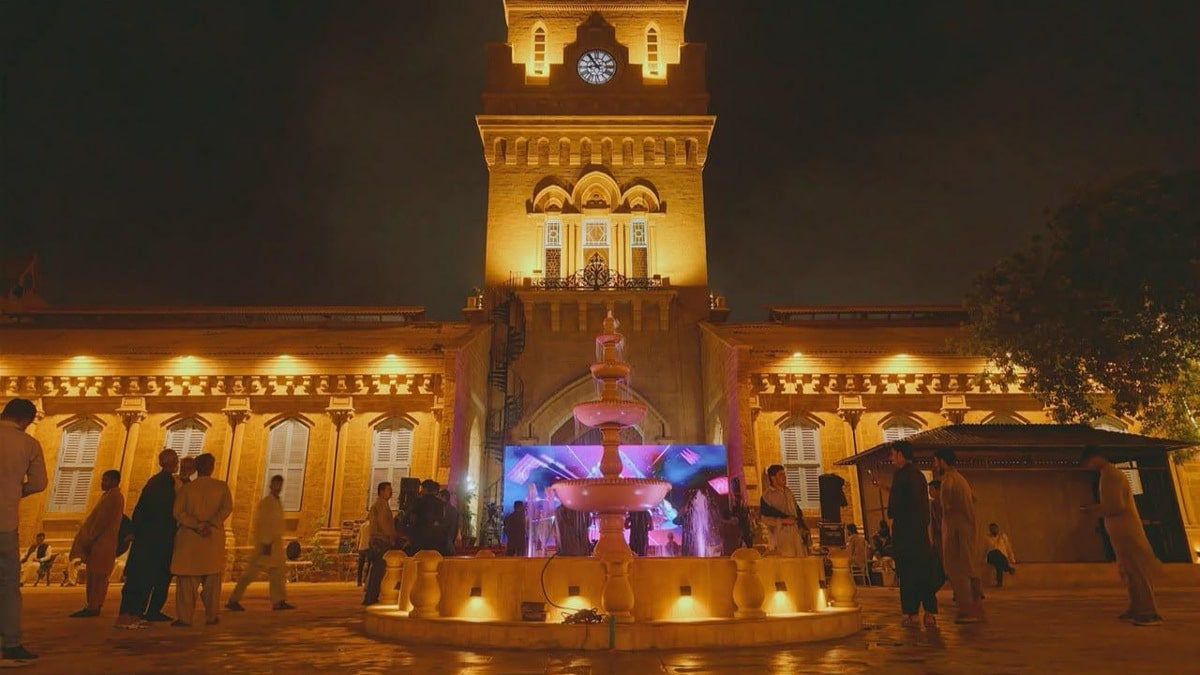
Chief Minister Syed Murad Ali Shah recently inaugurated the second phase of the Empress Market restoration, marking a significant milestone in Karachi’s urban revitalization. This project serves as a strategic catalyst for preserving the city’s architectural baseline while modernizing its functional efficiency. Consequently, the government aims to recalibrate the district’s economic and cultural output through precision heritage management.
The Structural Calibration of Empress Market
The rehabilitation work involves a comprehensive upgrade of the facility’s historical infrastructure. Specifically, the Karachi Metropolitan Corporation (KMC) prioritized several technical enhancements to improve the site’s utility:
- Heritage Architecture: Conservation of original stonework and historical facades.
- Precision Engineering: The revival of the iconic clock tower, which resumed operation after 25 years of dormancy.
- Urban Mobility: Improvements to pedestrian pathways and dedicated parking facilities to reduce local congestion.
Moreover, Mayor Barrister Murtaza Wahab emphasized that this project represents more than just a renovation. It serves as a structural restoration of Karachi’s identity. The KMC expects the revived market to function as a primary destination for both international tourists and local commerce.
The Translation: Contextualizing Heritage
In technical terms, heritage restoration is not merely about aesthetics; it is about synchronizing historical footprints with modern urban demands. The “Next Gen” logic here is clear: by stabilizing Empress Market restoration efforts, the city creates a “heritage economy.” This approach transforms an aging structure into a high-functioning hub that supports modern trade without erasing the cultural data of the past.
The Socio-Economic Impact
This development directly impacts the daily lives of Karachi’s citizens in several ways. For the average professional or student, the improved pedestrian zones offer a safer and more disciplined urban environment. Furthermore, the revival of the market acts as an economic multiplier for local vendors. Consequently, the increased foot traffic from local and international visitors will likely boost household incomes in the surrounding areas, reinforcing the market’s role as a commercial baseline.
The Forward Path: A Momentum Shift
At Next Generation Pakistan, we view this development as a Momentum Shift. Moving beyond simple maintenance, this project demonstrates a strategic intent to reclaim the urban narrative. While many cities face decay, Karachi’s pivot toward architectural precision signals a stabilization of governance. To maintain this trajectory, the government must now ensure the operational sustainability of these restored assets through consistent maintenance protocols and civic engagement.








