
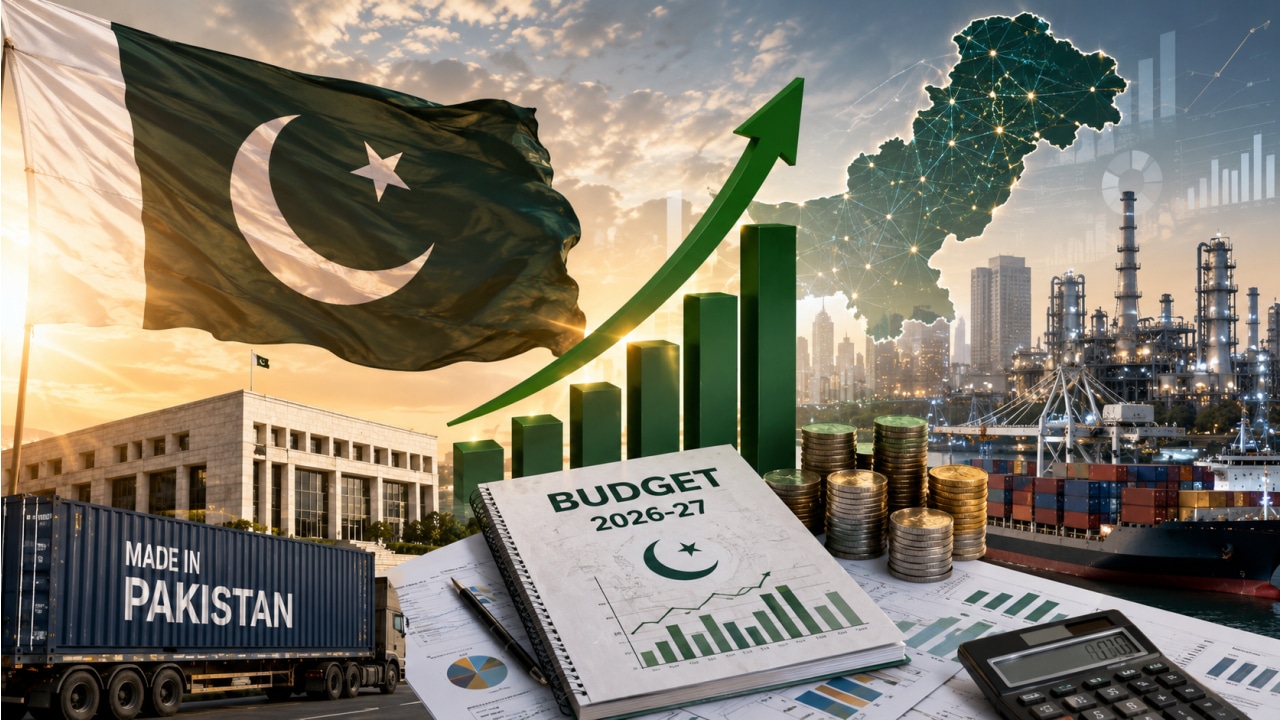
The federal administration has calibrated a strategic Pakistan job creation roadmap aiming to generate 2 million employment opportunities during the 2026-27 fiscal cycle. This initiative aligns with a projected Rs. 17.5 trillion budget framework designed to stimulate structural growth while maintaining fiscal discipline. Consequently, the government has partitioned these targets across critical sectors: 1.1 million roles in services, 500,000 in industry, and 400,000 in agriculture. By integrating these employment benchmarks into the national economic agenda, authorities aim to stabilize the labor market against global headwinds.
Structural Alignment for Pakistan Job Creation
The economic blueprint for the upcoming year operates on a 4% GDP growth baseline. To achieve this, the government has established specific performance indicators for various industrial domains. For instance, the services sector is expected to grow by 4.2%, while large-scale manufacturing and general industry are targeted at 4.5% and 4% respectively. This precision-based approach ensures that the Pakistan job creation targets are not mere projections but are anchored in sectoral expansion.

- Services Sector: 1.1 million new positions.
- Industrial Sector: 500,000 new positions.
- Agricultural Sector: 400,000 new positions.
Fiscal Framework and Revenue Calibration
To fund these ambitious development goals, the government has projected tax revenues of Rs. 15,267 billion. Although debt servicing remains a significant expenditure at Rs. 7,824 billion, the National Economic Council has approved a development plan worth Rs. 3,669 billion. Furthermore, the federal government is prioritizing existing infrastructure, deciding that no new development projects will be initiated unless they pertain to defense or internal security. This focus ensures that resources are concentrated on high-impact, ongoing catalysts for growth.
Professional Relief and Tax Incentives
Recognizing the pressure on middle-income earners, the budget proposes tax relief for salaried individuals totaling approximately Rs. 50 billion. Specifically, professionals earning over Rs. 183,000 per month may see a revision in tax slabs, while the surcharge on high-tier annual incomes exceeding Rs. 10 million is slated for removal. This adjustment is designed to increase disposable income, thereby stimulating domestic consumption and supporting the broader Pakistan job creation ecosystem.
The Translation: Clear Context
In essence, the government is shifting from a “survivalist” fiscal stance to a “targeted growth” strategy. By setting a hard target of 2 million jobs, they are signaling to investors that the state is prioritizing labor market absorption over mere debt management. The focus on services and manufacturing suggests a pivot toward a modern, value-added economy rather than a purely agrarian one.
The Socio-Economic Impact
For the average Pakistani citizen, these developments represent a dual benefit. First, the 400,000 jobs in agriculture and 1.1 million in services provide a direct pathway for youth employment in both rural and urban centers. Second, the proposed tax relief for salaried individuals provides a necessary buffer against the projected 8.2% inflation rate, helping middle-class households maintain their purchasing power in a volatile global economy.
The Forward Path: Opinion
This development represents a Momentum Shift. While the trade deficit and external sector pressures remain significant hurdles, the decision to link budget allocations directly to employment targets shows a level of architectural precision previously missing. If the projected 4% growth materializes, this could serve as the catalyst needed to transition Pakistan from economic stabilization to sustainable expansion.
.jpg)








