
The government projects that Pakistan’s edible oil import bill will reach a staggering US$ 6 billion by the conclusion of FY2026. This fiscal trajectory highlights a critical dependency, as domestic production currently services only 10 percent of the national requirement. Consequently, the nation remains vulnerable to international price volatility and supply chain disruptions.
Analyzing the $6 Billion Edible Oil Import Bill
Data from the Economic Survey 2025-26 reveals a calibrated look at our current consumption patterns. During the July-March period, Pakistan imported 3.65 million tons of edible oil. This volume includes 0.67 million tons extracted from 2.91 million tons of imported oilseeds. Specifically, the value of imported oil reached US$3.21 billion, while imported oilseeds added an additional US$1.34 billion to the national edible oil import bill.
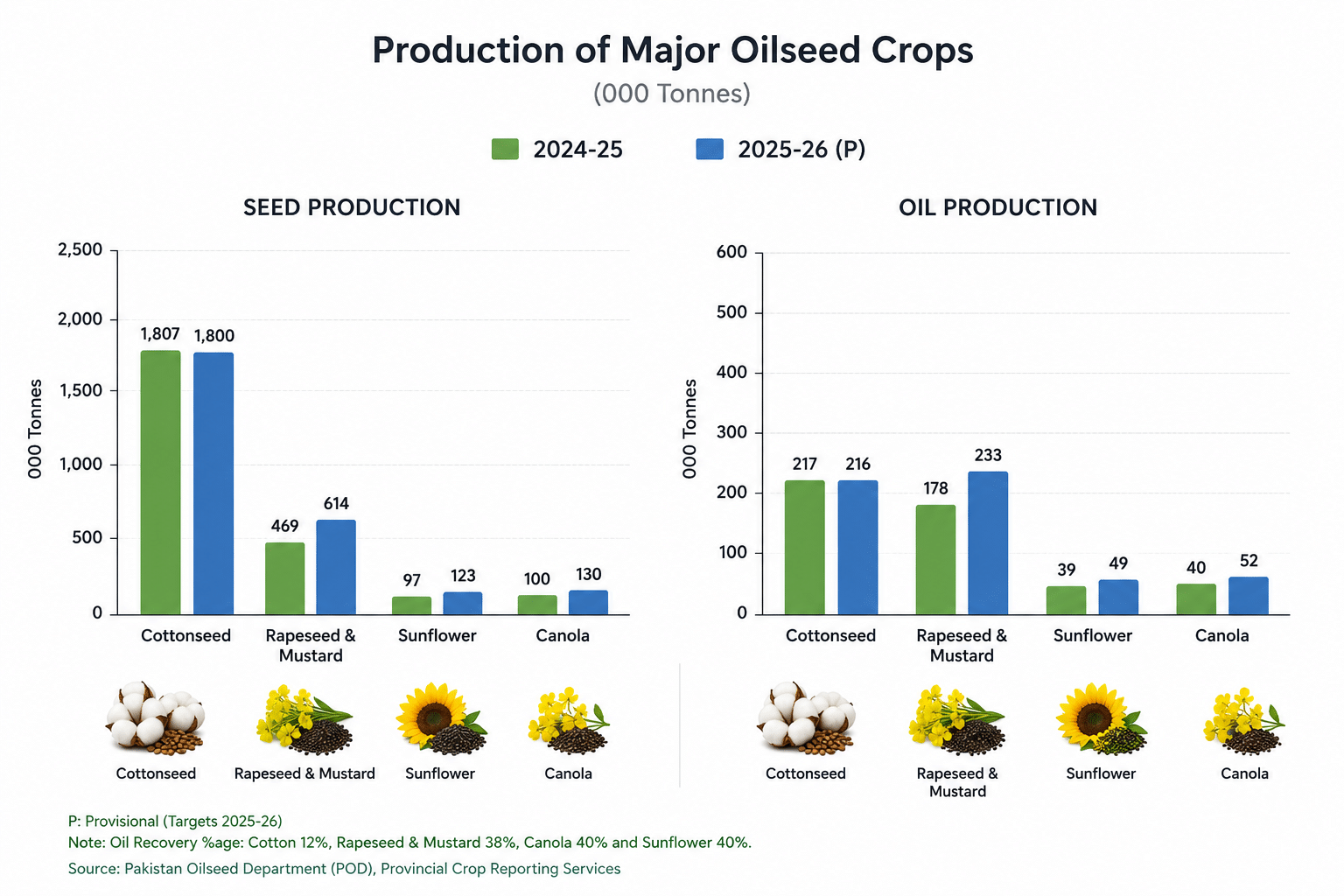
Current trends suggest a total availability of 5.36 million tons for the full year. While this represents a 15.5 percent growth over FY2025, the underlying structural issue remains. Local production stagnates at a baseline of 0.55 million tons, forcing a heavy reliance on foreign markets to meet the demand of Pakistani households.
The Translation: Decoding the Dependency
In “Next Gen” terms, Pakistan is currently operating an inefficient caloric economy. We are essentially exporting our foreign exchange reserves to purchase a basic necessity that our own soil is capable of producing. The 90 percent reliance on imports acts as a persistent drain on the PKR. Although domestic oilseed output is projected to grow from 474,000 tons to 550,000 tons, this 16 percent increase is a marginal catalyst compared to the massive scale of the edible oil import bill.
The Socio-Economic Impact
This development directly impacts the daily lives of every Pakistani citizen in the following ways:
- Kitchen Inflation: High import costs translate to volatile prices for cooking oil, a staple in every household.
- Currency Pressure: The $6 billion outflow weakens the Rupee, indirectly increasing the cost of other imported essentials like fuel and medicine.
- Agricultural Opportunity: For rural farmers, this gap represents a massive untapped market. Precision farming in oilseeds could revitalize rural income streams.
The Forward Path: A Momentum Shift
The Pakistan Oilseed Department has introduced a “Comprehensive Plan for Enhancing Indigenous Production.” This strategy aims for a strategic escalation of self-sufficiency:
- Short Term: Elevate production to 27 percent.
- Medium Term: Reach 40 percent through digital farming initiatives.
- Long Term: Achieve a 70 percent self-sufficiency baseline.
Expert Opinion: This represents a Momentum Shift. While the current figures are daunting, the shift toward “import substitution” through improved agricultural financing and efficient water use is the correct architectural move for Pakistan’s economic sovereignty. Success now depends on the precision of execution at the farm level.








