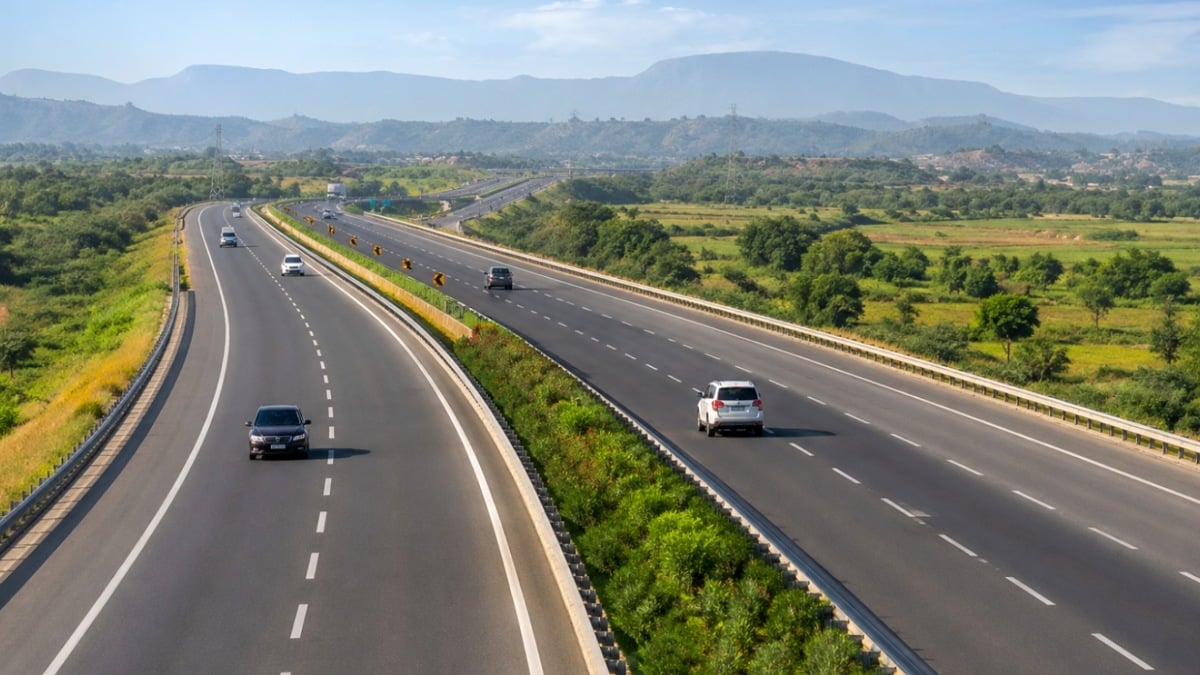
Strategic infrastructure serves as the calibrated backbone of a nation’s economic throughput and logistics precision. Consequently, the government has announced a significant highway infrastructure allocation of Rs. 226.98 billion under the Public Sector Development Programme (PSDP) for the 2025-26 fiscal year. This capital injection targets 71 National Highway Authority (NHA) projects to modernize the country’s 14,480-kilometer transit grid.
Analyzing the Strategic Investment Framework
The Pakistan Economic Survey 2025-26 reveals a precise breakdown of these funds. Specifically, the government earmarked Rs. 224.83 billion for ongoing schemes to ensure project continuity. Conversely, the administration set aside Rs. 2.15 billion for new development initiatives. This fiscal weighting prioritizes the completion of existing road networks over the launch of unverified corridors.

Scaling the National Transit Grid
The NHA network currently manages a sophisticated architecture of 48 national highways, motorways, and strategic roads. Furthermore, this network spans 14,480 kilometers, facilitating the vast majority of cargo movement and intercity travel. The highway infrastructure allocation acts as a catalyst for maintaining these vital economic arteries.
The Translation: Contextualizing the Billions
In simple terms, the government is focusing on “finishing what we started.” By allocating over 99% of the budget to ongoing projects, the state avoids the “construction sprawl” that often leads to abandoned half-finished roads. This calibrated approach ensures that existing investments in 71 NHA projects actually reach a functional baseline instead of lingering in budgetary limbo.
Socio-Economic Impact: Life on the Road
For the average Pakistani citizen, this investment translates directly into reduced travel times and lower logistics costs. Students and professionals in urban hubs like Lahore, Islamabad, and Karachi will benefit from more reliable intercity connectivity. Furthermore, rural farmers gain more efficient access to major markets, potentially reducing food spoilage and increasing household income through structural efficiency.
The Forward Path: A Momentum Shift?
We categorize this development as a Momentum Shift toward project accountability. While the limited funding for “new” projects might seem conservative, the focus on completing the existing 14,480-kilometer network represents a disciplined shift toward operational excellence. Pakistan does not just need more roads; it needs finished, high-performing highways that integrate the national economy into a singular, high-velocity unit.