
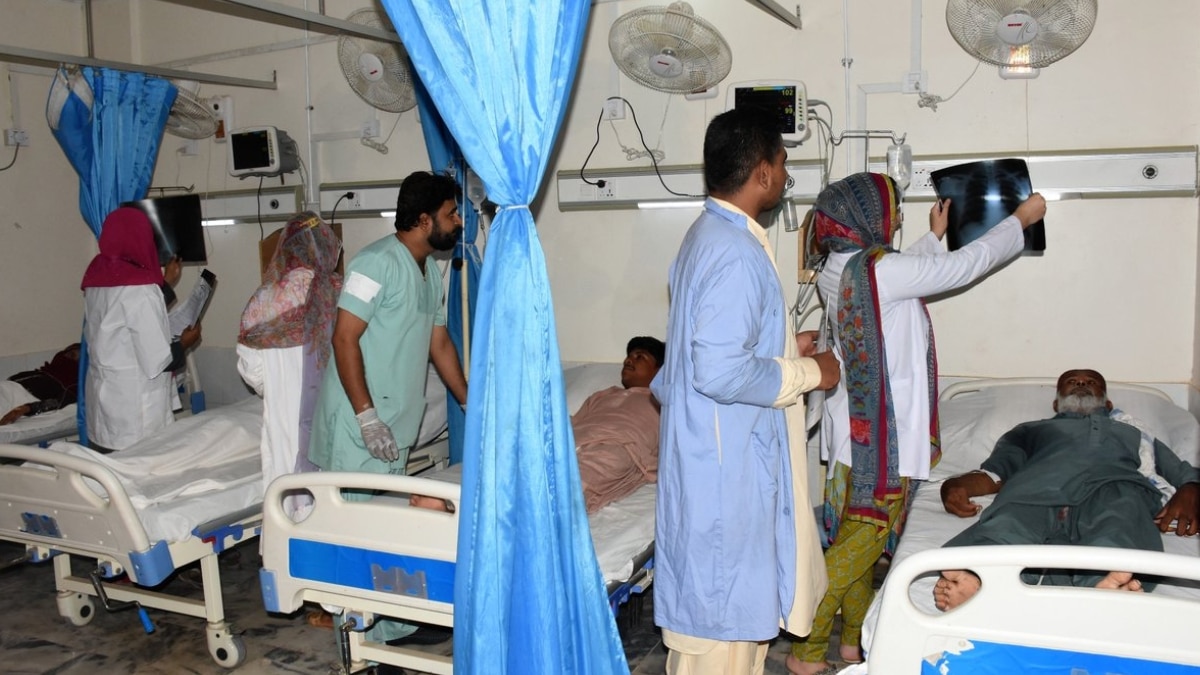
National architecture requires precise fiscal calibration, yet the latest data reveals a stagnant baseline for the nation’s well-being. Specifically, Pakistan’s public health expenditure remained at just 0.8% of GDP during FY 2025-26, according to the Pakistan Economic Survey. Consequently, this nominal increase to Rs. 942.2 billion fails to expand the actual fiscal footprint of the sector when compared to the previous year’s Rs. 924.9 billion.
Analyzing the Public Health Expenditure Data
Furthermore, the government continues to target universal health coverage under the Agenda 2030 Sustainable Development Goals. Despite these commitments, current spending levels sit far below the benchmarks required for large-scale infrastructure improvement. The fiscal breakdown for the current period includes:
- Total Public Health Spending: Rs. 942.2 billion.
- GDP Percentage: 0.8% (Stagnant year-on-year).
- PSDP Allocation: Rs. 19,375.8 million for targeted health projects.
In contrast to rising global health standards, the current public health expenditure highlights a limited fiscal space. Most experts argue that this allocation cannot support the necessary service delivery at scale for a growing population.
The Situation Room: Strategic Analysis
The Translation
While the government reports a “nominal increase” in rupees, the “real” value—as a percentage of the total economy—is flat. In economic terms, this means healthcare is not being prioritized as a growth engine. The allocation of Rs. 19,375.8 million for the Public Sector Development Program (PSDP) acts as a catalyst for specific projects, but it does not address the systemic operational deficits in existing hospitals.
The Socio-Economic Impact
Consequently, the daily life of a Pakistani citizen remains vulnerable to out-of-pocket expenses. For students and low-income households, a 0.8% GDP allocation results in overcrowded public facilities and a reliance on expensive private care. This creates a structural barrier to productivity, as health-related shocks often push families back into poverty in both urban and rural districts.
The Forward Path
This development represents a Stabilization Move rather than a Momentum Shift. While the maintenance of current spending prevents a total collapse of services, it does not provide the velocity needed to meet Agenda 2030 targets. Precision investment in digital health infrastructure could optimize this limited budget, but a structural increase in the GDP percentage is the only path to genuine progress.








