
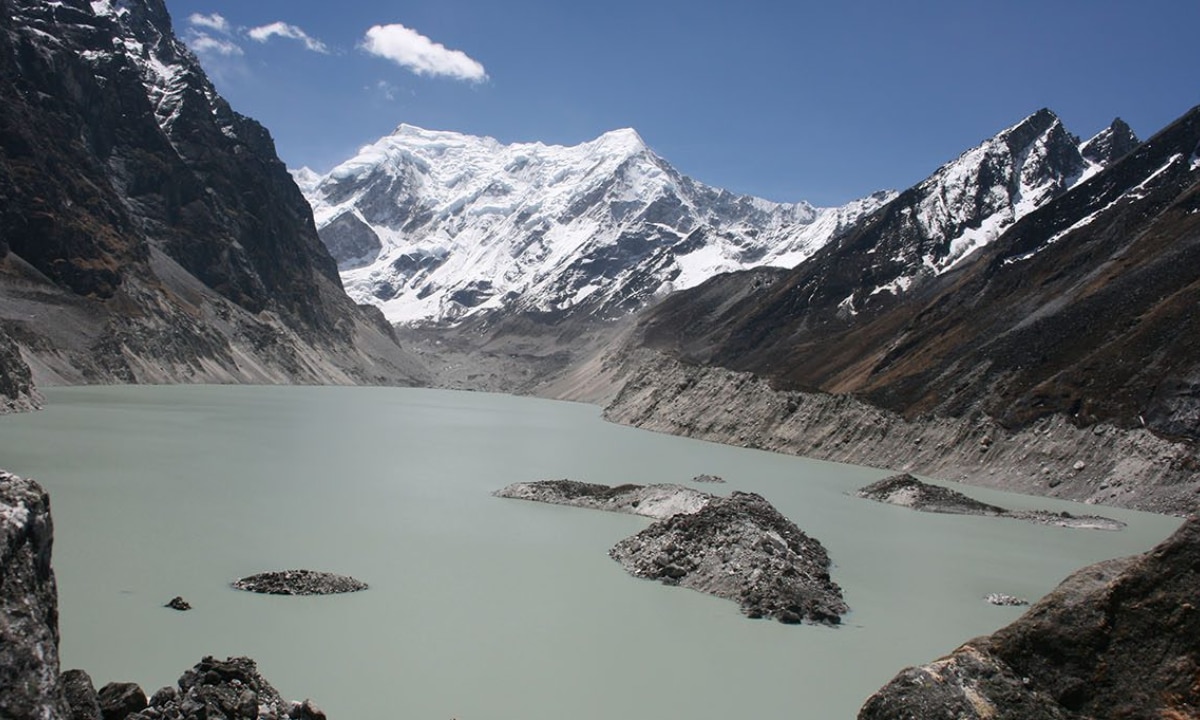
Systemic resilience is the cornerstone of national advancement, particularly when facing the calibrated risks of climate instability. The Upper Kohistan district administration has issued a critical Upper Kohistan GLOF warning as record-breaking temperatures accelerate glacial snowmelt across the northern corridors. Consequently, authorities have activated high-precision response plans to mitigate the increased threat of glacial lake outburst floods in vulnerable districts.
Understanding the Upper Kohistan GLOF Threat
Deputy Commissioner Azizullah Jan confirmed that the administration is conducting strategic community awareness sessions to prepare residents for potential structural emergencies. The Provincial Disaster Management Authority (PDMA) has extended this alert until May 31, noting that extreme heat coupled with heavy rainfall could trigger flash floods. Therefore, departments including Rescue 1122 remain fully prepared for rapid deployment in high-risk zones.
Monitoring the Kandia Valley Frontier
A specialized monitoring team recently inspected the early warning systems installed in Kandia Valley to ensure operational baseline efficiency. Furthermore, officials have advised travelers moving between Gilgit-Baltistan and Khyber Pakhtunkhwa to remain alert for sudden road blockages. Police personnel stationed along the Karakoram Highway are actively warning tourists to avoid GLOF-prone zones during this period of thermal acceleration.
The Translation: Structural Context
A Glacial Lake Outburst Flood (GLOF) represents a failure of natural geological containment. When rising temperatures act as a catalyst for rapid snowmelt, the hydrostatic pressure within glacial lakes often exceeds the structural integrity of the surrounding moraine. Consequently, the current warning is a calibrated response to these thermodynamic realities, translating complex meteorological data into actionable safety protocols for the local population.
Socio-Economic Impact: Protecting the Northern Corridor
The stability of Upper Kohistan is vital for the logistical integrity of the Karakoram Highway, a primary economic artery for Pakistan. For residents in the Kandia Valley, these flood warnings necessitate strategic relocations that disrupt daily labor and agricultural cycles. However, by prioritizing livestock and human safety, the administration protects the baseline economic assets of these rural households against catastrophic loss.
The Forward Path: A Stabilization Move
This development represents a Stabilization Move. While the deployment of early warning systems indicates a shift toward technological oversight, the infrastructure remains reactive rather than preventive. To achieve true momentum in regional safety, Pakistan must invest in long-term geological engineering. We must evolve from merely surviving seasonal melt cycles to mastering the structural challenges of our changing topography.








