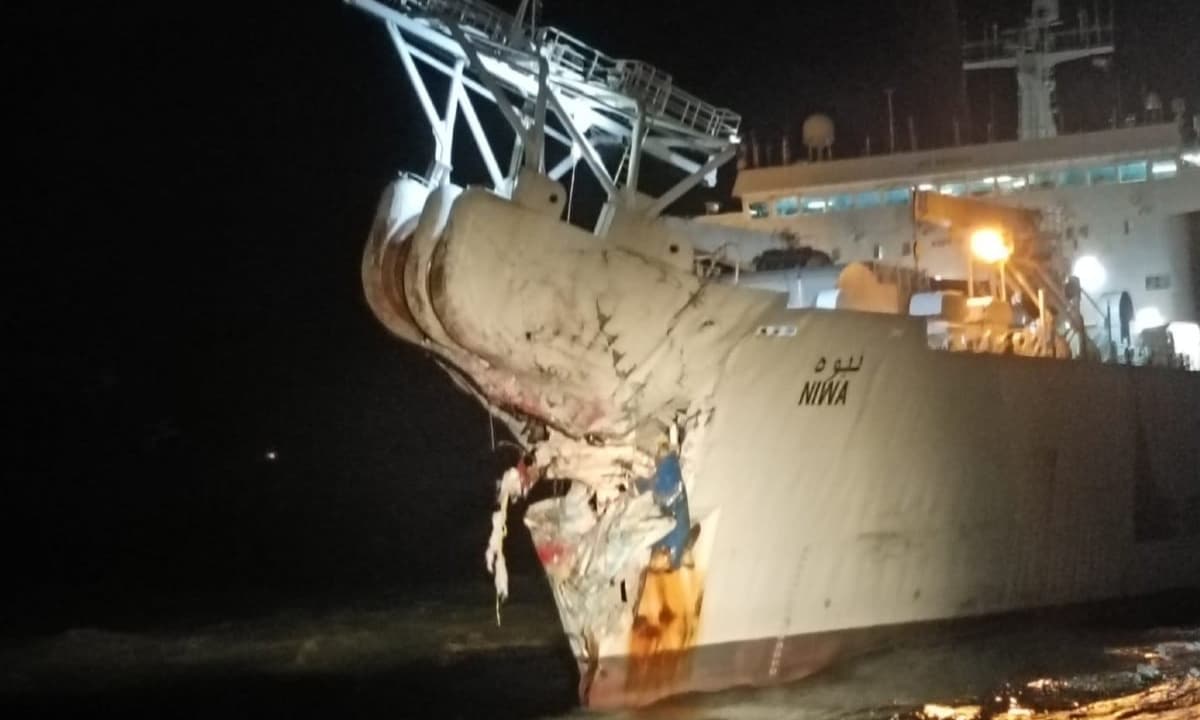
Maritime logistics serve as the vital baseline for Pakistan’s economic engine, yet a recent Karachi Port collision between two vessels underscores the critical need for precision in vessel management. On the night of May 28, the vessels MV Niwa and MV Papu collided outside the port’s operational boundary. Consequently, Federal Maritime Affairs Minister Junaid Anwar Chaudhry confirmed that authorities have launched a technical inquiry into the alleged negligence of both vessel masters. This proactive investigation aims to maintain the structural integrity of Pakistan’s maritime reputation and navigational safety.
The Translation: Decoding the Karachi Port Collision

While the term “collision” suggests a major disruption, this incident occurred outside the primary traffic lanes of the harbor. Specifically, the Karachi Port Trust (KPT) reported that maritime operations continued without any calibrated delay. Port authorities utilized strategic tugboats to safely bring the affected cable-laying vessel into the harbor for necessary repairs. In contrast to catastrophic accidents, this event resulted in no injuries or environmental leaks. The current inquiry focuses on the “human element,” as the masters of the ships face scrutiny for their navigational choices during the event.
Socio-Economic Impact: Protecting the National Supply Chain

For the average Pakistani citizen, port efficiency directly influences the price of imported essentials. A disruption in Karachi often acts as a catalyst for price fluctuations in fuel and raw materials. Fortunately, KPT Chairman Rear Admiral Shahid Ahmed ensured that technical support reached the damaged vessels immediately, preventing a bottleneck in the harbor. Furthermore, the stability of port operations means that the logistics chain for professionals and families remains secure. Maintaining these safety standards prevents long-term increases in shipping insurance, which would otherwise raise the cost of living across the nation.
The Forward Path: A Stabilization Move

- Forensic Audit: Authorities are conducting a detailed review of navigational logs to assign accountability.
- Safety Benchmarks: KPT is reviewing current oversight protocols for vessels operating on the port’s periphery.
- System Efficiency: The swift recovery of MV Niwa demonstrates a high level of operational readiness by the national tugboat fleet.
This incident represents a Stabilization Move. While the response was precise, the collision reveals a plateau in current navigational safety standards. Consequently, moving toward a “Momentum Shift” requires the integration of automated monitoring systems to eliminate human error. Pakistan must prioritize these technological upgrades to ensure our maritime gateways remain competitive and secure for global trade.