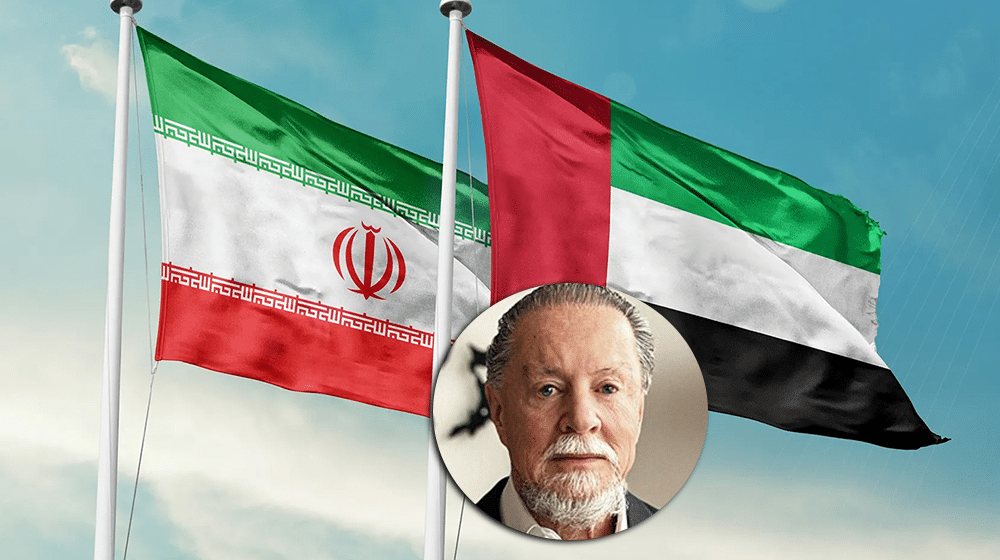
The shifting architecture of UAE-Iran relations faced a precision stress test this week after a viral exchange on X redefined the narrative of regional de-escalation. While Emirati academic Abdulkhaleq Abdulla described the UAE’s diplomatic pivot as a series of “cautious and calculated steps,” Israeli billionaire Eyal Ofer countered with a single, high-impact word: “capitulation.”
Analyzing the Friction in UAE-Iran Relations
This digital interaction bypassed traditional diplomatic channels, signaling a potential baseline shift in how private sector leaders perceive state-level strategies. Consequently, the remark resonated across the Middle East, with many observers questioning whether the UAE’s engagement with Tehran represents strategic precision or a structural retreat from previous geopolitical stances. Moreover, the exchange highlights the growing influence of non-state actors in shaping the optics of international relations.

Public reaction remained polarized. While some users viewed the UAE as a pragmatic stabilizer in a region engulfed by conflict, others suggested that the Emirates are operating under external pressures. Specifically, one commentator described the nation’s role as an instrument for larger entities, emphasizing the calibrated nature of these regional alignments.
The Translation (Clear Context)
In “Next Gen” clarity, the core of this debate lies in the definition of “Strategic De-escalation.” To the UAE, reducing tensions with Iran is a catalyst for economic preservation and regional safety. However, critics like Eyal Ofer view this not as a choice, but as a forced surrender to regional realities. The logic here suggests a fundamental disagreement over whether diplomatic flexibility constitutes strength or a lack of leverage.
The Socio-Economic Impact
For the average Pakistani citizen, these regional shifts are far from abstract. Pakistan’s economic stability is intrinsically linked to the Gulf’s geopolitical climate. Any perceived weakness or shift in UAE-Iran relations can fluctuate oil prices and affect the security of the millions of Pakistani professionals working in the UAE. Furthermore, regional stability is a prerequisite for the consistent flow of remittances, which serve as a critical baseline for Pakistan’s foreign exchange reserves.
The Forward Path (Opinion)
This development represents a Stabilization Move facing a perception crisis. While the UAE is strategically securing its borders through dialogue, the branding of “capitulation” creates a narrative hurdle. To maintain momentum, the UAE must demonstrate that its diplomatic engagement yields tangible security dividends. For Pakistan, a balanced Middle East is the optimal catalyst for our own domestic economic recovery.