Modernizing Islamabad’s Logistics: The Ataturk Avenue Expansion
Urban mobility acts as the circulatory system of a modernizing capital. The recent completion of the Ataturk Avenue Expansion represents a calibrated shift toward structural efficiency in Islamabad’s logistical framework. Minister of State for Interior Talal Chaudhry inaugurated the project on Monday, signaling a strategic upgrade to the city’s core infrastructure. This initiative reflects the federal government’s commitment to developing a high-performance urban environment.
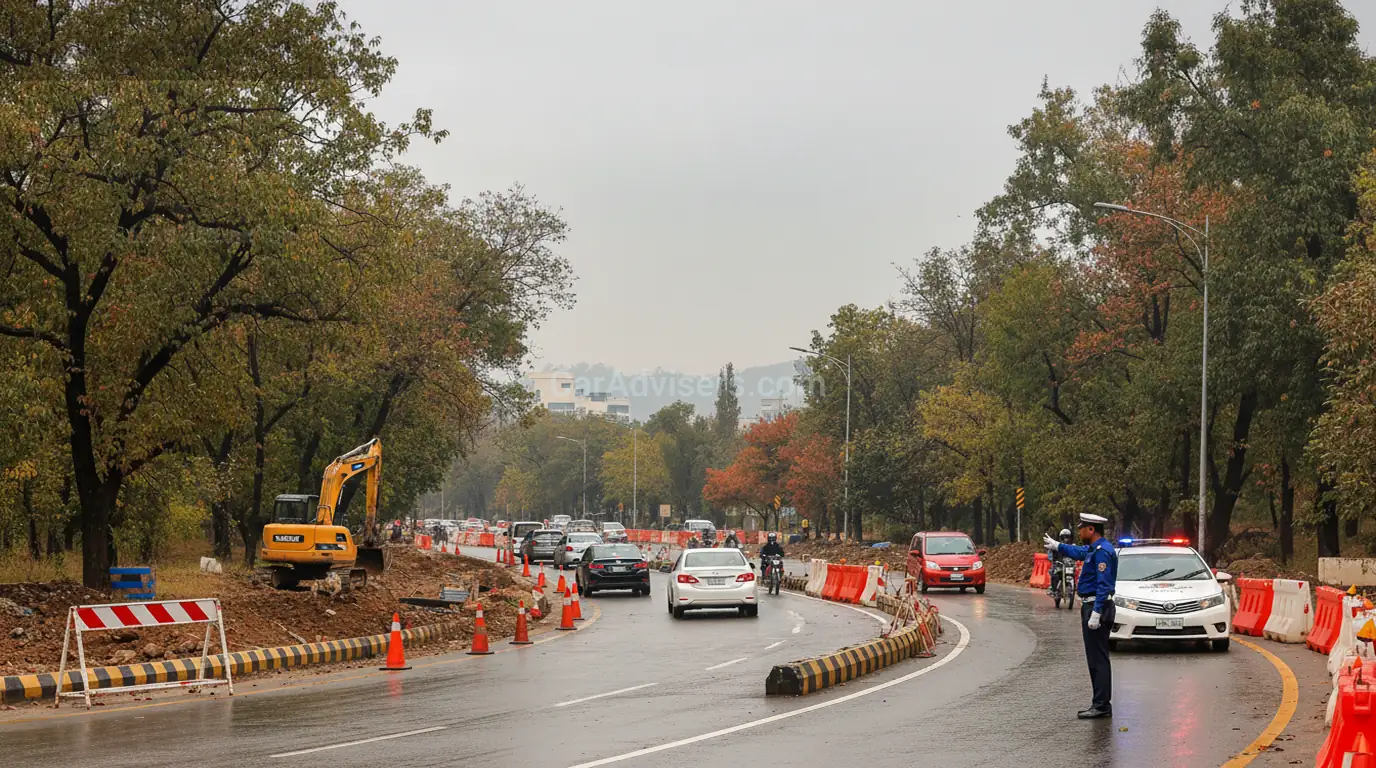
The Ministry of Interior executed this project under a vision of a modern, green capital. Specifically, engineers increased the road width from 24 feet to 52 feet. Consequently, this change will accelerate traffic flow and eliminate historic bottlenecks that previously hindered urban movement. The government prioritized environmental protection during construction to ensure the preservation of the capital’s green cover.
Structural Features and Environmental Calibration
The project integrates more than just asphalt. The upgraded avenue now features modern lighting systems and an advanced drainage network to handle seasonal monsoons. Furthermore, the design incorporates wide pedestrian walkways and enhanced safety protocols. This ensures a balanced environment for both motorists and residents. Minister Chaudhry emphasized that environmental protection remains a baseline priority for all future capital developments.
- Capacity Optimization: Expanded road width from 24ft to 52ft.
- Infrastructure Integration: New lighting and drainage systems installed.
- Pedestrian Safety: Dedicated walkways included in the structural plan.
- Eco-Preservation: Strategic construction to protect existing trees.
The Situation Room Analysis
The Translation (Clear Context)
The Ataturk Avenue Expansion is not merely a road-widening exercise; it is a recalibration of urban throughput. By doubling the width, planners have transitioned from a reactive maintenance model to a proactive capacity model. This allows for a higher volume of vehicles without the friction of peak-hour congestion, effectively future-proofing one of the city’s busiest arteries.
The Socio-Economic Impact
For the average Pakistani citizen in the capital, this project translates into recovered time. Reduced idling leads to lower fuel consumption and decreased emissions, which directly benefits household budgets and public health. Students and professionals now have a predictable baseline for their daily commutes. This reliability acts as a catalyst for economic productivity in the surrounding commercial sectors.
The Forward Path (Opinion)
This development represents a Momentum Shift. While road expansion is a traditional solution, the inclusion of modern drainage and tree preservation suggests a pivot toward sustainable urbanism. It moves Islamabad closer to a global standard of precision infrastructure, though the long-term success depends on the consistent maintenance of these new systems.