The structural integrity of a sporting institution is measured by its capacity to endure prolonged volatility. After a 22-year calibration period, the Arsenal Premier League drought has finally concluded, marking a tectonic shift in English football’s power dynamics. Consequently, the North London club has transitioned from a period of aesthetic idealism to one of ruthless, high-output efficiency.
In 2002, the Arsenal ecosystem functioned as a model of fluid mechanics. Under Arsène Wenger, the team operated with a velocity that appeared effortless. Icons like Thierry Henry and Dennis Bergkamp didn’t just play; they engineered art. However, the subsequent decades tested the club’s baseline stability. The 2003-2004 “Invincibles” season established a high-performance benchmark that eventually became a heavy psychological burden.
The Deceleration: From Invincibles to Volatility

Following the stadium transition in 2004, the club’s competitive edge began to erode. Rivals utilized massive capital injections while Arsenal prioritized fiscal discipline. This strategic pivot resulted in a “Banter Era,” where the club became a frequent target of ridicule. Fans watched helplessly as high-value assets like Cesc Fàbregas and Robin van Persie exited the system.

The lack of structural authority in the midfield and defense led to repeated seasonal collapses. Furthermore, the “Top Four” finish became the ceiling rather than the floor. This period of stagnation required a total system reboot to restore the club’s status as a premier global competitor.
A Calibrated Path to the Arsenal Premier League Title
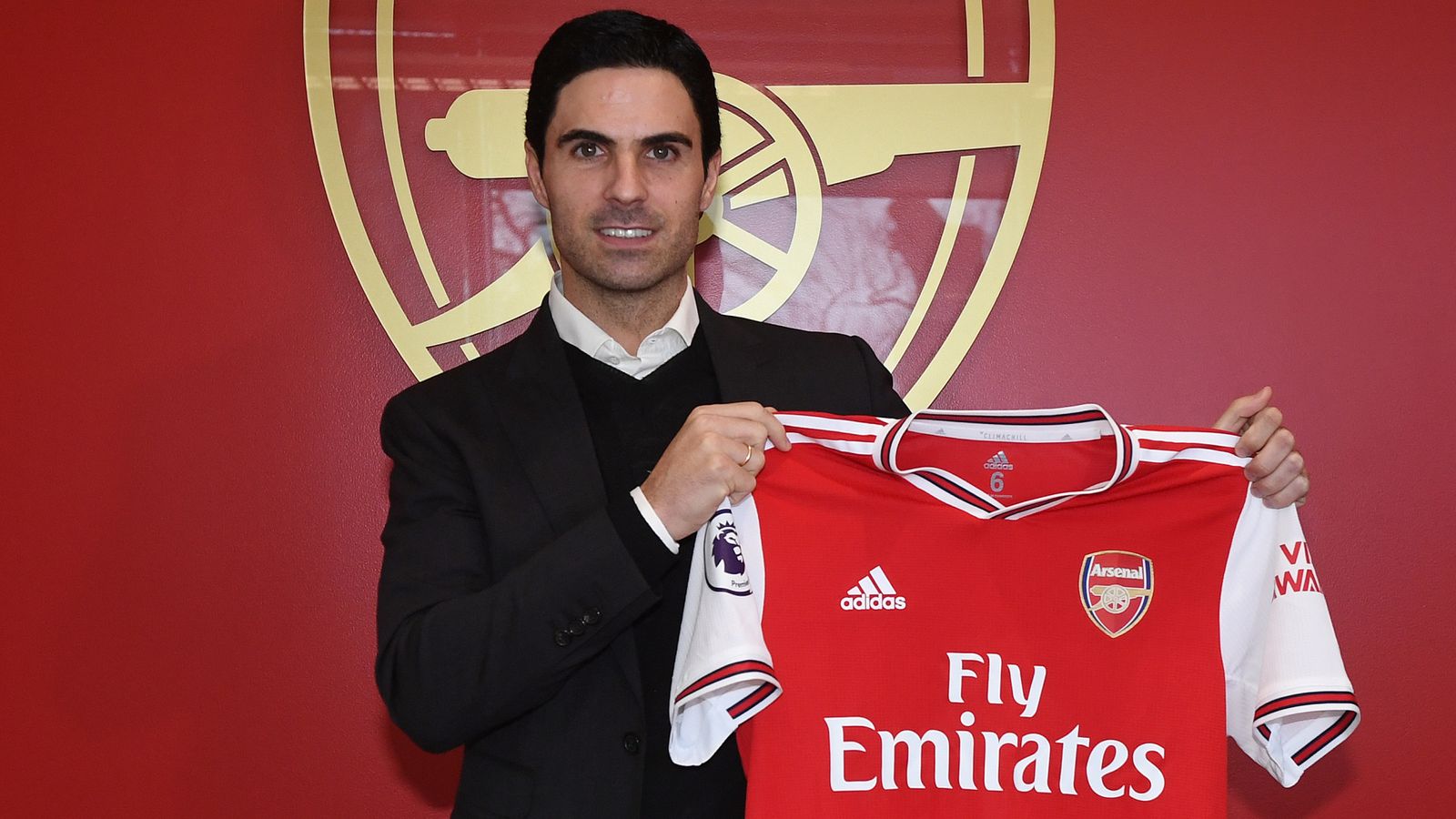
The appointment of Mikel Arteta in 2019 served as the primary catalyst for change. Arteta implemented a disciplined tactical framework that demanded precision and accountability. Initially, the project faced significant skepticism due to inconsistent results. Nevertheless, the management team remained committed to the long-term vision.
Key personnel acquisitions accelerated this evolution. To maximize efficiency, the club integrated specific archetypes:
- Martin Ødegaard: The technical architect and field general.
- William Saliba: The defensive anchor providing structural security.
- Declan Rice: The high-intensity engine in the central pivot.
- Bukayo Saka: The homegrown catalyst for offensive output.
The Final Execution: Ending the 22-Year Wait

Achieving championship status requires more than talent; it necessitates the ability to manage high-pressure variables. Before this triumph, Arsenal faced three consecutive seasons of “near-misses.” These failures served as critical data points, allowing the squad to refine their late-season endurance. This year, the team successfully neutralized Manchester City’s momentum.
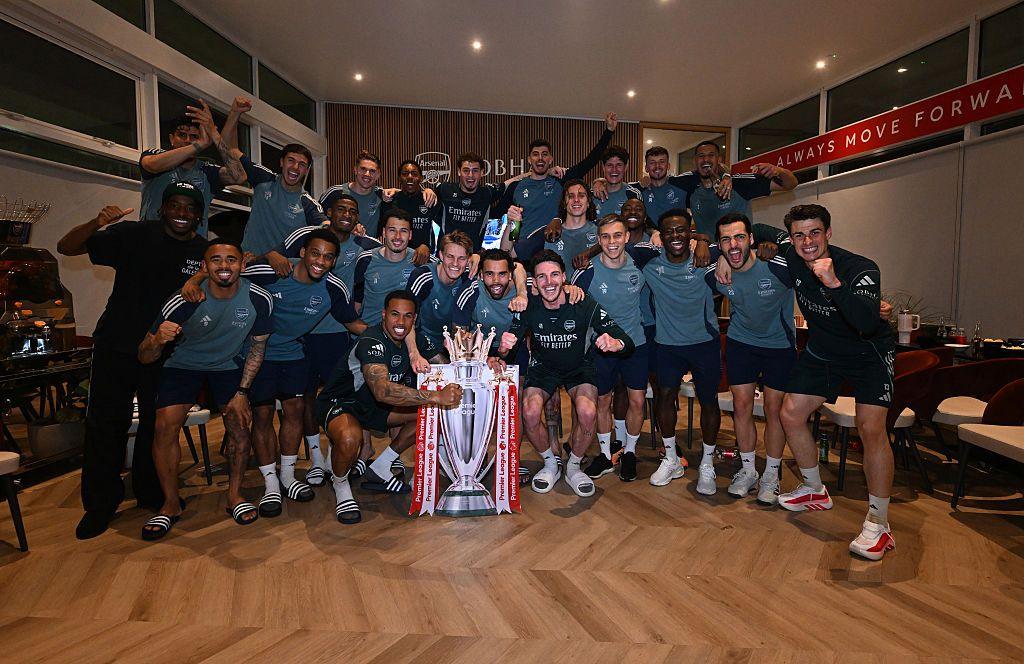
A 1-1 draw between Manchester City and Bournemouth mathematically confirmed Arsenal as the victors. For the global fanbase, this wasn’t merely a trophy—it was a systemic release of two decades of suppressed expectation. The Arsenal Premier League victory proves that institutional rebuilds, when executed with precision, eventually yield definitive results.
Analysis: The Situation Room
The Translation
The shift from Wenger’s “poetry in motion” to Arteta’s “ruthless control” represents a move toward modern industrial football. Arsenal no longer seeks to win beautifully; they seek to win predictably. They have mastered the “ugly win,” utilizing set-piece dominance and defensive rigidity—factors that are statistically more reliable than creative flair alone.
The Socio-Economic Impact
In Pakistan, where the English Premier League serves as a major cultural export, this victory provides a psychological “momentum shift” for youth. It demonstrates that long-term planning and surviving “the banter years” can lead to absolute success. For the local professional, it reinforces the value of process over immediate gratification.
The Forward Path
This development represents a definitive Momentum Shift. Arsenal is no longer an “emerging” force; they are now the established benchmark. With the youngest squad profile among Europe’s elite, the club has calibrated itself for a sustained era of dominance. The banter era is officially decommissioned.