

Innovation in personal computing has reached a critical inflection point. ASUS and Xreal recently launched the ROG Xreal R1, a sophisticated pair of AR gaming glasses engineered for high-performance handheld, PC, and console environments. Originally previewed at CES 2026, this hardware represents a structural shift toward wearable, high-fidelity visual interfaces.
Defining the Visual Baseline for AR Gaming Glasses
The ROG Xreal R1 utilizes a calibrated Sony 0.55-inch micro OLED display, delivering a crisp 1920 x 1080 resolution. Furthermore, ASUS engineered these glasses to project a massive 171-inch virtual screen, covering 95% of the user’s focused vision. This precision optic system offers a 57-degree field of view, ensuring total immersion.
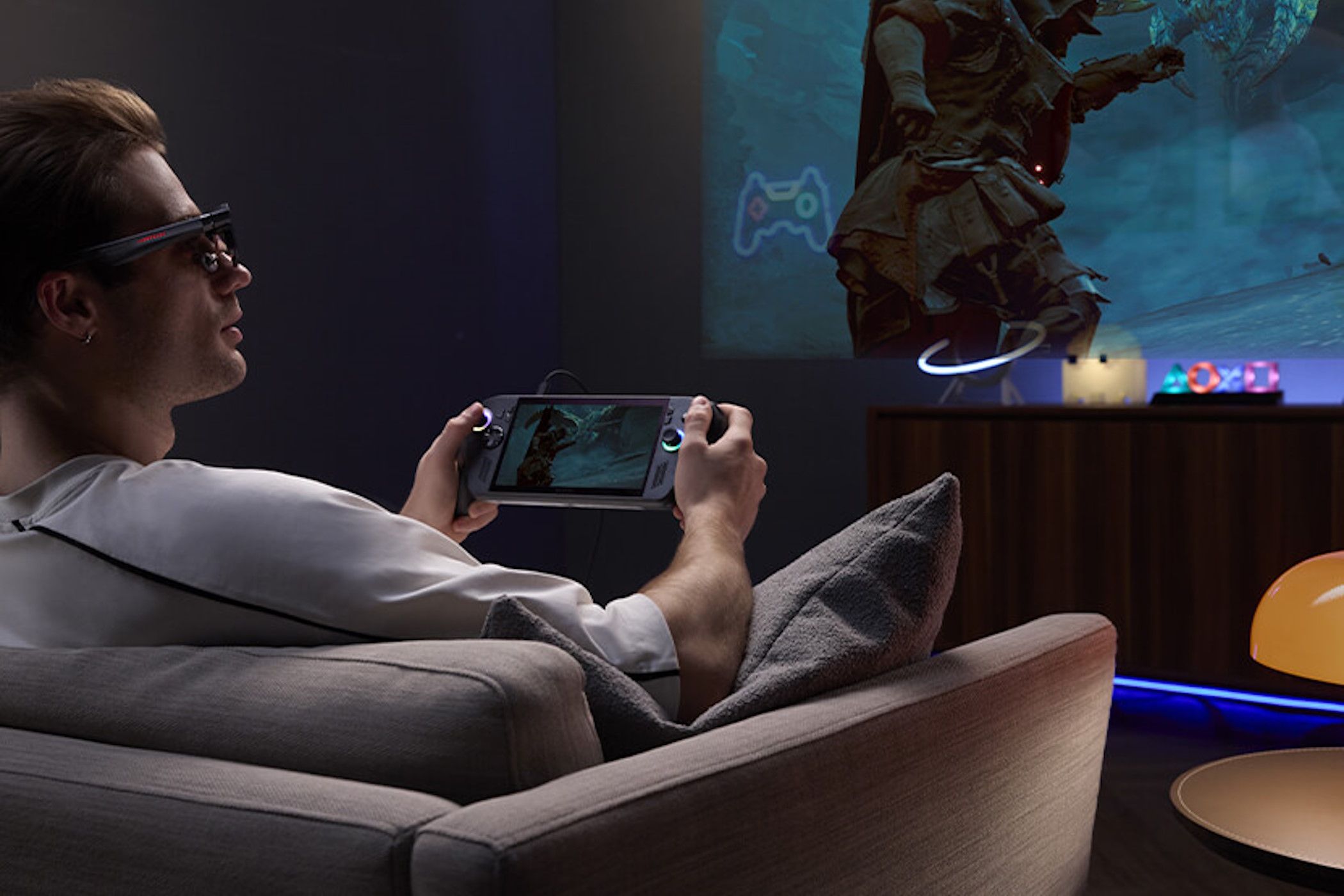
Performance remains the primary objective for this device. Consequently, the display supports a 240Hz refresh rate when frame rate boost is active. With a motion-to-photon latency of just 3ms and a peak brightness of 700 nits, the R1 eliminates the standard lag associated with wearable displays. These AR gaming glasses truly bridge the gap between mobility and high-end desktop monitoring.
System Integration and Dynamic Control
While the R1 maintains compatibility across most modern platforms, it functions as a strategic companion for the ROG Ally. Users can manage the hardware via the Armoury Crate SE, allowing for real-time adjustments to screen size, aspect ratio, and tint levels without interrupting gameplay. Additionally, the native 3DoF tracking allows users to pin the display in a fixed spatial position using Anchor mode.

The included ROG Control Dock further expands the ecosystem by enabling keyboard and mouse precision through the ASUS DisplayWidget Center. This dock serves as a catalyst for advanced features, including AI-enhanced dynamic crosshairs and real-time 2D to 3D conversion. Weighing only 91 grams, the device also integrates “Sound by Bose” for high-fidelity spatial audio, specifically tuned for gaming environments.

The Situation Room Analysis
The Translation
The ROG Xreal R1 is not just a display; it is a spatial computer for your eyes. “3DoF tracking” means the glasses recognize when you turn your head, keeping the virtual screen locked in space rather than just moving with your face. The “Electrochromic lens” technology functions like digital sunglasses, automatically tinting to block out real-world light so the game screen looks clearer, then turning transparent when you look away to ensure safety and awareness.
The Socio-Economic Impact
For the modern Pakistani professional or student, this technology democratizes high-end real estate. In urban centers where physical space is at a premium, these AR gaming glasses provide a 171-inch workstation or cinema experience that fits in a pocket. It allows for private, high-speed productivity and entertainment in public transport or shared housing, effectively upgrading the user’s environment without requiring physical renovations.
The Forward Path
This development represents a Momentum Shift. By hitting a 240Hz refresh rate in a 91-gram wearable, ASUS has moved AR from a “gimmicky accessory” to a “legitimate monitor replacement.” While the $849.99 price point targets early adopters, the structural efficiency of this design sets the baseline for the next generation of mobile computing in Pakistan and beyond.








