
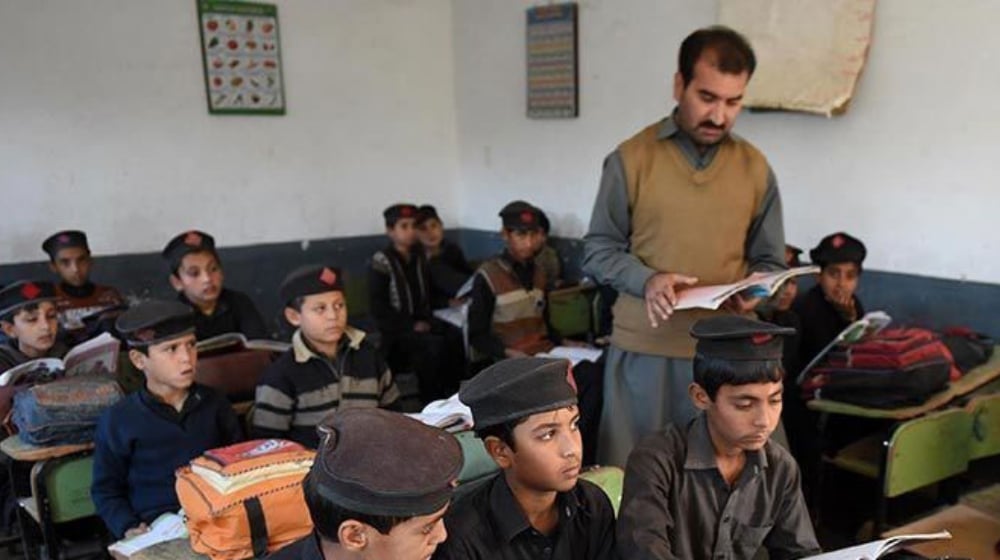
The Khyber Pakhtunkhwa government is executing a strategic structural overhaul by regularizing 14,000 KP Ad Hoc Teachers. This calibrated decision, spearheaded by the provincial ministerial committee, aims to stabilize the regional academic baseline. Consequently, this initiative ensures that the educators recruited in 2022 transition into permanent roles, securing the province’s educational infrastructure. Minister for Elementary and Secondary Education, Arshad Ayub Khan, chaired the session where the committee reached this precision-driven agreement.
Systemic Benefits of Regularizing KP Ad Hoc Teachers
The ministerial committee met in Peshawar to finalize the framework for workforce stabilization. High-level officials, including Law Minister Aftab Alam and Finance Advisor Muzammil Aslam, participated in the deliberations. They focused on integrating those previously excluded from the regularization process into the permanent system. Furthermore, the Finance Advisor issued specific directives to optimize the financial onboarding of these professionals.
Key Administrative Directives
- Immediate CP Fund Activation: Teachers must open Contributory Provident (CP) Fund accounts immediately upon notification.
- Government Contribution: The provincial government will provide a 12% contribution to these accounts to ensure long-term financial security.
- Cabinet Approval: The committee will now seek formal endorsement from the Khyber Pakhtunkhwa provincial cabinet to finalize the transition.
Education Minister Arshad Ayub Khan congratulated the educators, framing the move as a rightful entitlement. He emphasized that the government views this not just as a welfare step, but as a strategic necessity for systemic efficiency.
The Translation (Clear Context)
In technical terms, “ad hoc” status refers to temporary, contract-based employment that often lacks the full benefits of civil service. By transitioning these 14,000 KP Ad Hoc Teachers to permanent status, the government is effectively “hard-coding” these positions into the provincial budget. This eliminates the uncertainty of contract renewals and integrates the workforce into the standard government pay and pension structure, including the 12% CP Fund contribution.
The Socio-Economic Impact
This development directly impacts the quality of instruction for thousands of Pakistani students. Permanent teachers are more likely to invest in long-term curriculum development and student mentorship when they have job security. For the households of these 14,000 teachers, this move provides a reliable financial baseline. Specifically, the inclusion of the CP Fund ensures a safety net for professional families in both urban and rural KP, fostering a more resilient middle class.
The Forward Path (Opinion)
This development represents a significant Momentum Shift. While regularization is often seen as an administrative formality, doing so for a cohort of 14,000 educators is a massive logistical undertaking. It signals a move away from “stop-gap” governance toward a more integrated, permanent educational model. If the cabinet provides swift approval, this could serve as a catalyst for similar structural reforms in other provincial sectors, prioritizing human capital as the primary driver of national progress.








