
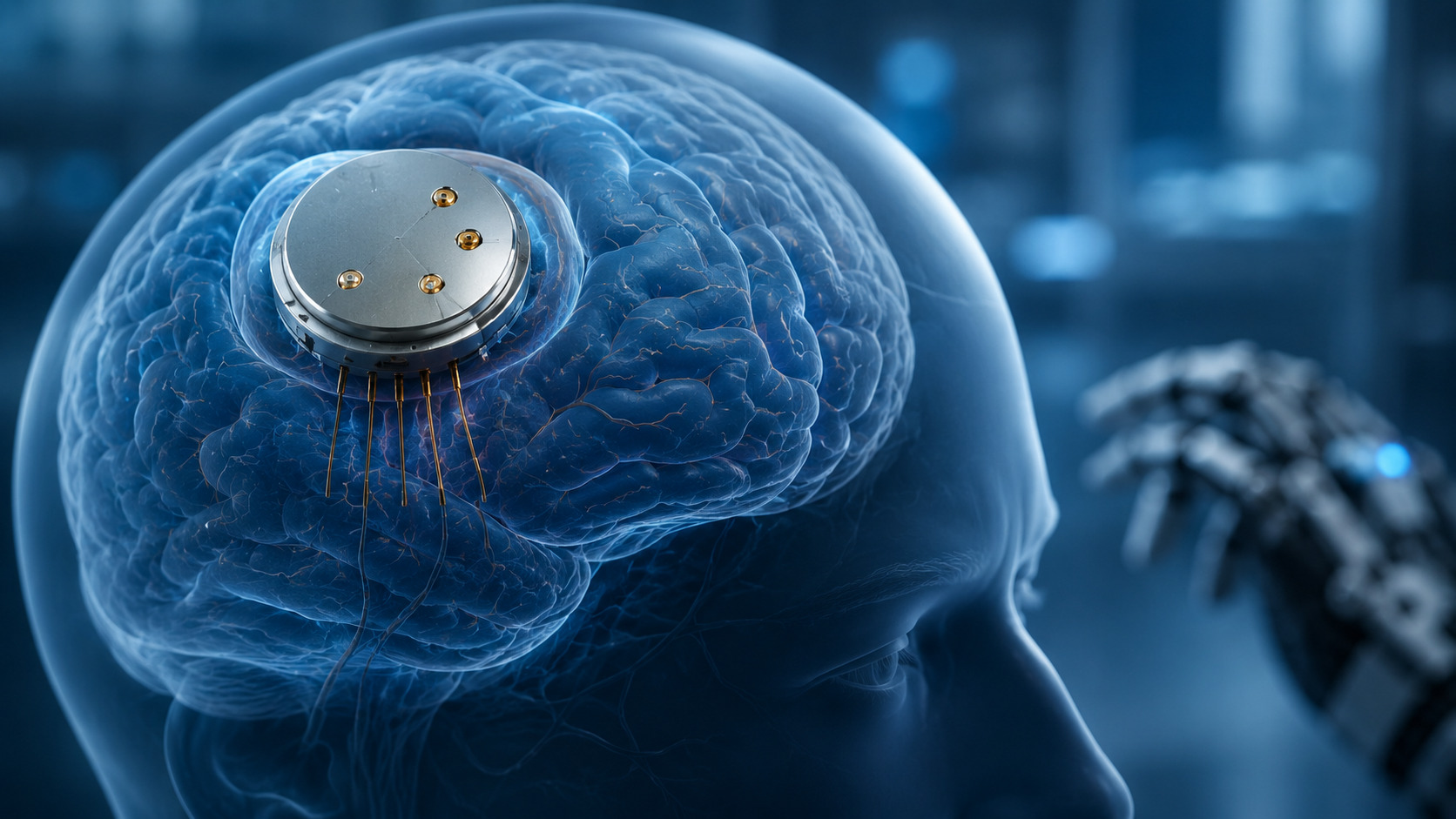
The global neurotechnology sector witnessed a calibrated momentum shift as China authorized the world’s first commercial brain chip, NEO, for public medical use. This landmark approval establishes a precision baseline for implantable systems, specifically targeting patients suffering from paralysis due to cervical spinal cord injuries. By integrating advanced neural decoding with assistive robotics, the NEO system enables individuals to regain control over their physical environment through thought-driven commands.
The Engineering Behind the Commercial Brain Chip
Neuracle Medical Technology, in collaboration with Tsinghua University, engineered the NEO device to bridge the gap between biological intent and mechanical action. Consequently, the system utilizes eight high-precision electrodes to capture neural signals directly from the motor control regions of the brain. These signals undergo rapid digital conversion before an external computer translates them into commands for an assistive robotic glove.
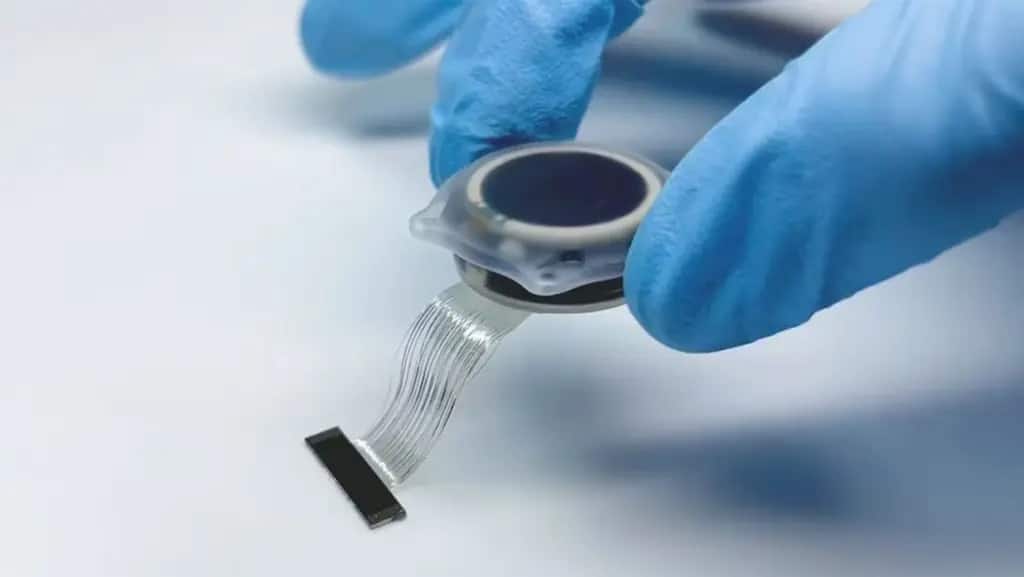
The structural design of NEO prioritizes patient safety through a semi-invasive approach. Unlike deeper implants, this coin-sized device rests on the dura mater, the brain’s protective outer layer. Specifically, this placement avoids piercing the cerebral cortex, which reduces the risk of long-term tissue damage or severe immune responses. This calibrated design choice distinguishes the commercial brain chip from more invasive alternatives currently in clinical phases.
Strategic Market Lead: NEO vs. Neuralink
China’s regulatory acceleration has placed NEO ahead of Elon Musk’s Neuralink in terms of commercial availability. While Neuralink’s N1 implant continues rigorous human trials, it has yet to receive general commercial approval from the US FDA. In contrast, the Chinese National Medical Products Administration finalized NEO’s approval following successful clinical testing where patients demonstrated significant improvements in hand function and object handling.

Furthermore, the NEO system targets stable adults who meet specific eligibility requirements, ensuring a controlled and ethical rollout. This development signals a broader push by Chinese regulators to dominate the Brain-Computer Interface (BCI) landscape, which they have identified as a strategic technological priority.

The Translation (Next Gen Clarity)
To understand the NEO device, one must view it as a high-speed translator for the nervous system. When a spinal injury severs the “wires” between the brain and the hands, the brain still sends the signals, but they have nowhere to go. This commercial brain chip acts as a bypass. It captures those “phantom” movement signals at the source and reroutes them to a computer. Essentially, it replaces damaged biological nerves with digital circuits and external robotics, restoring the circuit of human intent.
The Socio-Economic Impact
For the average Pakistani citizen, particularly those within the 1.1 million-plus population living with some form of physical disability, this technology represents a catalyst for independence. From a socio-economic perspective, regaining hand function means transitioning from a state of total dependency to one of partial or full autonomy.
- Reduced Caregiver Burden: Families can redirect time and resources previously spent on 24/7 physical assistance.
- Productivity Gains: Students and professionals with paralysis can re-enter the digital workforce using BCI-controlled devices.
- Healthcare Efficiency: Long-term rehabilitation costs may decrease as patients gain the ability to perform basic self-care tasks.
The Forward Path (Opinion)
This development is a definitive Momentum Shift. By moving the commercial brain chip out of the laboratory and into the marketplace, China has bypassed the “innovation valley of death” that often stalls high-tech medical devices. While valid concerns regarding data privacy and neural security remain, the successful commercialization of NEO proves that the infrastructure for the next stage of human evolution—human-machine integration—is no longer theoretical; it is operational.








