

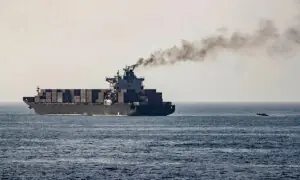
Pakistan has successfully facilitated the high-stakes transfer of 22 Iranian ship crew members from United States custody, marking a calibrated diplomatic breakthrough in regional maritime security. The crew members, formerly of the seized container vessel MV Touska, arrived in Pakistan via an overnight flight and now await formal handover to Iranian authorities. Consequently, this operation serves as a critical confidence-building measure between Washington and Tehran, with Islamabad acting as the structural bridge for mediation.
Pakistan’s Strategic Role in Repatriating Iranian Ship Crew
The Foreign Office confirmed that the repatriation process resulted from coordinated efforts between the US and Iran. Furthermore, the MV Touska will return to Pakistani territorial waters to undergo necessary technical repairs before its final delivery to the original owners. US Central Command corroborated the transfer, verifying that American forces completed the logistics for the 22 individuals. Previously, authorities sent six other individuals—identified as family members—to another regional state last week.

Diplomatic De-escalation in the Gulf of Oman
The MV Touska’s seizure occurred in April near the Strait of Hormuz after US forces alleged the vessel ignored multiple navigational warnings. This incident initially escalated tensions within the Gulf of Oman. However, Pakistan’s current involvement represents a baseline for de-escalation. Deputy Prime Minister Ishaq Dar recently engaged in dialogue with Iranian Foreign Minister Seyed Abbas Araghchi to ensure long-term regional stability through precision diplomacy.

The Translation (Clear Context)
In high-stakes maritime law, the “seizure” of a vessel often leads to prolonged legal and military standoffs. By acting as a third-party facilitator, Pakistan is neutralizing a potential flashpoint. Instead of a direct US-Iran exchange, which remains politically complex, the use of Pakistan’s “sovereign buffer” allows both nations to resolve the humanitarian aspect of the seizure without compromising their broader strategic positions.
The Socio-Economic Impact
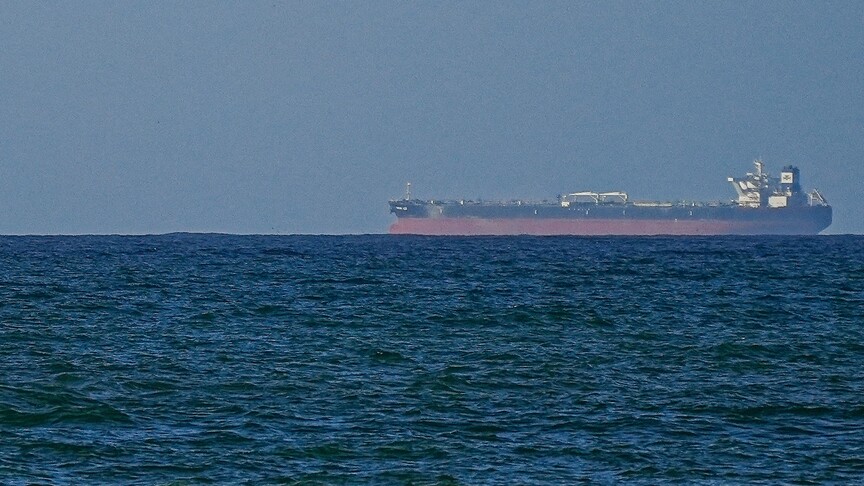
For the average Pakistani citizen, regional stability is directly linked to energy costs and trade security. Any conflict near the Strait of Hormuz—where a significant portion of the world’s oil passes—triggers global price spikes that hit Pakistani households immediately. By facilitating this transfer, Pakistan reinforces its image as a reliable maritime hub, potentially attracting future logistics and repair contracts for its domestic ports.
The “Forward Path” (Opinion)
This development represents a Stabilization Move. While it does not resolve the underlying systemic friction between the US and Iran, it prevents a humanitarian crisis from becoming a military catalyst. Pakistan’s ability to coordinate with both US Central Command and the Iranian Foreign Ministry demonstrates a sophisticated level of “System Efficiency” in our foreign policy. Moving forward, maintaining this neutrality is essential for Pakistan to remain a key architect of regional peace.









