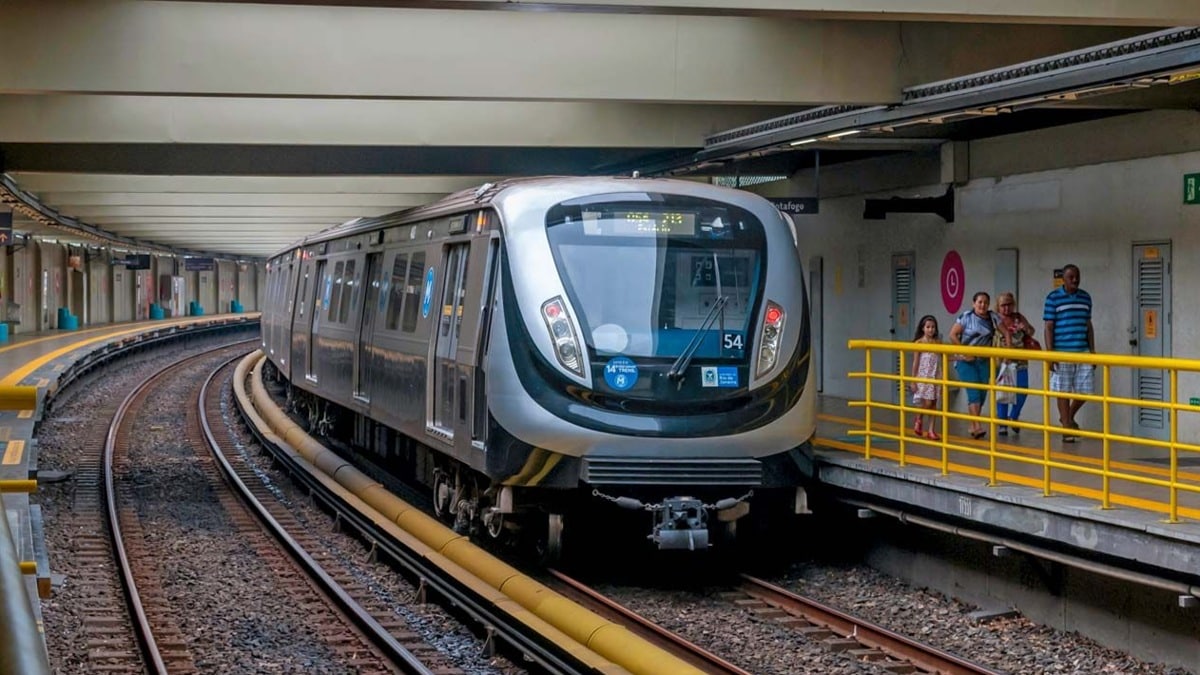
The Pakistan Academy of Engineering (PAE) has calibrated a structural vision for an underground rail Karachi network to recalibrate the city’s collapsing transportation baseline. This proposal serves as a precision catalyst for long-term urban efficiency, moving beyond the surface-level limitations of existing transit. Consequently, the project aims to solve the systemic congestion that currently throttles the economic heart of Pakistan.
Structural Calibration: The PAE Symposium Vision
During the 40th Symposium, titled Importance of Underground Mobility in a Megacity, global engineering experts analyzed the strategic viability of subterranean transit. Scholars from the United States, China, and Pakistan evaluated high-performance systems in Singapore, New York, and Delhi to establish a baseline for Karachi. Furthermore, the committee concluded that an underground rail Karachi system is no longer a luxury but a structural necessity for a megacity of this scale.

Strategic Corridors and Integrated Mobility
The PAE President, Prof. Dr. Brig. (retd.) Nasim Akhtar Khan, emphasized that Karachi’s demographic trajectory requires immediate infrastructure planning. The academy proposed two primary high-density corridors to serve as the network’s backbone:
- The Core Link: A strategic route connecting Numaish Chowrangi to Merewether Tower.
- The Commercial Axis: An underground corridor stretching from FTC on Sharea Faisal to I.I. Chundrigar Road and Tower.
This network will not operate in isolation. Instead, it will complement the existing Bus Rapid Transit (BRT) lines, creating a unified, multi-modal transport ecosystem. This integration will significantly increase passenger throughput while reducing the carbon footprint of daily commutes.

The Translation: Contextualizing Subterranean Transit
While surface-level transit like the BRT provides immediate relief, it remains vulnerable to Karachi’s existing traffic density and road narrowness. The “Underground Mobility” logic suggests that by moving transit to a different vertical plane, we decouple public transport from street-level friction. This engineering shift allows for higher frequency, greater speed, and zero interference from traditional vehicular traffic, ensuring a predictable baseline for the city’s movement.
The Socio-Economic Impact: Empowering the Citizen
The implementation of an underground rail Karachi network will fundamentally alter the daily life of the average citizen. Professionals working in the I.I. Chundrigar commercial district will see a drastic reduction in commute times, directly increasing economic productivity. For students and low-income households, this system offers a safer, climate-controlled, and reliable alternative to the aging fleet of private buses. Specifically, the project reduces urban pollution and lowers the cost of mobility, providing a significant boost to the household disposable income of millions.

The Forward Path: A Momentum Shift
This proposal represents a definitive Momentum Shift for Pakistan’s infrastructure. While the capital intensity of underground rail is high, the cost of inaction—measured in fuel waste, lost work hours, and environmental decay—is far higher. If the state moves from the proposal phase to strategic execution, Karachi could finally transition from a struggling megacity to a modern, high-efficiency global hub. We must prioritize this structural upgrade to secure our digital and economic frontier.