
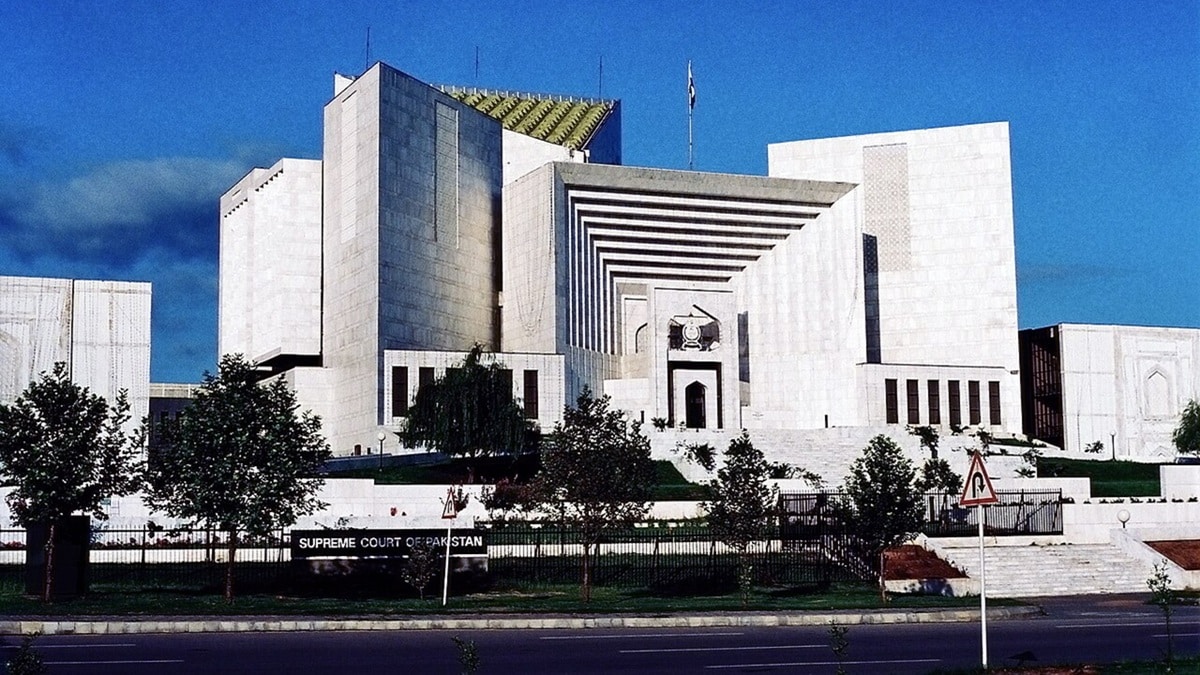
The Supreme Court of Pakistan recently issued a calibrated Supreme Court verdict regarding a sensitive minor rape case originating from Sheikhupura. Justice Salahuddin Panhwar, delivering the written judgment, converted the initial death sentence of the convict into life imprisonment. While the court modified the primary sentence, it maintained all other penalties, including a fine of Rs. 300,000 and additional prison terms. This judicial intervention underscores a strategic focus on balancing legal precision with institutional accountability for child protection.
Structural Directives for National Safety
Beyond the individual sentencing, the Supreme Court verdict established a new baseline for student security across Pakistan. The court observed that the state maintains a fundamental responsibility to protect female students within educational institutions and during their daily commutes. Consequently, the judiciary directed all provincial Inspectors General of Police and the Islamabad IG to intensify patrolling around schools. These measures aim to reinforce security arrangements and provide a deterrent against potential predators in academic environments.
Evidence and Investigative Precision
The court addressed critical technical aspects of the prosecution’s case to ensure system efficiency. Specifically, the ruling clarified that the absence of semen in forensic reports does not inherently weaken a sexual assault case. Furthermore, the court ruled that a three-day delay in registering the First Information Report (FIR) does not grant the accused the benefit of doubt. This decision prioritizes the victim’s reality over procedural technicalities, especially when institutional cover-ups are detected.
- Convict Profile: A school sweeper in a Sheikhupura housing colony.
- Forensic Clarity: Medical evidence confirmed injuries consistent with assault.
- Institutional Accountability: The court rebuked the school administration for attempting to conceal the incident.
The Situation Room Analysis
The Translation (Clear Context)
In this Supreme Court verdict, the judiciary applied a calibrated approach to sentencing. While the death penalty was commuted to life imprisonment, the court maintained the rigorous financial and compensatory penalties. This transition reflects a move toward sustainable legal precedents where life imprisonment ensures the convict remains removed from society. The court simultaneously identified that the school administration’s attempt to suppress the incident by treating the victim on-site was a structural failure that must not impede justice.
The Socio-Economic Impact
This development directly affects the daily lives of Pakistani families and students. By mandating increased police patrolling and rapid action on harassment complaints, the court is strengthening the safety perimeter for the youth. For households in both urban and rural Pakistan, this represents an shift toward a more responsive security apparatus. It sends a clear signal that educational institutions are not “safe havens” for criminals, and institutional negligence will face judicial scrutiny.
The Forward Path (Opinion)
We categorize this development as a Momentum Shift. The Supreme Court’s recommendation for federal and provincial governments to adopt modern medico-legal systems, modeled after the Sindh Medical Legal Act, is a precision-driven catalyst for reform. Establishing standardized investigation protocols will minimize the reliance on erratic evidence collection. This structural evolution is essential for building a resilient legal framework that protects the most vulnerable citizens of our nation.








