
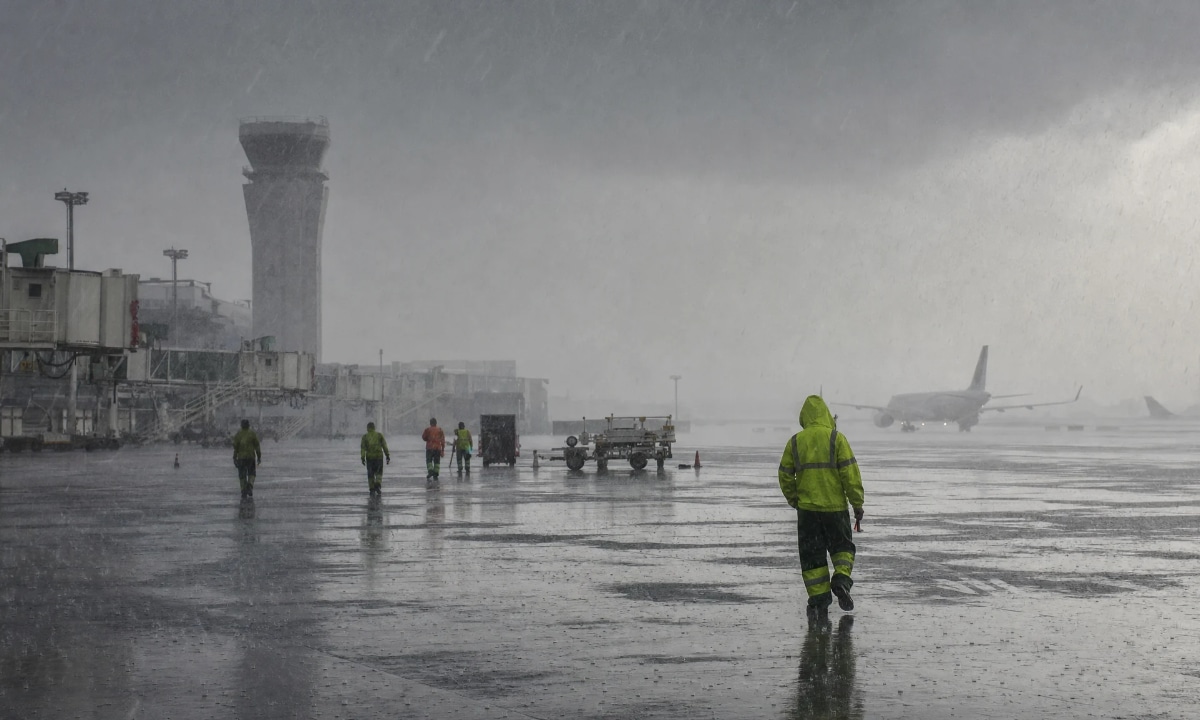
Severe atmospheric instability recalibrated Lahore flight operations on Sunday as Air Traffic Control (ATC) prioritized structural safety over schedule adherence. Heavy rain and high winds surrounding Allama Iqbal International Airport (AIIAP) created hazardous landing conditions. Consequently, multiple aircraft remained airborne to avoid unsafe touchdowns while officials monitored precision metrics.
Strategic Navigation and Precision Safety Protocols
Aviation sources confirm that ATC denied landing permissions to several domestic and international flights. This decision stemmed from a calibrated assessment of poor visibility and excessive wind speeds that exceeded safe operational thresholds. Specifically, Flight PF 145 from Karachi entered a strategic holding pattern, circling the city until the environment stabilized.
International routes faced similar logistical challenges. For instance, Flight OD 131 from Kuala Lumpur and AirAsia Flight PF 787 from Dubai received instructions to maintain altitude. Strategically, these holding patterns prevent runway excursions and ensure that every arrival occurs under optimal friction and visibility parameters.
Impact on Lahore Flight Operations Systems
Airport authorities emphasized that the temporary suspension was a mandatory safety precaution. By securing the runway during the peak of the storm, they mitigated the risk of hydraulic failure or navigation errors. Furthermore, the ground staff mobilized to manage the inevitable backlog once the rain subsided.
While many flights eventually touched down safely, the disruption caused a ripple effect throughout the regional network. Consequently, passengers experienced significant delays as the system worked to clear the holding stack. The airport continues to utilize real-time meteorological data to prevent further systemic bottlenecks.
The Situation Room Analysis
The Translation (Clear Context)
A “holding pattern” is not a sign of failure but a calibrated safety buffer. When wind speeds cross a specific “crosswind component” limit, landing becomes a geometric risk. ATC officials use these pauses to ensure that aircraft have a clear, dry path for braking, which is essential for heavy jets arriving from international hubs.
The Socio-Economic Impact
Disruptions in Lahore flight operations directly impact Pakistan’s commercial velocity. Delayed international arrivals stall supply chains and disrupt executive schedules in the Punjab region. For the average citizen, these events necessitate a more robust digital infrastructure for real-time flight tracking to minimize time lost at terminals.
The “Forward Path” (Opinion)
This event represents a Stabilization Move. While the delays are inconvenient, the adherence to strict safety baselines demonstrates a mature aviation culture. To progress toward a “Momentum Shift,” AIIAP requires further investment in Category III Instrument Landing Systems (ILS) to minimize the impact of visibility-related disruptions in the future.








