
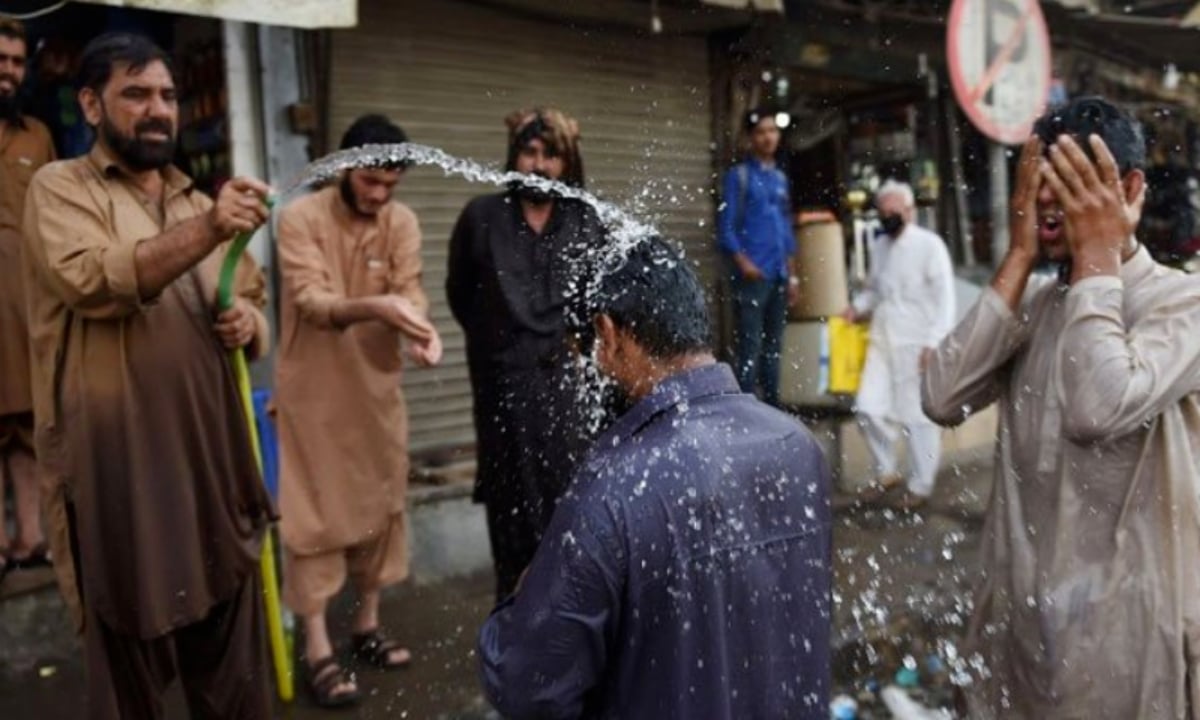
Six major cities in Sindh have officially breached the 50°C threshold as the Pakistan heatwave crisis intensifies across the southern region. Meteorological data confirms that Shaheed Benazirabad and Dadu recorded a calibrated maximum of 51°C on Thursday. Consequently, this extreme thermal event has placed the provincial infrastructure under significant stress while affecting millions of residents. Authorities have issued high-alert warnings as the structural high-pressure system continues to dominate the atmospheric landscape.
Analyzing the Structural Heat Intensity
The intensity of this heatwave has broken local records across several districts. Mohenjo-Daro reached a staggering 50.5°C, while Larkana, Jacobabad, and Sakrand all hit the 50°C baseline. Furthermore, the coastal hub of Karachi recorded 40°C, but high humidity levels of 79 percent significantly increased the perceived temperature. These calibrated readings indicate a severe departure from seasonal norms, requiring immediate strategic intervention for public safety.
- 51°C: Shaheed Benazirabad and Dadu
- 50.5°C: Mohenjo-Daro
- 50°C: Larkana, Jacobabad, and Sakrand
- 48.5°C: Rohri
The Regional Impact of the Pakistan Heatwave Crisis
The Pakistan heatwave crisis is not limited to temperature alone; the humidity in urban centers like Karachi creates a lethal combination for the vulnerable. Meteorological officials note that the current high-pressure system acts as a thermal lid, preventing vertical air movement. Although the system is expected to weaken by June 13, the short-term impact on public health remain a primary concern for the provincial government.
The Translation (Clear Context)
In technical terms, a high-pressure system creates what is known as a “heat dome.” This structural phenomenon traps hot air near the surface and prevents clouds from forming to provide shade. Essentially, the atmosphere is acting as a precision-sealed environment where heat accumulates without a cooling release. The “feels-like” temperature in Karachi is much higher because the 79 percent humidity prevents the human body from cooling itself through evaporation.
The Socio-Economic Impact
This thermal surge creates a massive strain on Pakistan’s energy grid as the baseline demand for cooling skyrockets. For the average citizen, this translates to increased risks of heatstroke and reduced productivity for the outdoor labor force. In rural Sindh, extreme temperatures threaten the precision of agricultural cycles. Consequently, families must navigate the rising costs of hydration and energy while managing the health of elderly members and children.
The Forward Path (Opinion)
This development represents a Momentum Shift in our regional climate trajectory. The frequency with which our cities now breach the 50°C mark indicates a structural change in environmental stability rather than a one-off event. While the immediate weakening of the high-pressure system offers temporary relief, Pakistan must move toward strategic urban cooling and long-term climate resilience to survive this new thermal reality.








