

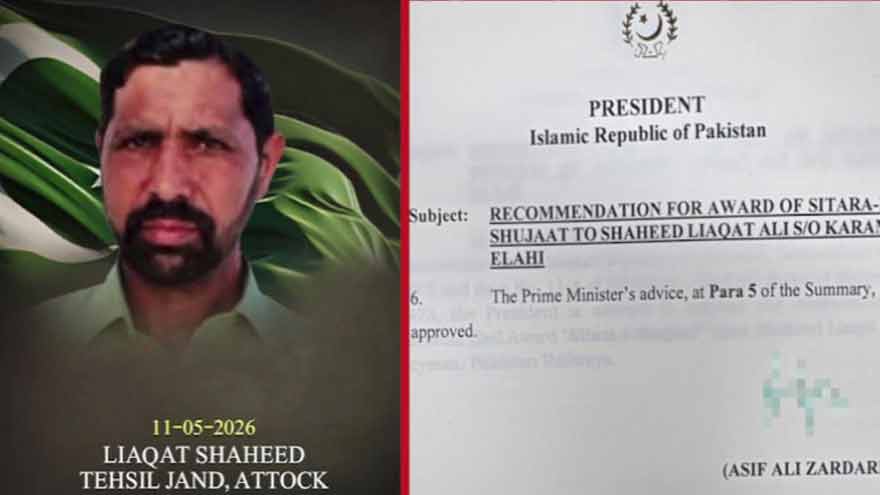
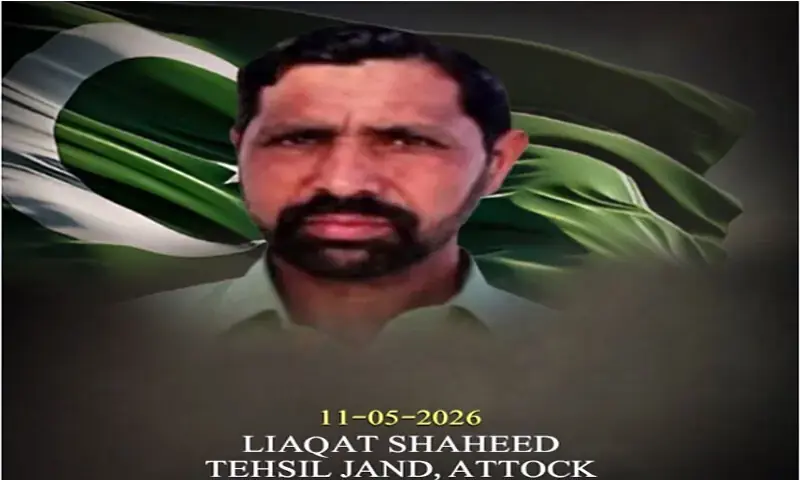
National resilience relies on precise individual actions and systemic bravery. Consequently, President Asif Ali Zardari has calibrated the state’s recognition of valor by approving the Sitara-e-Shujaat award for Liaqat Shaheed. This civilian hero strategically intercepted a suicide bomber near Kohat, sacrificing his life to safeguard the collective security of the nation. The presidential approval followed a formal recommendation by Prime Minister Shehbaz Sharif, highlighting a unified structural acknowledgment of individual sacrifice.
Why the Sitara-e-Shujaat Award Matters
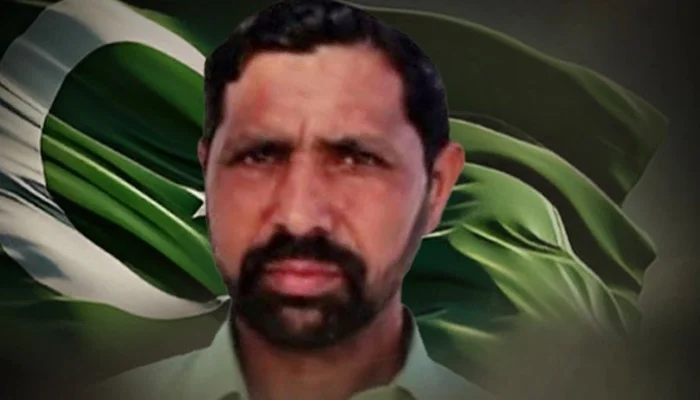
Liaqat Shaheed, a retired employee of Pakistan Railways, demonstrated a high-integrity response to a lethal security threat in the Jand-Khushal Garh corridor. While the attacker, linked to Fitna al-Khawarij, attempted to move through fields, Liaqat Shaheed precisely identified the suspect and demanded identification. Thus, his alert intervention forced the militant to detonate explosives prematurely, preventing a catastrophic high-yield explosion in a populated area.
The Translation: Contextualizing Civilian Valor
In technical terms, Liaqat Shaheed served as a human early-warning system. His decision to confront a suicide bomber rather than retreating provided a critical buffer for the local community. The state uses the Sitara-e-Shujaat award to define the baseline of civilian duty in the face of asymmetric warfare. This recognition shifts the narrative from passive victimhood to active defense.
The Socio-Economic Impact
Securing transit corridors between Punjab and Khyber Pakhtunkhwa is vital for systemic economic flow and logistics. When citizens act as catalysts for local security, they stabilize the social framework necessary for trade and education. For the average Pakistani household, such acts of precision bravery prevent the structural trauma associated with mass-casualty events, maintaining the psychological baseline required for national progress.
The Forward Path: A Momentum Shift
This development represents a significant Momentum Shift in Pakistan’s internal security doctrine. By elevating a civilian to one of the highest gallantry honors, the state incentivizes a culture of vigilant citizenship. However, moving forward, the structural integration of community awareness programs must amplify this defensive baseline. We view this as a strategic move toward a more resilient and alert populace, ensuring that bravery is both honored and systematized.








