

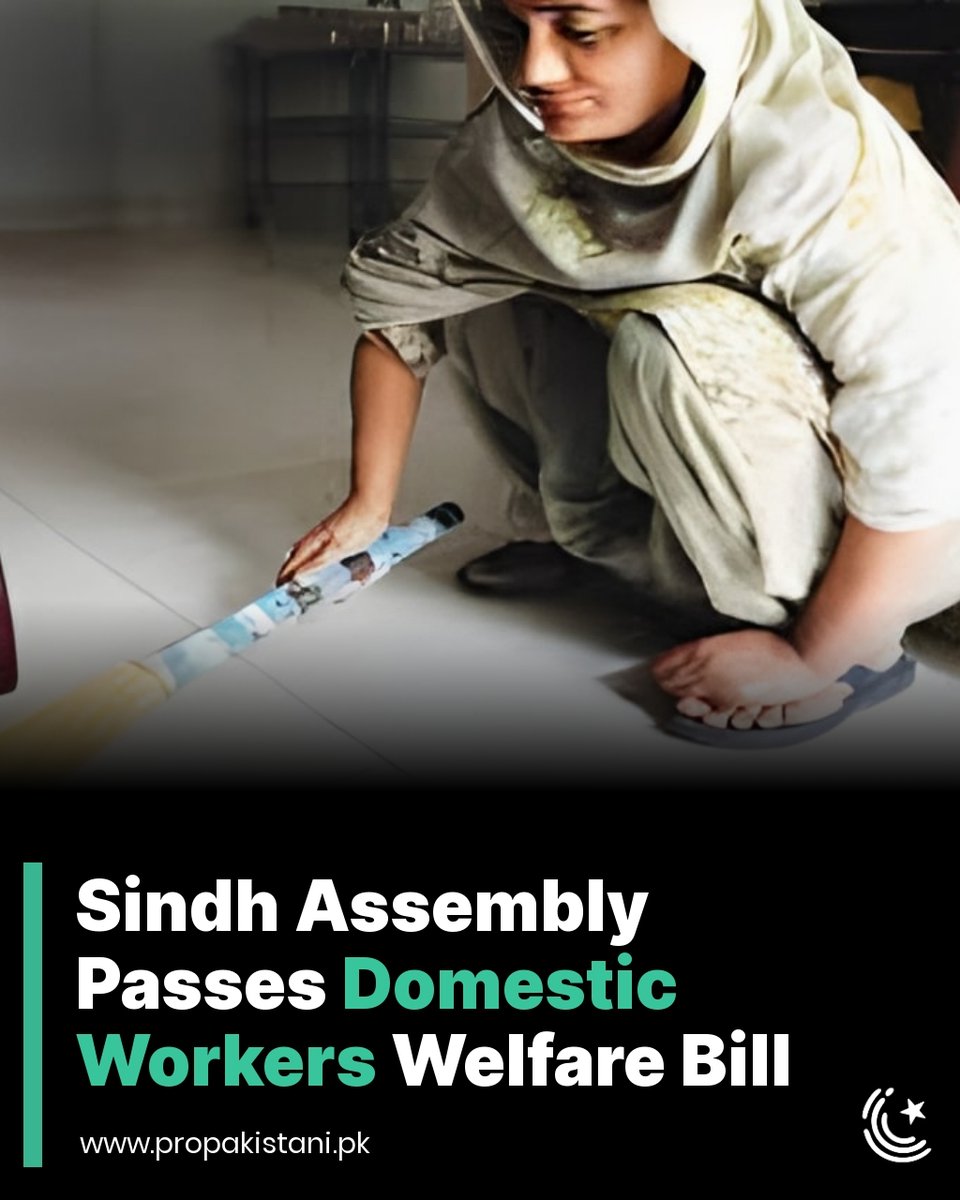
The Sindh Assembly has achieved a structural milestone by passing the Domestic Workers Welfare Bill 2025, establishing a calibrated baseline for labor rights in the informal sector. This legislation introduces precise legal protections and formal employment safeguards for household staff across the province. Consequently, the provincial government has moved to standardize working conditions that were previously unregulated and precarious.
Understanding the Domestic Workers Welfare Bill
The newly passed legislation defines a domestic worker as any individual employed to perform household tasks. It transitions the informal arrangement of domestic help into a regulated employment framework. Key structural components of the bill include:
- Strict Age Limits: Households cannot employ children under the age of 16 in any capacity.
- Calibrated Working Hours: Full-time workers are limited to eight hours daily and a six-day work week.
- Mandatory Documentation: Employers must issue formal employment letters to the relevant labor inspector.
- Leave Entitlements: Workers receive six weeks of paid maternity leave, 10 casual leave days, and eight paid sick days.
The “Situation Room” Analysis
The Translation: Technical Clarity
This bill functions as a catalyst for professionalizing the domestic workforce. By requiring a formal “employment letter,” the state creates a traceable labor record, effectively moving thousands from the shadows into the documented economy. Furthermore, the creation of a Dispute Resolution Committee (DRC), led by a grade-16 officer, provides a strategic mechanism for mediation that bypasses expensive traditional litigation.

The Socio-Economic Impact
For the average Pakistani household, this represents a shift toward higher system efficiency. Domestic workers—who are often the backbone of urban middle-class productivity—now gain social security and health protections. This change directly improves the quality of life for millions of low-income families in Sindh, reducing financial shocks through paid sick leave and regulated work cycles. It creates a more stable, motivated, and protected workforce.
The “Forward Path”: Expert Opinion
We classify this development as a significant Momentum Shift. While the legislation is robust on paper, the precision of its impact depends entirely on enforcement. The digital submission of employment letters is a strategic move toward modern governance. If implemented with technical accuracy, this bill will serve as a structural blueprint for other provinces to follow, finally aligning Pakistan’s informal sector with international labor standards.








