
Energy autonomy represents a critical baseline for sustainable national advancement. Consequently, the Sindh government’s strategic deployment of Free Solar Systems to 275,000 families marks a calibrated shift toward decentralized energy stability. This Rs. 18.206 billion initiative aims to alleviate the burden on the national grid while empowering underprivileged households across the province. By targeting low-income sectors, the state is effectively installing a long-term catalyst for economic resilience.
Scaling Decentralized Energy with Free Solar Systems
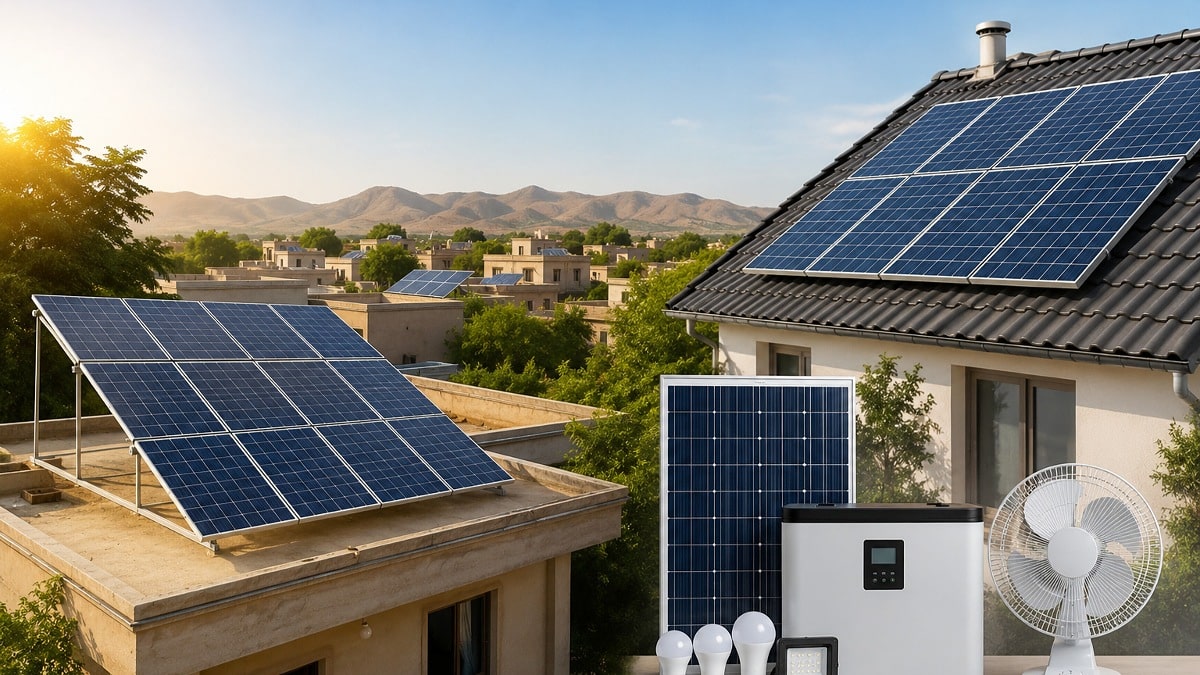
Chief Minister Murad Ali Shah recently chaired a review meeting to accelerate the installation of these renewable assets. The project specifically prioritizes 132,000 off-grid households in remote desert, mountainous, and riverine regions. Furthermore, the initiative includes 143,000 on-grid “protected” consumers who currently consume fewer than 100 electricity units monthly. Each precision-calibrated kit includes:
- 180-watt high-efficiency solar panel
- Advanced lithium-ion battery storage
- One DC fan and multiple LED lights
The Energy Department reported that technicians have already successfully installed 11,571 systems in Karachi, Ghotki, Umerkot, and Tharparkar. This early momentum suggests a disciplined trajectory toward the June 2027 completion deadline.
The Translation: Contextualizing the Infrastructure
In technical terms, this project transitions 275,000 residential units from passive consumers to active micro-producers. By providing lithium-based storage and 180W panels, the government is not merely giving “free gear”; it is building a localized energy buffer. This reduces the provincial demand on the central grid during peak hours. Consequently, the system efficiency improves for all users as the total load becomes more manageable and distributed.
The Socio-Economic Impact: Empowering the Grassroots
This development directly improves the daily life of Pakistani citizens by eliminating the “energy poverty trap.” For a BISP-registered family, zero-cost electricity means monthly savings can be redirected toward nutrition and education. In rural Sindh, reliable lighting extends the productive hours for students and small-scale home businesses. Ultimately, this structural upgrade provides a baseline of dignity and safety for households in remote areas previously neglected by traditional power grids.
The Forward Path: Next Gen Perspective
We categorize this initiative as a Momentum Shift. While many government projects focus on maintenance, this is a strategic move toward a renewable-first future. The inclusion of lithium battery technology—as opposed to older lead-acid variants—demonstrates a commitment to modern technical standards. To maximize this impact, the government must ensure a rigorous maintenance framework exists beyond the 2027 installation phase. This roadmap serves as a blueprint for other provinces to achieve systemic energy equity.








