
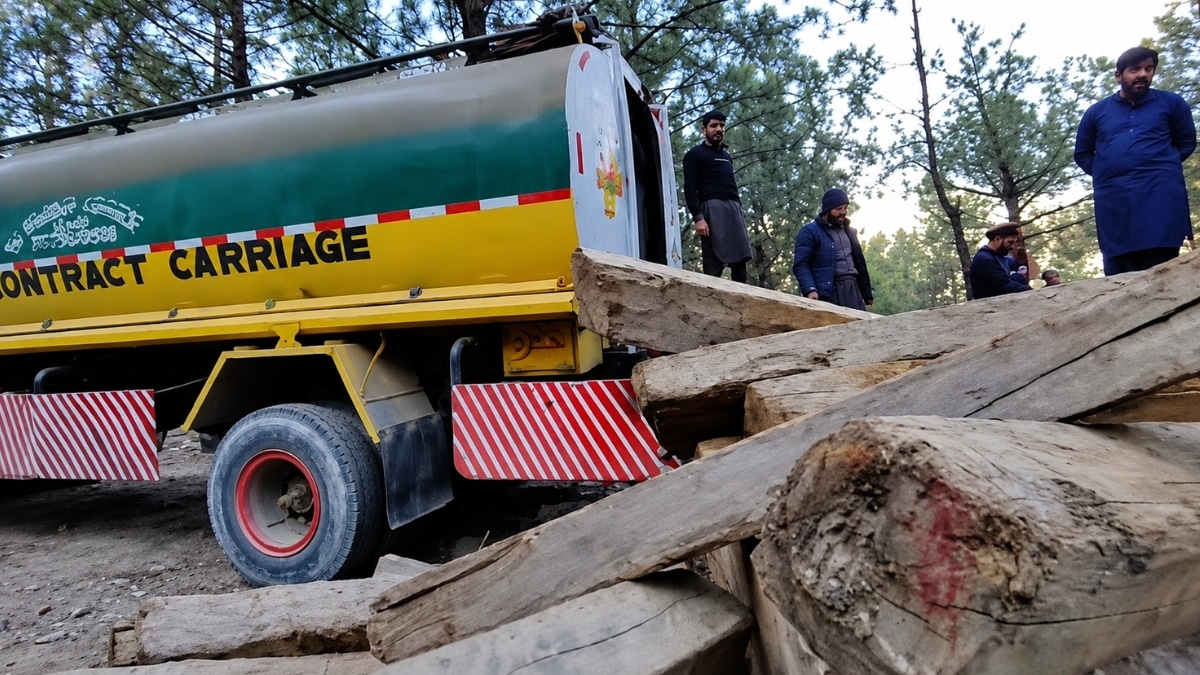
The Senate Sub-Committee on Kashmir Affairs and Gilgit-Baltistan has officially suspended all timber transport licenses in the region to enforce a rigorous physical verification of logging operations. Chaired by Senator Faisal Saleem Rehman, the panel aims to calibrate the Diamer Forest Working Plan 2021-2050 against structural conservation needs. This intervention ensures that harvesting protocols align with environmental stability before any further timber movement occurs across the Gilgit-Baltistan frontier.
The Strategic Suspension of Timber Transport Licenses
Authorities have directed the forest department to maintain total transparency throughout the verification process. Consequently, the panel decided that timber transport licenses will remain on hold until inspectors verify harvesting targets and establish adequate oversight mechanisms. This strategic pause aims to restore public confidence in regional forest management. The Diamer Forest Working Plan currently covers 122,863 acres, segmented into 343 distinct compartments for scientific monitoring.
Precision Monitoring and GIS Integration
Multidisciplinary validation teams are now deploying GIS mapping and GPS tracking to eliminate human bias during forest assessments. Officials confirmed that harvesting remains strictly limited to dead, dying, or diseased trees. Currently, the department has approved 72 compartments for operation, while declaring 53 unsuitable. In contrast to previous years, felling orders have only been issued for six compartments, demonstrating a calibrated approach to resource extraction.
The Situation Room: Strategic Analysis
The Translation (Clear Context)
The Senate panel is hitting the pause button on the commercial movement of wood. While “licenses” sounds like simple paperwork, these permits are the primary mechanism for regulating the removal of natural resources from Gilgit-Baltistan. By halting timber transport licenses, the committee is demanding a precision audit. They are moving away from the revenue-first models of the 1990s and toward a multidisciplinary validation system that verifies every tree compartment before a single log moves.
The Socio-Economic Impact
For the citizens of Gilgit-Baltistan, this shift represents a move toward safeguarding the “water towers” of Pakistan. Unregulated logging leads to soil erosion and flash floods, which directly threaten local infrastructure and agriculture. By prioritizing scientific management, the government is protecting the long-term economic baseline of the region. Furthermore, the scrutiny of 1,200 employee records aims to eliminate institutional corruption, ensuring local communities benefit from sustainable growth.
The Forward Path (Opinion)
This directive constitutes a significant Momentum Shift. For nearly three decades, forest policy has been reactive and revenue-driven. The subcommittee’s insistence on physical verification and GIS-backed data indicates a transition to precision-based governance. However, the success of this move depends on the strict implementation of oversight. Without a calibrated approach, the vacuum created by halting legal timber transport licenses could inadvertently fuel illegal movement if enforcement remains weak.
Accountability and Structural Reform
The committee also expressed concern over inconsistent policies that prioritized revenue generation over conservation since the 1990s. To address this, they have demanded complete service records for all 1,200 forest department employees. Additionally, the panel is scrutinizing official records dating back to 2003 to ensure full accountability. This comprehensive review seeks to curb illegal logging and establish a sustainable framework for the future.
- Suspension: All timber transit licenses are halted pending physical inspection.
- Technology: GIS mapping and GPS tracking are mandatory for compartment validation.
- Audit: Full service records of 1,200 employees are under review.
- Conservation: Harvesting is restricted to dead or diseased trees only.








