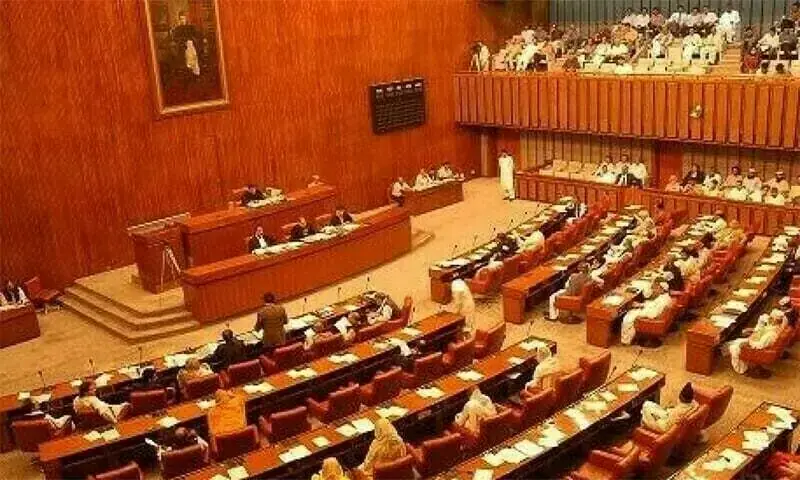
National advancement requires absolute precision in infrastructure governance. Consequently, the Senate Standing Committee on Economic Affairs recently halted the tendering for the Chakdara-Chitral Road (N-45) project. The committee directed both the Economic Affairs Division (EAD) and the National Highway Authority (NHA) to suspend all proceedings immediately. This intervention ensures that project documentation meets the necessary baseline for structural and financial accountability before moving forward.
The Vital Need for Transparency in the Chakdara-Chitral Road Project
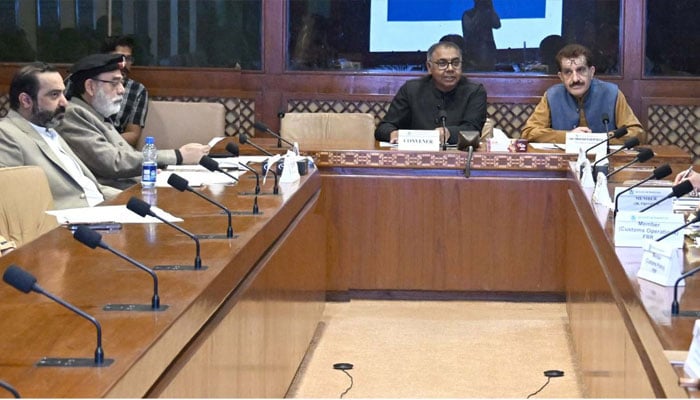
Committee members expressed significant reservations regarding the data presented by officials during the latest briefing. They described the current information as incomplete and strategically irrelevant to the project’s complex scope. Therefore, the Senate panel mandated the immediate submission and review of several critical assets:
- Comprehensive feasibility reports for the Kalkatak-Chitral section.
- Detailed and accurate project maps.
- Full transparency on urban sector initiatives related to the corridor.
Structural Gaps in Governance and Oversight
The committee highlighted a critical leadership vacancy in the NHA General Manager (P&CA) position. This vacancy, resulting from a recent officer transfer, has hindered project oversight and administrative continuity. To mitigate future irregularities, the committee chairman recommended that the EAD establish a dedicated monitoring desk. This strategic move aims to calibrate the tendering process with higher transparency standards and reduce the risk of systematic errors.
The Translation: Contextualizing the Halt
In technical terms, the Senate is enforcing a “compliance checkpoint.” Instead of allowing an infrastructure project to proceed with vague metrics, they are demanding a data-driven baseline. This move prevents “scope creep”—where projects grow in cost without growing in value—and minimizes financial leakage. By halting the Chakdara-Chitral Road tender, the committee is prioritizing long-term structural integrity over short-term political speed.
Socio-Economic Impact: What This Means for Citizens
For the residents of Chitral and Chakdara, this delay serves as a catalyst for better quality. While a pause may seem like a setback, it prevents the construction of sub-standard roads that require frequent, costly repairs. Professional transporters and local families will eventually benefit from a road built on accurate maps and verified feasibility reports, ensuring safer, more reliable connectivity across the region.
The Forward Path: Innovator’s Perspective
This development constitutes a Momentum Shift. By demanding transparency and institutional oversight, Pakistan is moving away from ad-hoc infrastructure development toward a disciplined, systemic approach. Establishing an EAD monitoring desk is a calibrated step toward modernizing how our nation manages large-scale engineering assets. We are building a system where precision is the standard, not the exception.