

Princeton researchers have successfully calibrated a living computing device that integrates 70,000 biological neurons within a sophisticated 3D electronic mesh. Consequently, this breakthrough represents a structural pivot in how we approach both artificial intelligence and neuroscience. By merging living tissue with microscopic electronics, the team has established a baseline for a new era of energy-efficient computation.
The Architecture of a Living Network
Traditional biocomputing often relied on flat, 2D cell cultures that lacked the complexity of natural biology. In contrast, the Princeton team engineered a 3D mesh of microscopic metal wires and flexible electrodes. This structural scaffold allows tens of thousands of neurons to grow into a functional network. Furthermore, a precision-thin epoxy coating ensures the mesh remains flexible enough to interact with soft neural tissue without causing damage.

The integrated system uses approximately 70,000 biological neurons. These cells communicate through the 3D mesh, which functions as both a sensor and a controller. Consequently, researchers can monitor electrical pulses and stimulate specific neurons with unprecedented precision. This allows the system to learn and recognize complex electrical patterns over several months.
Overcoming the AI Energy Bottleneck
Current artificial intelligence models require massive amounts of electricity to function. However, the human brain operates on a tiny fraction of that power. Professor Tian Ming Fu notes that our brains consume roughly one millionth of the energy used by modern AI systems. Therefore, this living computing device acts as a catalyst for developing “green” computing solutions that mimic biological efficiency.
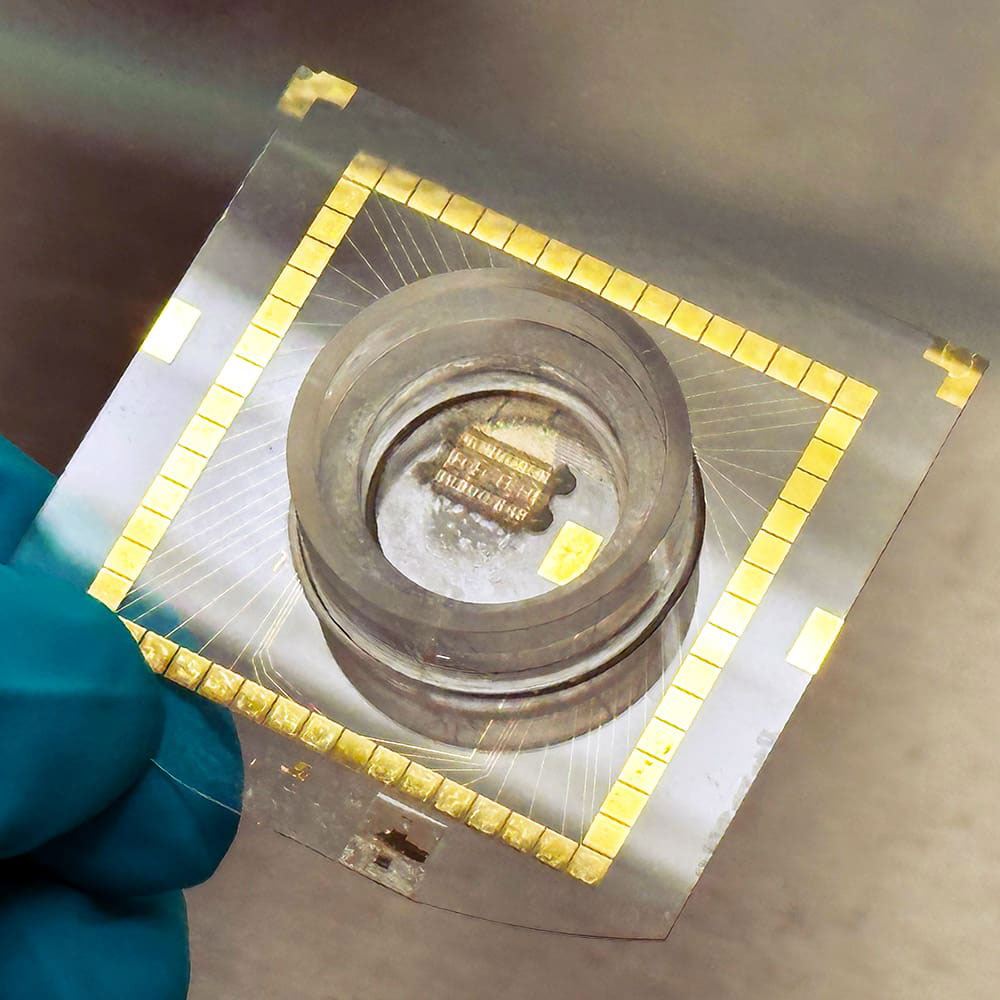
During testing, the living network successfully distinguished between different spatial and temporal patterns. The researchers trained algorithms to identify these pulses, proving that biological cells can perform logical computational tasks. This precision-driven approach opens doors for studying how diseases like Alzheimer’s disrupt neural communication at a microscopic level.
The Situation Room Analysis
The Translation: Bio-Silicon Integration
This development is not just about growing cells in a lab; it is about “architectural synergy.” Researchers have moved from observing the brain to building with it. By placing electrodes inside the neural network rather than outside, they have created a two-way communication bridge. This allows for real-time data processing using biological logic instead of just silicon-based binary code.
Socio-Economic Impact: Precision Medicine for Pakistan
For the average Pakistani citizen, this technology signals a future of localized, low-cost medical diagnostics. As these systems scale, they could lead to “lab-on-a-chip” devices that test how a specific patient’s brain cells react to medication. This reduces the baseline cost of neurological healthcare and provides students and professionals in Pakistan’s growing biotech sector with a new frontier for high-impact research.
The Forward Path: A Momentum Shift
This development represents a significant Momentum Shift. We are moving beyond the limits of traditional hardware. While still in the experimental phase, the ability to control 70,000 neurons for pattern recognition suggests that biological computing is a viable alternative to energy-hungry data centers. The next strategic step involves scaling these networks to handle more complex, real-world datasets.








