
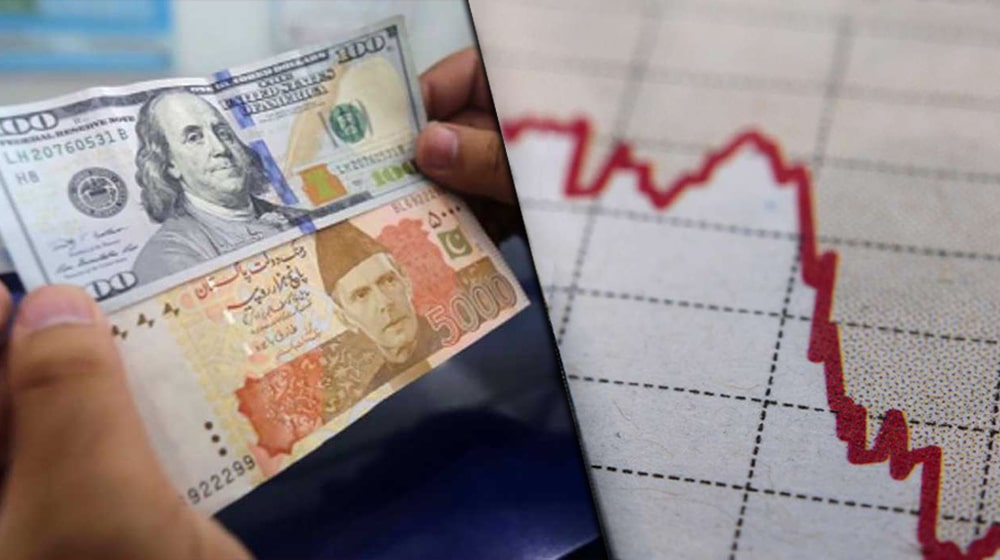
The structural resilience of the national currency reached a significant milestone as the Pakistani Rupee win streak extended to its 149th consecutive day against the US Dollar. On Tuesday, the PKR closed at 278.81, marking a precision gain of one paisa. This sustained momentum highlights a strategic stabilization in the foreign exchange market, providing a calibrated baseline for upcoming fiscal quarters.
Currency Performance and Market Calibration
Beyond the US Dollar, the PKR demonstrated structural strength against several major international currencies. Notably, the local currency appreciated by Rs. 1.01 against the British Pound (GBP) and Rs. 1.08 against the Euro (EUR). Furthermore, the Rupee maintained a stable position against the UAE Dirham (AED) and the Saudi Riyal (SAR), ensuring consistency for regional trade and remittances.
Comparative Exchange Rates (April 2026)
- USD: 278.81 (Gained 0.01)
- EUR: 326.30 (Gained 1.08)
- GBP: 376.63 (Gained 1.01)
- CAD: 204.41 (Gained 0.05)
- AUD: 200.10 (Lost 0.03)
The Translation (Clear Context)
In technical terms, the “green” closure of the PKR indicates a persistent appreciation in value relative to the US Dollar. This 149-day Pakistani Rupee win streak is not merely a statistical anomaly; it represents a systematic rebalancing of supply and demand within the interbank market. When the Rupee “gains,” it means the cost of purchasing foreign currency decreases, which directly reduces the cost of imported commodities and debt servicing.
The Socio-Economic Impact
This currency stability acts as a catalyst for reduced inflationary pressure on the average Pakistani household. For students planning to study abroad or professionals managing international subscriptions, the gains against the Euro and Pound provide immediate financial relief. Strategically, a stronger Rupee helps stabilize the prices of fuel and electricity, which are heavily dependent on import costs, thereby protecting the purchasing power of the middle class.
The Forward Path (Opinion)
We categorize this development as a Momentum Shift. While a one-paisa gain appears marginal, the cumulative effect of a five-month streak indicates a structural transition toward long-term stabilization. The ability of the PKR to recover against high-value currencies like the GBP and EUR, while maintaining a baseline against the USD, suggests that Pakistan’s monetary policy is reaching a state of precision efficiency. To maintain this progress, the focus must remain on increasing export complexity and securing consistent foreign direct investment.








