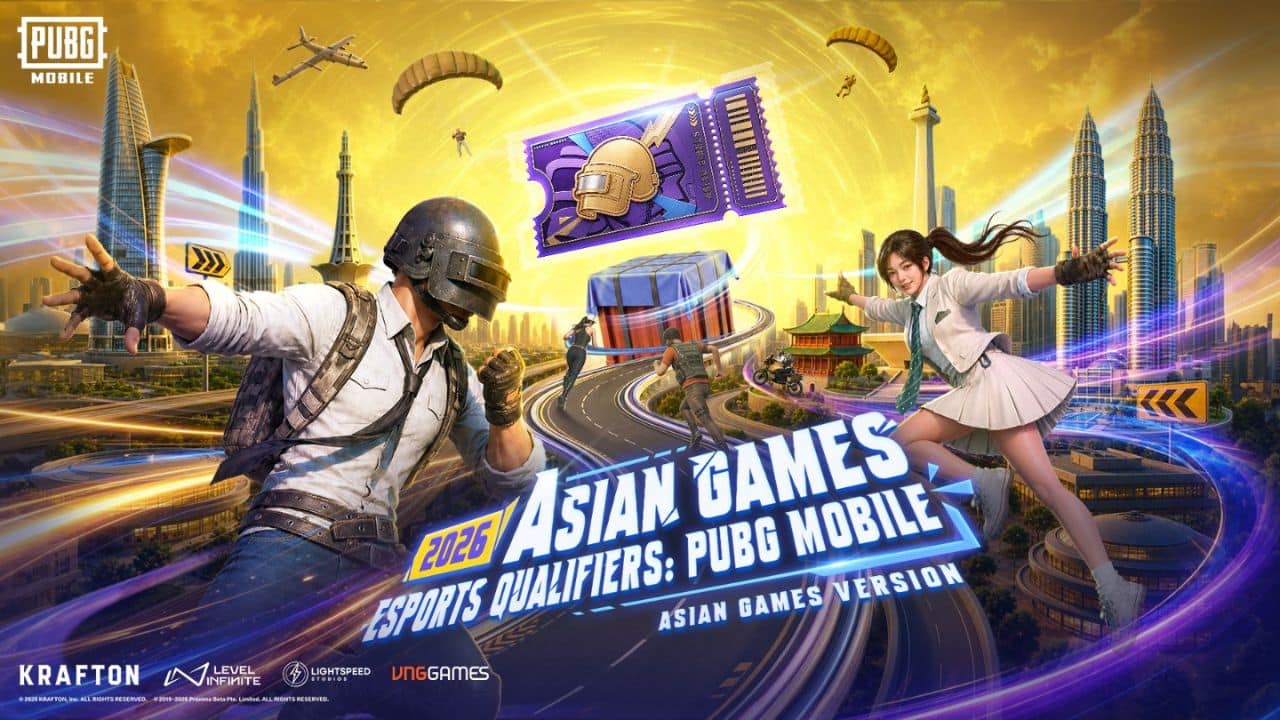
The architectural shift in regional competition reaches a new baseline as 23 National Olympic Committees (NOCs) prepare for the 2026 Asian Games Esports Qualifiers. This strategic event, featuring the PUBG MOBILE Asian Games Version, serves as a catalyst for professional gaming across Asia. Consequently, elite athletes from Pakistan and 22 other nations will converge in Ho Chi Minh, Vietnam, to secure their placement in the 20th Asian Games.
Strategic Framework of the Asian Games Esports Qualifiers
Beginning June 19, the tournament introduces a calibrated competitive structure designed to test precision and resilience. The 23 teams will navigate an initial Group Stage, where high-density gameplay determines the top six contenders from each group. These twelve teams then advance to the Qualifier Finals. Furthermore, the final map rotation is officially confirmed, utilizing Erangel for the first four matches and Miramar for the final two high-stakes rounds.

Precision execution is mandatory for the eight elite teams seeking advancement to Japan. These qualifiers join previous medalists from China, South Korea, and Chinese Taipei. Additionally, Japan secures the final slot as the host nation, ensuring a total of twelve teams showcase their talent at the 2026 Asian Games Esports main event.
The Translation: Next Gen Clarity
In technical terms, the “NOC” (National Olympic Committee) structure means that esports is now officially integrated into the same administrative framework as traditional athletics. Unlike standard battle royale matches, the “Asian Games Version” is a precision-calibrated build of PUBG Mobile. This version prioritizes objective-based performance and systemic skill over random elements. Consequently, this ensures that the competition remains a baseline for pure athletic merit rather than luck.

The Socio-Economic Impact
The participation of Pakistan in this global arena directly influences the domestic digital economy. For the average Pakistani household, this development validates esports as a legitimate professional career path for the youth. As local players like those from Magna Esports Club achieve international visibility, they act as a catalyst for increased investment in high-speed digital infrastructure. This shift empowers students and professionals to pursue roles in the wider software and creative industries, bridging the gap between urban and rural technological literacy.
The Forward Path: Momentum Shift
This development represents a significant Momentum Shift for Pakistan’s digital frontier. By aligning our national talent with the Asian Games Esports ecosystem, we are transitioning from passive consumers to active architects of the global digital sports economy. The presence of powerhouses like Pakistan, Indonesia, and Iraq in Group B ensures a fierce display of regional skill. We must continue to support these structural advancements to maintain our trajectory toward global STEM leadership.