
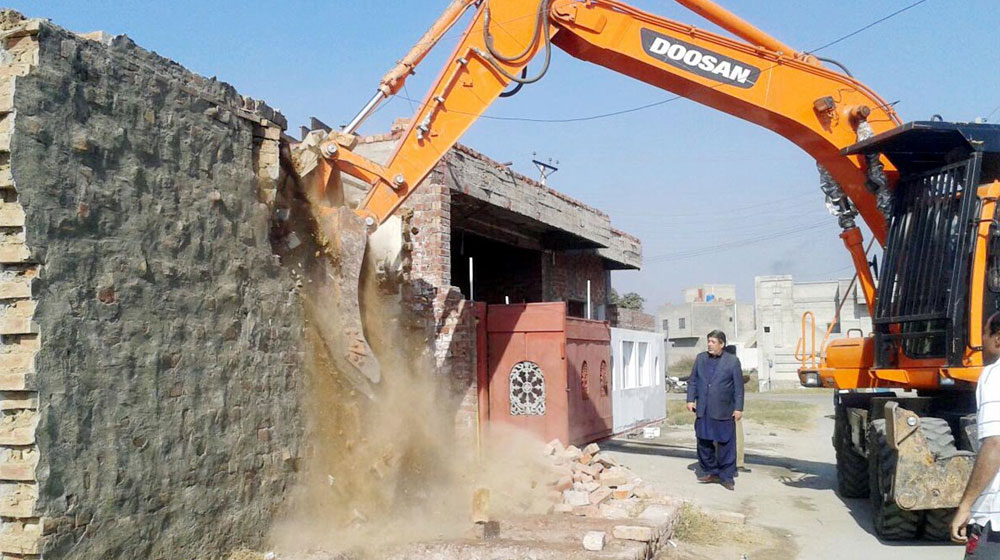
The Sindh Building Control Authority (SBCA) recently executed a calibrated land recovery operation in Karachi’s Orangi Town. This strategic move successfully reclaimed high-value property belonging to the Red Crescent Society after four decades of illegal encroachment. Consequently, this intervention restores the baseline for public service infrastructure in one of the city’s most densely populated sectors.
The Mechanics of the Recovery Operation
During the tactical deployment in Orangi Town No. 5, authorities dismantled over 100 illegally constructed commercial shops. These structures sat directly on land originally designated for essential healthcare services. For 40 years, an organized encroachment mafia controlled this site, extracting commercial value from land meant for the public good.
The Pakistan Red Crescent Society (PRCS) Sindh Branch catalyzed this action through persistent coordination with Karachi Mayor Murtaza Wahab and the SBCA. Following these high-level strategic meetings, officials cleared the established commercial market and confiscated all unauthorized goods. Furthermore, the SBCA issued formal legal warnings to prevent future structural violations on the perimeter.
The Situation Room Analysis
The Translation: Institutional Alignment
This development signifies a transition from fragmented governance to a coordinated enforcement model. By aligning the PRCS, the Mayor’s office, and the SBCA, the state has demonstrated its capacity to dismantle long-standing illegal networks. This land recovery operation proves that administrative persistence can override the inertia of multi-decade encroachment.
Socio-Economic Impact: Healthcare Accessibility
The restoration of this land directly influences the life of the average citizen in Orangi Town. The Red Crescent Society plans to construct a comprehensive hospital on the site, providing free medical facilities to thousands of households. Instead of profits flowing to an illegal mafia, the land will now produce a high social return on investment through improved health outcomes and reduced financial burden on low-income families.
The Forward Path: A Momentum Shift
We classify this recovery as a significant Momentum Shift for Karachi’s urban management. Reclaiming public space after 40 years sets a new precedent for system efficiency. It signals that illegal occupation is no longer a permanent status and that strategic assets can be returned to their intended purpose through disciplined legal and administrative pressure.








