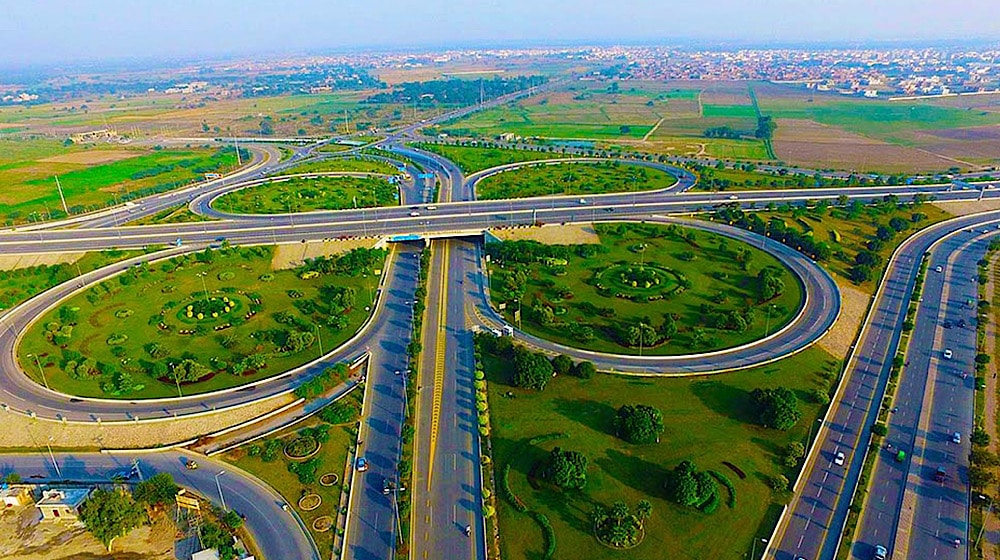
The Punjab government is executing a calibrated shift to accelerate the Rawalpindi Ring Road operational timeline. By deferring the Rs. 5 billion Thalian interchange, the project management unit prioritizes system efficiency and immediate traffic relief through a temporary two-way carriageway connection. This strategic bypass will serve as a catalyst for regional logistics, moving over 18,000 vehicles daily upon its initial opening.
Calibrating the Rawalpindi Ring Road for Immediate Utility
Construction on the main 38.3 km corridor has entered its final phase, and workers have already completed more than 28 kilometers of asphalt road. Consequently, the divisional administration shifted its focus toward horticulture and final finishing. While the Thalian interchange is a vital component of the revised PC-I, the government maintains a baseline focus on making the primary route functional before the monsoon season intensifies.

Structural Milestones and Technical Precision
Engineers have successfully completed the Soan Bridge and are currently casting girders for the critical railway bridge. Specifically, the Project Management Unit operates in three shifts to recover time lost during previous seasonal delays. Although the total project cost surged from Rs. 33 billion to Rs. 47 billion, the National Highway Authority is simultaneously expanding service roads to accommodate the projected traffic surge at the Thalian junction.
- Total Length: 38.3 Kilometers
- Planned Interchanges: Banth, Chak Baili Khan, Adiala Road, Chakri Road, and Thalian.
- Economic Zones: Proposed industrial clusters along the route.
- Traffic Capacity: Engineered for 18,000+ vehicles daily.
The Translation (Clear Context)
In technical terms, the government is adopting a “Minimum Viable Product” approach. By using a temporary two-way carriageway instead of waiting for a complex Rs. 5 billion interchange, they ensure the Rawalpindi Ring Road serves its purpose immediately. This decision avoids the “sunk cost” trap where a finished road remains closed due to one unfinished intersection. The logic is simple: move the traffic now and build the permanent interchange while the system is live.
The Socio-Economic Impact
For the average Pakistani citizen in Rawalpindi and Islamabad, this development directly translates to fuel savings and reduced urban congestion. Commuters currently trapped in the city center will bypass the bottleneck entirely. Furthermore, the industrial zones planned along the route will act as a structural baseline for job creation, potentially raising property values and commercial activity in previously rural outskirts.
The Forward Path (Expert Opinion)
This development represents a Momentum Shift. Prioritizing functionality over aesthetic or total completion is a disciplined move that reflects modern project management. While the cost escalation to Rs. 47 billion is significant, the decision to open the road via an interim link prevents further economic stagnation. We view this as a strategic win for provincial infrastructure efficiency.