
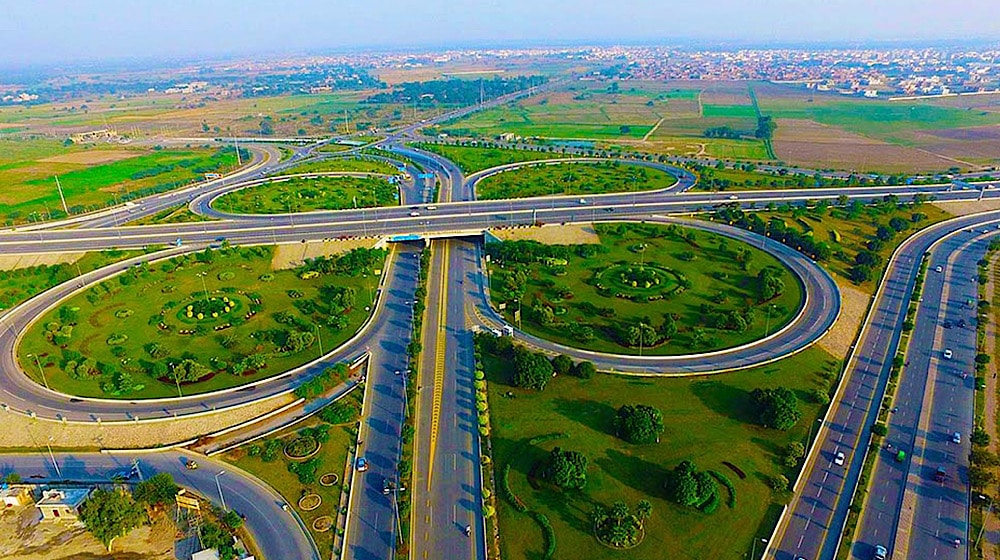
Infrastructure serves as the baseline for national efficiency. Consequently, authorities have finalized a mid-June deadline for the Rawalpindi Ring Road, a 38.6-kilometer corridor designed to serve as a strategic catalyst for regional commerce. While the project missed previous milestones, physical progress has officially reached 85%, signaling a critical transition toward operational readiness.
Calibrating the Rawalpindi Ring Road Timeline
The project trajectory recently underwent a rigorous review by Rawalpindi Commissioner Engineer Aamir Khattak. Although Punjab Chief Minister Maryam Nawaz previously suggested various dates, the current engineering assessment prioritizes a mid-June launch. Specifically, the road will become operational even as crews continue precision work on the Thalian interchange. This phased approach ensures immediate relief for the city’s saturated traffic corridors.

Strategic logistics management remains a core objective of this development. Furthermore, the administration plans to divert heavy trucks and containers from internal city streets directly toward the new arterial route. This shift requires the relocation of wholesale markets and bus terminals, creating a more structured urban environment. The project scope includes connectivity through Rawat, Chak Beli Road, and the GT Road to maximize economic throughput.
The Situation Room: Strategic Analysis
The Translation (Clear Context)
The decision to open the Rawalpindi Ring Road without the Thalian interchange reflects a strategic “Early Harvest” model. By decoupling specific interchanges from the main carriageway, the government prioritizes immediate system efficiency over total completion. Essentially, the core 38.6-kilometer track is ready to handle the load, while secondary nodes receive final calibrations in parallel.
The Socio-Economic Impact
For the average Pakistani citizen, this development represents a significant reduction in daily “Time Poverty.” Heavy traffic diversion will lower carbon emissions in residential areas and decrease commute times by an estimated 30-40%. For the professional sector, the relocation of warehouses and factories to the road’s perimeter will catalyze new industrial hubs, creating localized employment opportunities outside the congested city core.
The Forward Path (Opinion)
This development constitutes a Momentum Shift. While the repeated revisions of the deadline suggest initial planning friction, reaching the 85% completion baseline indicates that the project has passed the point of structural uncertainty. It is no longer a maintenance move; it is an aggressive push toward modernizing Pakistan’s northern logistics spine.








