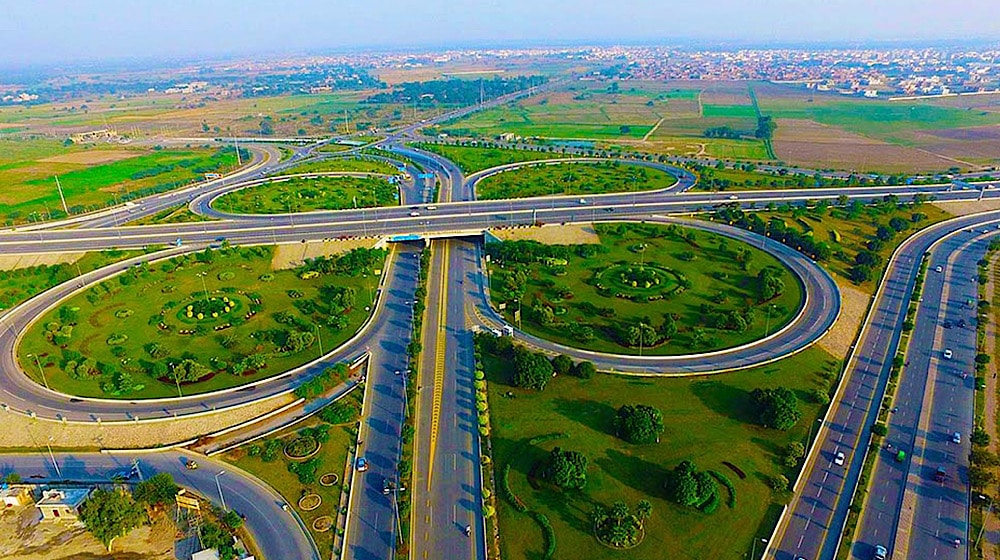
The Rawalpindi Ring Road delay represents a strategic recalibration of regional infrastructure. Engineering authorities have extended the completion timeline to late June 2024. This adjustment stems from a significant expansion of the Thallian Interchange scope. Consequently, the project now integrates a more sophisticated motorway link to optimize the national transportation grid.
Technical Scope and Project Calibration
The 38.6-kilometre corridor now requires a calibrated investment of Rs. 42 billion. Furthermore, the upgrade of the Thallian Interchange adds an additional Rs. 5 billion to the baseline cost. These modifications ensure the facility functions as a broad-based logistics hub rather than a simple transit point. Currently, teams have finished 70 percent of the road carpeting work across the main alignment.
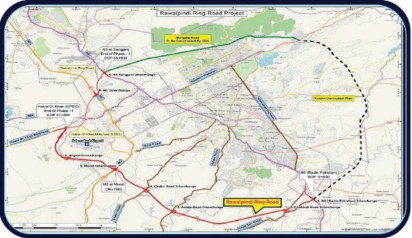
Construction remains active on five secondary interchanges located at Banth, Chak Beli Khan Road, Adiala Road, and Chakri Road. Additionally, the Kachehry Chowk Interchange Project has reached 88 percent completion. Officials expect to open this specific interchange by May 10, providing immediate relief to urban traffic congestion in the twin cities.
The Translation: Precision Engineering Over Speed
In technical terms, the Rawalpindi Ring Road delay reflects a shift from basic roadwork to advanced system architecture. Upgrading an interchange from a standard exit to a “broad-based facility” means increasing lane capacity and structural load limits. This foresight prevents future bottlenecks that would otherwise occur as the metropolitan area expands. The system is designed for high-frequency logistical flow between GT Road and the M-1/M-2 motorways.
The Socio-Economic Impact: A New Industrial Blueprint
This project functions as a catalyst for local economic development. The government plans to utilize 500 metres of land on both sides of the route for specialized zones. These include transport terminals, IT zones, industrial areas, and health facilities. For the average citizen, this translates to shorter commute times and decentralized job opportunities. Students and professionals will benefit from the dedicated education and IT hubs, reducing the pressure on the central city core.
The “Forward Path”: A Momentum Shift
This development represents a Momentum Shift for Pakistan’s infrastructure. Although the timeline extension is frustrating for daily commuters, the decision to upgrade the Thallian Interchange displays structural foresight. We are no longer building for today; we are building for the next decade. The integration of commercial and industrial zones along the ring road ensures the project generates its own economic value, making it a sustainable engine for regional growth.