TL;DR: The Punjab Government is recalibrating child nutrition by integrating sustainable school meals with a circular economy framework. By utilizing fully recyclable milk cartons that are repurposed into school furniture and stationery, the initiative transforms daily consumption into a catalyst for national environmental resilience.
The Global Shift Toward Integrated Nutrition
Across the international landscape, school feeding programs are evolving beyond basic caloric delivery. Modern systems in Europe and Southeast Asia now function as strategic platforms for embedding environmental responsibility. Consequently, Punjab has adopted this global benchmark, connecting nutrition delivery with a practical model of resource circularity.

Furthermore, nations like Colombia and Malaysia have institutionalized recycling through inter-school competitions and large-scale projects. These calibrated efforts move sustainability from a theoretical concept to a visible, active practice. Specifically, the Punjab initiative ensures that sustainable school meals leave no waste footprint behind.
Calibrating a Circular Logic: From Cartons to Classrooms
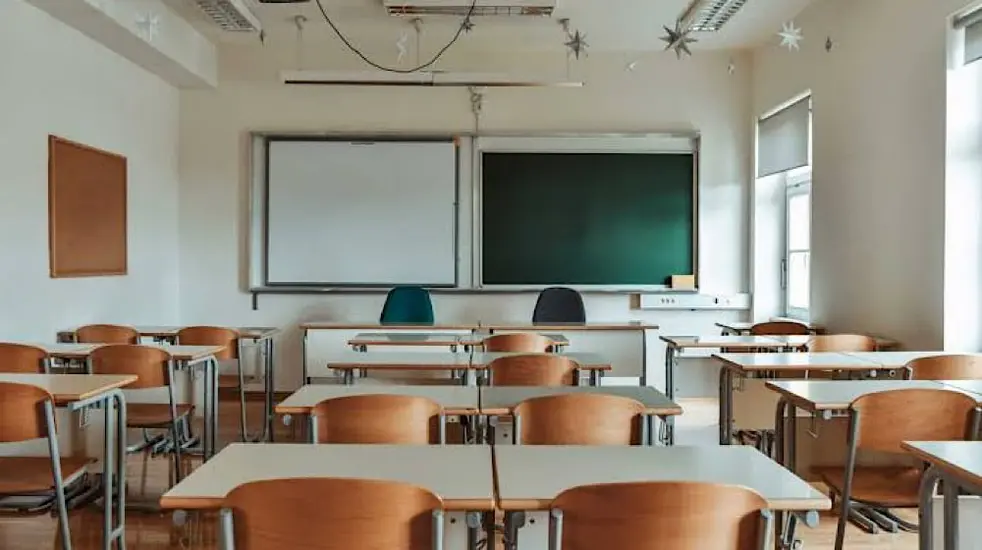
The operational core of this program involves a closed-loop system where consumption directly fuels infrastructure. After students consume the milk, the discarded cartons undergo a strategic transformation. Specifically, these materials are processed into durable school benches and notebooks. This structural efficiency ensures that the act of eating becomes a baseline for ecological protection.

This approach is vital for Pakistan, a nation highly vulnerable to climate-induced stressors. By designing systems where the “right behavior” is the default setting, the government creates a scalable blueprint for urban and rural resource management. This precision in design ensures long-term societal benefits through minimized waste and maximized utility.
The Situation Room: Strategic Analysis
The Translation (Clear Context)
In technical terms, this initiative represents a “Closed-Loop Circular Economy.” Instead of a linear “take-make-dispose” model, the program treats waste as a valuable raw material. This converts a potential environmental liability (used cartons) into a tangible asset (school furniture), effectively eliminating the concept of “trash” within the school ecosystem.
The Socio-Economic Impact
For the average Pakistani citizen, this development signals a shift toward systemic efficiency. Households benefit as children bring these sustainable habits home, reducing local waste management burdens. For students, it provides early-age exposure to environmental literacy, preparing a workforce that is inherently conscious of resource constraints in a precision-driven global economy.

The Forward Path (Opinion)
This development represents a definitive Momentum Shift. By embedding sustainability into the fabric of the education system, Punjab is not merely maintaining current standards but is setting a new national catalyst for innovation. This is progress defined by structural foresight rather than reactive policy.
Benefits of Scaling Sustainable School Meals
- Waste Reduction: Diverts thousands of tons of packaging from landfills.
- Resource Efficiency: Maximizes the lifecycle of imported and local materials.
- Behavioral Engineering: Cultivates a generation of eco-conscious citizens.
- Infrastructure Support: Provides low-cost, durable furniture to resource-constrained schools.