
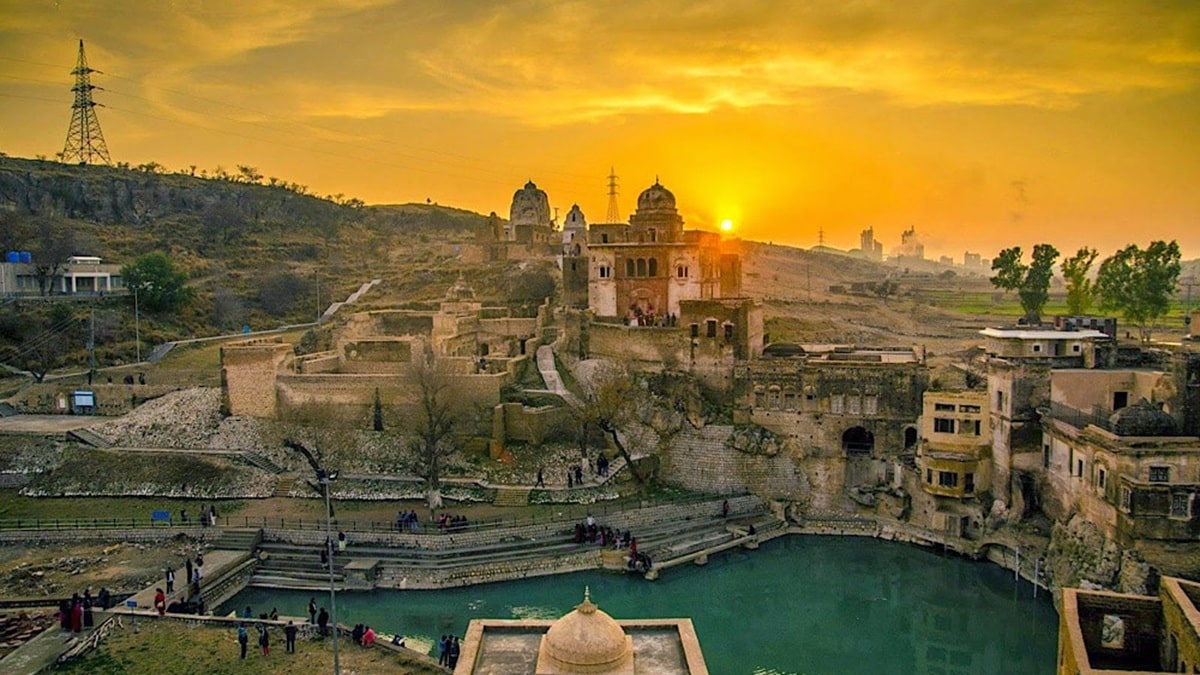
The Punjab government’s strategic launch of a Rs. 471 billion Punjab tourism plan marks a calibrated shift toward a high-efficiency service economy. By establishing the province’s first-ever Tourism Authority, the administration aims to catalyze private-sector participation and transform historical assets into structural economic drivers. This initiative, part of Chief Minister Maryam Nawaz’s Economic Transformation Vision, positions tourism as a primary baseline for provincial revenue.
Strategic Pillars of the Punjab Tourism Plan
The government designed a multi-tiered investment framework to mobilize Rs. 471 billion. Specifically, the public sector will contribute Rs. 171 billion, while private-sector participation is projected to reach Rs. 300 billion. Consequently, officials estimate this strategy will generate up to Rs. 450 billion in annual economic activity. Furthermore, tourist arrivals are expected to surge to 30 million annually, necessitating a highly trained workforce. To meet this demand, the government launched an internship program to calibrate the skills of 1,000 young professionals for the hospitality sector.
The Destination Economy Initiative: Eight Core Circuits
A central component of the strategy involves the Destination Economy Initiative. This project will develop eight specialized tourism circuits across the province at a cost of Rs. 171 billion. These circuits aim to improve connectivity and infrastructure in the following regions:
- Lahore: Historical and urban exploration.
- Religious Tourism: Sacred sites across the province.
- Potohar & Salt Range: Natural wonders and ancient geography.
- Cholistan & South Punjab: Desert heritage and cultural depth.
- Eco-tourism & Heritage: Sustainable travel and archaeological preservation.
Revitalizing Heritage and Natural Assets
The budget allocates significant capital to high-impact destinations. For instance, Rs. 4 billion is dedicated to the renovation of the Taxila Heritage Site, a cornerstone of South Asian archaeology. Additionally, the Lahore Heritage Project receives Rs. 31 billion to preserve the city’s architectural legacy. In Murree, the Bansara Gali Zoological Garden is currently under construction with a precision-focused budget of Rs. 3.92 billion. These investments ensure that Punjab’s cultural capital becomes a catalyst for modern economic growth.
The Situation Room Analysis
The Translation
The establishment of a dedicated Tourism Authority represents a shift from fragmented management to a centralized regulatory engine. This body will serve as a single-window interface for investors, removing bureaucratic friction. It essentially converts tourism from a passive heritage maintenance task into an active, precision-engineered industrial sector.
The Socio-Economic Impact
For the average Pakistani citizen, this plan facilitates localized wealth generation. Residents in areas like Changa Manga and Potohar will see increased demand for local services, hospitality, and crafts. The 1,000-person internship program acts as a structural baseline to professionalize the youth, providing them with marketable skills in a globalized industry.
The Forward Path
This development represents a Momentum Shift. By integrating private investment with public infrastructure, Punjab is no longer just maintaining sites; it is building a tourism ecosystem. If executed with precision, this strategy will stabilize provincial finances and provide a scalable model for national advancement.








