
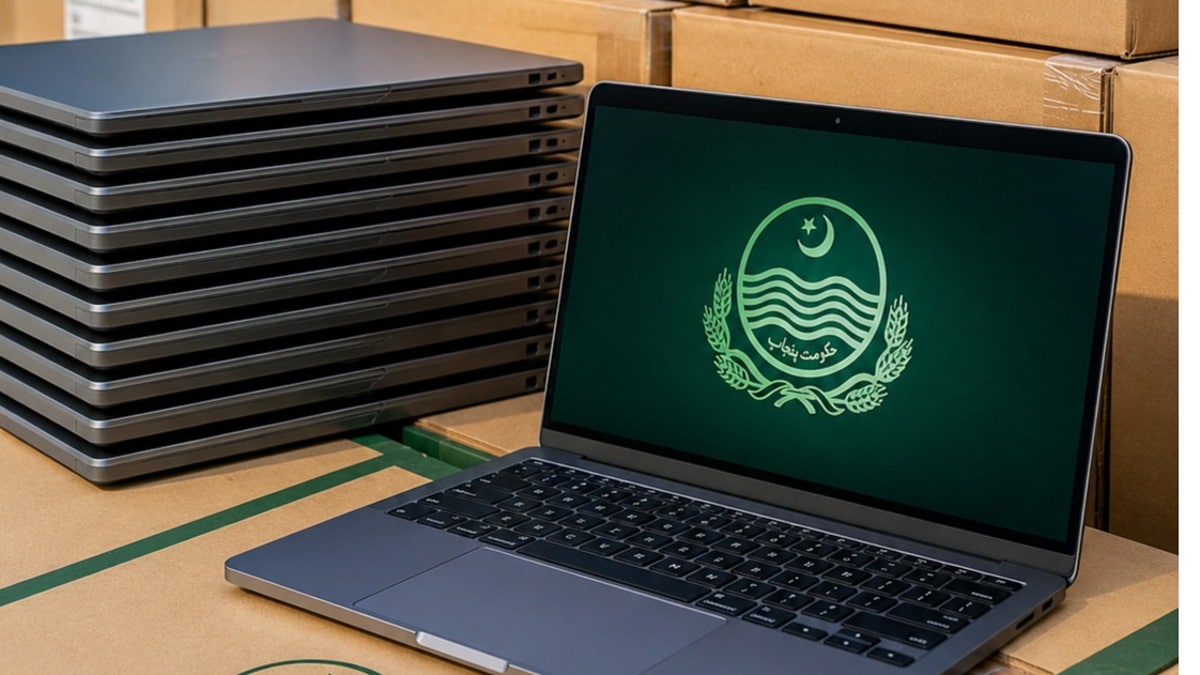
The digital infrastructure of our youth undergoes a strategic calibration as the Punjab laptop scheme enters its second phase. Punjab Education Minister Rana Sikandar Hayat recently confirmed that the first batch of 30,000 laptops has arrived in the province. This delivery serves as the baseline for a wider precision-targeted initiative approved by Chief Minister Maryam Nawaz. Consequently, the provincial government aims to distribute over 70,000 high-performance laptops during the current fiscal year to bridge the digital divide.
The Translation: Analyzing the 750 Billion Educational Catalyst
This distribution represents more than a simple hardware rollout; it is the physical manifestation of a structural shift in fiscal priorities. The Punjab government recently allocated a record-breaking Rs. 750 billion to the education sector within the 2026-27 budget. Specifically, the School Education Department received Rs. 600.78 billion to sustain current operations and advance development projects. In contrast, the Higher Education Department secured Rs. 83.48 billion, ensuring that university-level research and digital learning remain at the forefront of national advancement.
The Socio-Economic Impact: Precision Tools for a Modern Workforce
How does this development alter the daily trajectory of a Pakistani citizen? For the average student in Lahore or South Punjab, access to high-spec hardware functions as a catalyst for economic mobility. By equipping 70,000 students with these machines, the government is effectively injecting a surge of digital capability into the labor market. Furthermore, the allocation of Rs. 11.15 billion for higher education development projects ensures that academic environments evolve alongside global technological standards. This initiative directly supports households by reducing the financial barrier to entry for modern freelance and software markets.
The Forward Path: A Momentum Shift in Digital Literacy
From a STEM-driven perspective, the Punjab laptop scheme represents a definitive Momentum Shift. Rather than merely maintaining the status quo, the massive 750 billion PKR budget indicates a strategic pivot toward digital literacy as a primary economic driver. While the current delivery of 30,000 units is a vital milestone, the long-term success depends on the sustained integration of this hardware into the curriculum. This move signals a forward-thinking commitment to transforming Pakistan into a regional technology hub through disciplined investment in human capital.








