
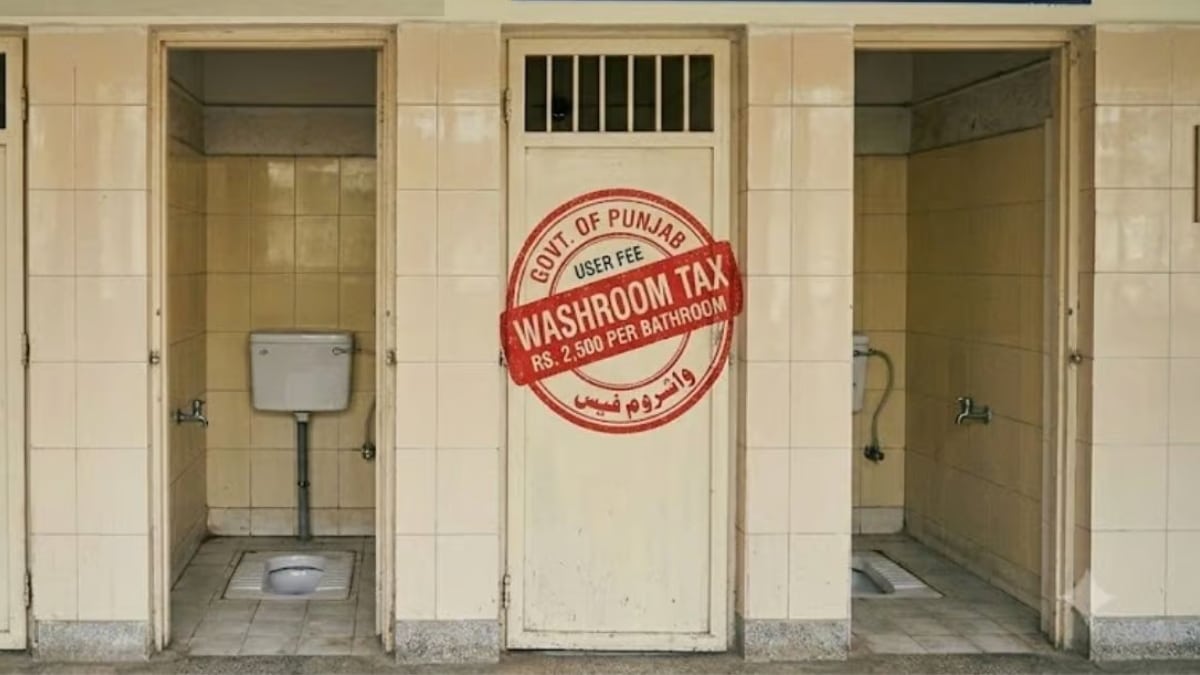
The structural sustainability of Punjab’s urban infrastructure depends on the fiscal health of its municipal agencies. Recently, the Punjab government introduced a calibrated Punjab sewerage tax aimed at commercial entities, specifically impacting medical facilities in Rahim Yar Khan. This measure serves as a baseline for recalibrating how the Water and Sanitation Agency (WASA) maintains the regional drainage network while addressing the high output of commercial waste.
Fiscal Precision: The Implementation of the Punjab Sewerage Tax
WASA has officially initiated billing for multiple medical complexes based on their sanitation footprint. For instance, Lala Iqbal Hospital received a monthly bill of Rs. 37,500, calculated against 15 toilets. Furthermore, the Nasir Medical Complex faced a bill of Rs. 62,500 for its 17 toilets, while the Doctor Hospital and Trauma Center saw a charge of Rs. 12,500. Consequently, local observers have labeled this a “toilet tax” due to the specific metric used for calculation.
WASA Deputy Director Amir Naveed clarified that this levy is not a new independent tax but a refined application of the existing Punjab sewerage tax. The cabinet approved this measure to target commercial properties that place a significant burden on the city’s drainage systems. To enforce compliance, authorities reportedly registered an FIR against a private surgical clinic that failed to meet its payment obligations.
The Situation Room Analysis
The Translation (Clear Context)
While the public perceives this as a “tax on toilets,” the technical logic follows a consumption-based infrastructure model. WASA is essentially using the number of sanitation units as a proxy to estimate the volume of effluent discharge. In architectural terms, more toilets indicate a higher capacity for waste generation, necessitating a higher financial contribution to maintain the structural integrity of the sewerage network.
The Socio-Economic Impact
This policy directly affects the operational overhead of private healthcare providers. For the average Pakistani citizen, this could lead to a marginal increase in medical service fees as hospitals attempt to balance their financial baselines. Moreover, the aggressive enforcement via FIRs suggests a shift toward a more disciplined, albeit rigid, fiscal environment for commercial healthcare in urban centers like Rahim Yar Khan.
The “Forward Path” (Opinion)
This development represents a Stabilization Move. While the implementation appears abrupt, municipal agencies require consistent revenue catalysts to prevent system-wide drainage failures. However, for this to transition into a “Momentum Shift,” the government must ensure that these collected funds are strictly reinvested into modernizing the aging sewerage infrastructure, rather than merely plugging fiscal deficits.
Source: 92 News








