
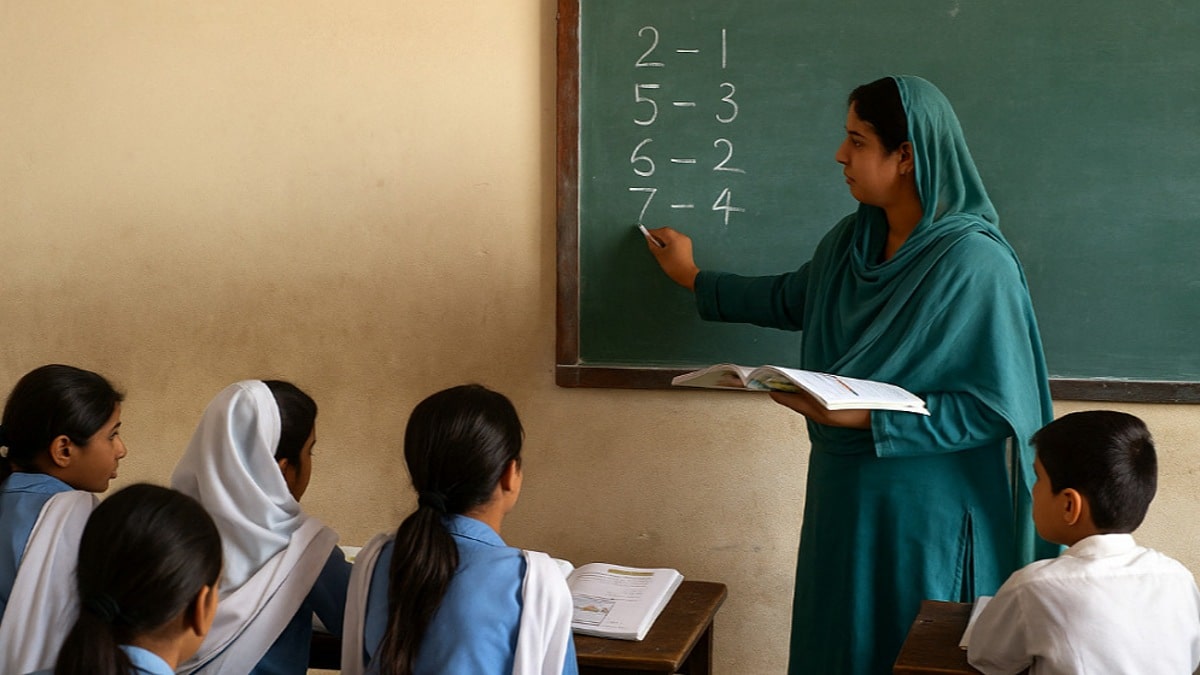
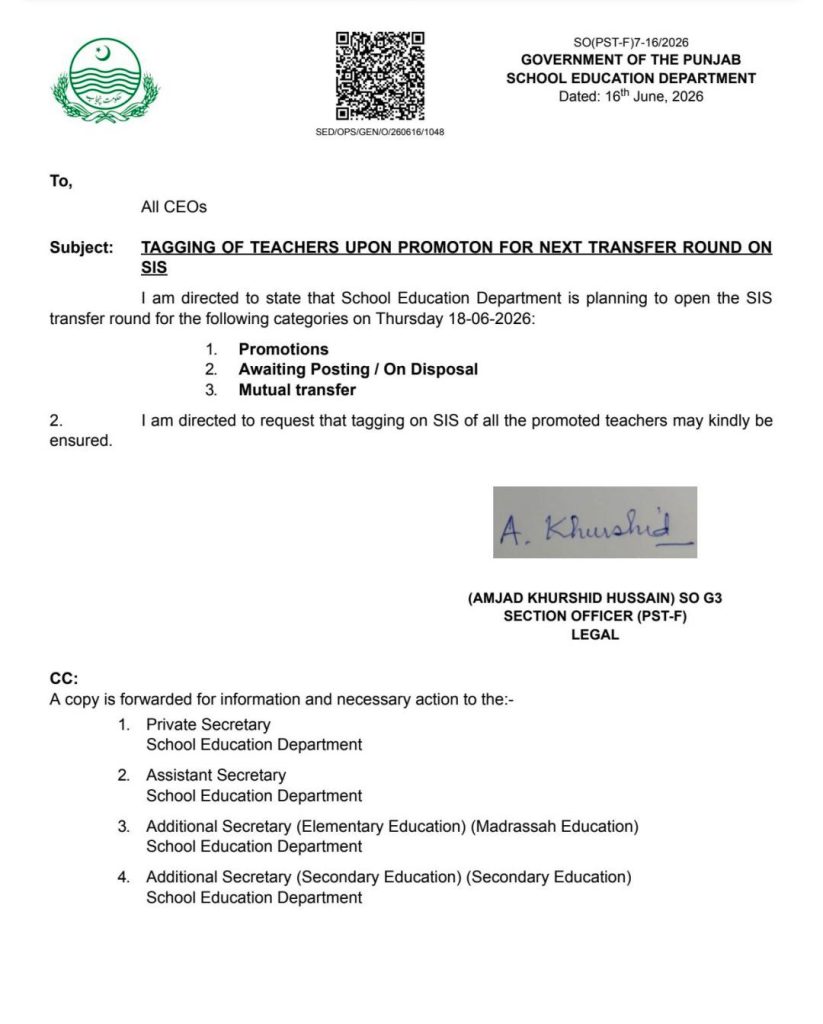
The Punjab School Education Department has initiated a calibrated Punjab e-transfer round to optimize educator placement across the province. This strategic deployment utilizes the School Information System (SIS) to ensure structural efficiency for promoted and awaiting-posting personnel. Consequently, teachers can now submit their applications through the digital portal starting June 23, 2026.
Strategic Timeline for the Punjab E-Transfer Round
The department has established a precise baseline for the transfer cycle. Teachers must adhere to the following schedule to ensure their preferences are captured within the system:
- Application Submission: June 23 to June 30, 2026.
- Appeals Review Process: July 1 to July 6, 2026.
- Issuance of Posting Orders: July 9, 2026.
Furthermore, this round specifically targets teachers promoted to higher grades and those currently awaiting official posting orders. Mutual transfer requests are also integrated into this specific Punjab e-transfer round phase.
Operational Requirements and SIS Integration
The notification mandates that district education authorities must verify the digital tagging of all promoted teachers on the SIS platform. Precision in this step is vital. If a teacher fails to submit sufficient preferences for vacant posts, the department will execute a mandatory placement. Specifically, the SIS portal will automatically assign these individuals to any available vacancy to maintain systemic balance.

The Translation: Digital Governance in Education
In “Next Gen” terms, the Punjab e-transfer round is more than a clerical update; it is a data-driven redistribution of human capital. By using the SIS portal, the government removes the traditional “gatekeepers” of teacher postings. This algorithm-led approach ensures that vacancies are filled based on actual school needs rather than manual intervention. It treats the education workforce as a dynamic network that requires constant calibration.
The Socio-Economic Impact
For the average Pakistani citizen, this development stabilizes the local classroom. When teachers are posted efficiently, students in both urban and rural areas benefit from consistent instruction. For the teachers, the Punjab e-transfer round reduces the financial and emotional burden of “awaiting posting” periods. Improved mobility for educators directly correlates with better job satisfaction and, ultimately, higher educational standards for the next generation.
The Forward Path: A Momentum Shift
This development represents a Momentum Shift. The School Education Department is moving beyond maintenance and toward a fully automated governance model. While the threat of “mandatory postings” for those who don’t submit preferences seems strict, it is a necessary catalyst for system-wide discipline. This structural shift ensures that no school is left understaffed due to administrative delays.








