
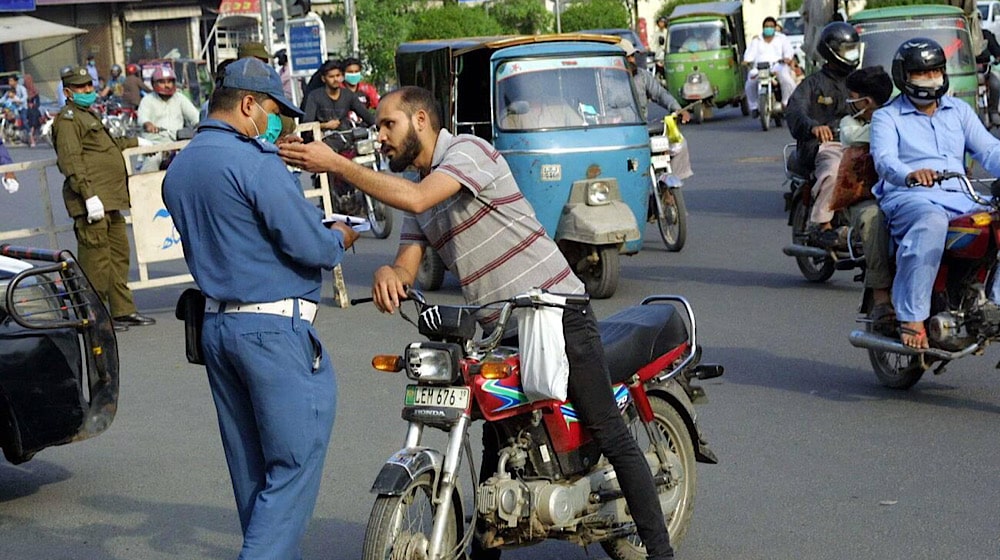
National advancement requires a calibrated balance between legislative enforcement and economic reality. The Punjab Assembly recently passed the Provincial Motor Vehicles (Fourth Amendment) Ordinance 2025, initiating a significant Punjab traffic fines reduction to provide strategic relief to citizens. This legislative move, awaiting final gubernatorial approval, recalibrates penalties for motorcycles, commercial transport, and private vehicles to align with the current socio-economic baseline.
Recalibrating the Legal Framework for Punjab Traffic Fines
The revised legislation introduces a precision-driven approach to traffic penalties, specifically targeting segments most affected by inflationary pressures. Consequently, the government has reduced the operational burden on the transport sector while maintaining strict standards for safety-critical violations.
- Motorcycles and Rickshaws: Authorities slashed motorcycle fines from Rs 2,000 to Rs 1,000, with a maximum cap now set at Rs 2,000. Rickshaw drivers benefit from a reduction to Rs 1,000 for standard offenses.
- Private Vehicles: Car and jeep owners will see minor offense penalties drop from Rs 5,000 to Rs 2,000. However, serious violations maintain a Rs 5,000 baseline to ensure road discipline.
- High-Capacity Vehicles: For vehicles exceeding 2000cc, the maximum penalty fell from Rs 20,000 to Rs 10,000, ensuring a more proportional fine structure.
- Logistics and Transport: Fines for Mazda trucks, coasters, and light passenger vans plummeted from Rs 20,000 to Rs 7,000, acting as a catalyst for lower transport costs.
Notably, the Punjab Assembly maintained existing fines for speeding across all categories. This decision preserves the structural integrity of road safety measures while offering financial breathing room elsewhere.
The Situation Room Analysis
The Translation
The Provincial Motor Vehicles (Fourth Amendment) Ordinance 2025 represents a strategic “correction” of the penalty-to-income ratio. Rather than a relaxation of law, this move serves as a recalibration. By lowering the financial barrier for minor infractions, the state aims to increase overall compliance and reduce the potential for informal “negotiations” on the road.
Socio-Economic Impact
This development directly impacts the daily lives of millions of Pakistanis, particularly students and middle-income professionals who rely on motorcycles and rickshaws. By reducing the penalty burden, the government lowers the “risk cost” of daily commuting. Furthermore, slashing fines for commercial trucks and vans potentially stabilizes logistics costs for goods, indirectly benefiting urban and rural households.
The “Forward Path”
We categorize this development as a Momentum Shift. This legislative precision demonstrates a government capable of responding to the economic baseline of its citizens. While enforcement remains critical for national discipline, these structural adjustments ensure that the legal system remains a tool for progress rather than an insurmountable financial obstacle.








