
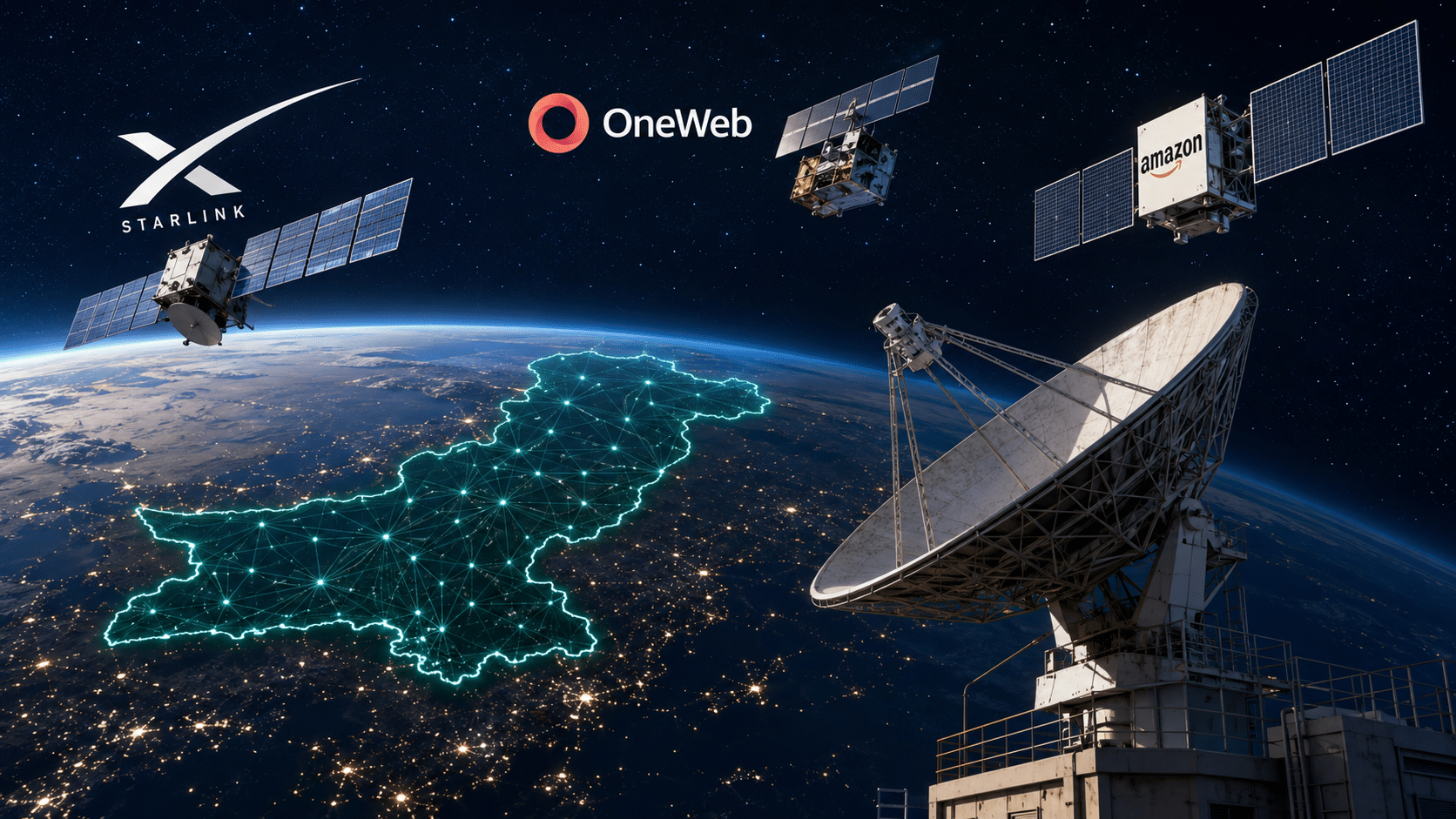
The evolution of national infrastructure requires a shift from terrestrial limits to orbital precision. Consequently, the Pakistan Telecommunication Authority (PTA) has recommended licensing satellite internet Pakistan operators, including Starlink, OneWeb, and Amazon’s Project Kuiper. Specifically, Chairman Major General (R) Hafeez Ur Rehman emphasized that satellite broadband provides a catalyst for reliable access in underserved regions. This calibrated move aims to bridge the digital divide where conventional fiber-optic deployment remains economically unfeasible.
Integrating Satellite Internet Pakistan into National Infrastructure
The PTA has already finalized the technical and regulatory groundwork for this transition. Furthermore, the authority submitted its formal recommendations to the Ministry of Information Technology and Telecommunication for final approval. The Chairman highlighted Nepal as a successful baseline where satellite services significantly improved nationwide connectivity. To proceed, operators must first secure registration from the Space Activities Regulatory Board before the PTA issues commercial licenses.
This structural change addresses the logistical hurdles of expanding high-speed coverage beyond urban centers. By utilizing Low-Earth Orbit (LEO) technology, Pakistan can bypass the geographic limitations that have historically hindered progress. Consequently, the government is focusing on a framework that ensures both national security and system efficiency.
The Situation Room Analysis
The Translation (Clear Context)
Satellite internet represents a fundamental shift from traditional “ground-up” infrastructure to a “top-down” orbital mesh. Unlike geostationary satellites that suffer from high latency, LEO satellites—like those used by Starlink—orbit much closer to Earth. This proximity ensures lower latency and higher speeds. Essentially, the PTA is moving from a reliance on physical cables to a decentralized network that can be accessed from any coordinate in the country.
The Socio-Economic Impact
This development directly impacts the daily lives of students, professionals, and households in rural Pakistan. For students in remote areas, satellite internet Pakistan means access to global educational resources without the need for urban relocation. For the professional sector, it enables a truly national gig economy. Households near motorways or in mountainous terrains will finally achieve parity with urban centers, fostering a more inclusive digital economy.
The Forward Path (Opinion)
This initiative represents a significant Momentum Shift. By opening the market to global leaders like Amazon and Starlink, the PTA is not just maintaining current standards but accelerating our technological baseline. While the regulatory hurdles with the Space Activities Regulatory Board remain, the strategic intent is clear: Pakistan is preparing for a future where connectivity is a right, not a geographical privilege.








