The landscape of Pakistan’s educational excellence underwent a significant calibration as Punjab Board Toppers for 2026 emerged predominantly from private institutions. In the Secondary School Certificate First Annual Examination, private schools secured a dominant 72.73% share of top positions. Consequently, this shift highlights a growing performance gap between private and public sector infrastructure. Data reveals that eleven students secured the highest positions across nine boards, including joint toppers in Gujranwala and Sahiwal.
The Situation Room: Strategic Analysis
The Translation
While government schools provide the baseline for mass education, private institutions have optimized their academic delivery systems to capture elite performance metrics. Specifically, private schools achieved 8 out of 11 top positions. This precision in academic training allows private entities to dominate the overall provincial rankings consistently.
The Socio-Economic Impact
For Pakistani citizens, this trend suggests that quality education is increasingly becoming a privatized commodity. Middle-class households must now allocate higher percentages of their income to ensure competitive academic outcomes. Furthermore, the 27.27% share of government schools indicates a structural disadvantage for students in the public sector, potentially limiting social mobility for those in under-resourced areas.
The Forward Path
This development represents a Momentum Shift for the private sector but serves as a Stabilization Move for government policy. To maintain national competitiveness, the state must recalibrate public school resources. We need a catalyst for change in the public sector to restore equilibrium and ensure that merit, not just tuition fees, determines the future of our youth.
Precision Data: 2026 Punjab Board Toppers Breakdown
The following table presents the calibrated results of the highest-scoring students across the province. Amina Mahboob of Lahore recorded the highest precision score of 1,192 marks. Consequently, these metrics provide a baseline for assessing educational quality in 2026.
- Highest Provincial Score: 1,192/1,200 (Lahore Board)
- Total Overall Toppers: 11 Students
- Private Sector Dominance: 72.73% of top spots
| Board | Overall Topper | Marks | Institution | Type |
|---|---|---|---|---|
| Lahore | Amina Mahboob | 1,192 | The Educators High School, Pattoki | Private |
| D.G. Khan | Abdullah Saleem | 1,191 | Millat Public High School, Layyah | Private |
| Faisalabad | Umna Salahuddin | 1,191 | The City Grammar School | Private |
| Multan | Mehreen Rasool | 1,190 | Ibn-e-Seena Girls HS School, Dunyapur | Private |
| Sargodha | Nabeel Ahmad Kazmi | 1,188 | Government High School 47/TDA, Bhakkar | Govt |
| Bahawalpur | Abdul Haseeb | 1,186 | Government Abbasia HS School | Govt |
| Rawalpindi | Muhammad Manan Ahtsham | 1,191 | Al Amir Foundation Public School | Private |
| Sahiwal | Munsaf Bashir | 1,191 | Govt HS School 168/9-L, Sahiwal | Govt |
| Sahiwal | Abdullah Nasir | 1,191 | New Beacon House High School | Private |
| Gujranwala | Adeena Rashid | 1,190 | Future Vision Secondary School | Private |
| Gujranwala | Sadiqa Almas | 1,190 | A+ School System for Girls | Private |
Structural Comparison: Private vs. Government Efficiency
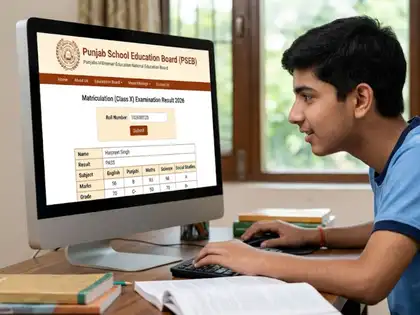
Private institutions exclusively produced the overall toppers in six major boards, including Lahore and Faisalabad. However, government institutions showed resilience by securing top positions in Sargodha and Bahawalpur. Therefore, the data illustrates a concentrated excellence in the private sector while public schools maintain a localized presence in specific regions.
| School Type | Number of Toppers | Provincial Share |
|---|---|---|
| Private Schools | 8 | 72.73% |
| Government Schools | 3 | 27.27% |
| Total | 11 | 100% |