
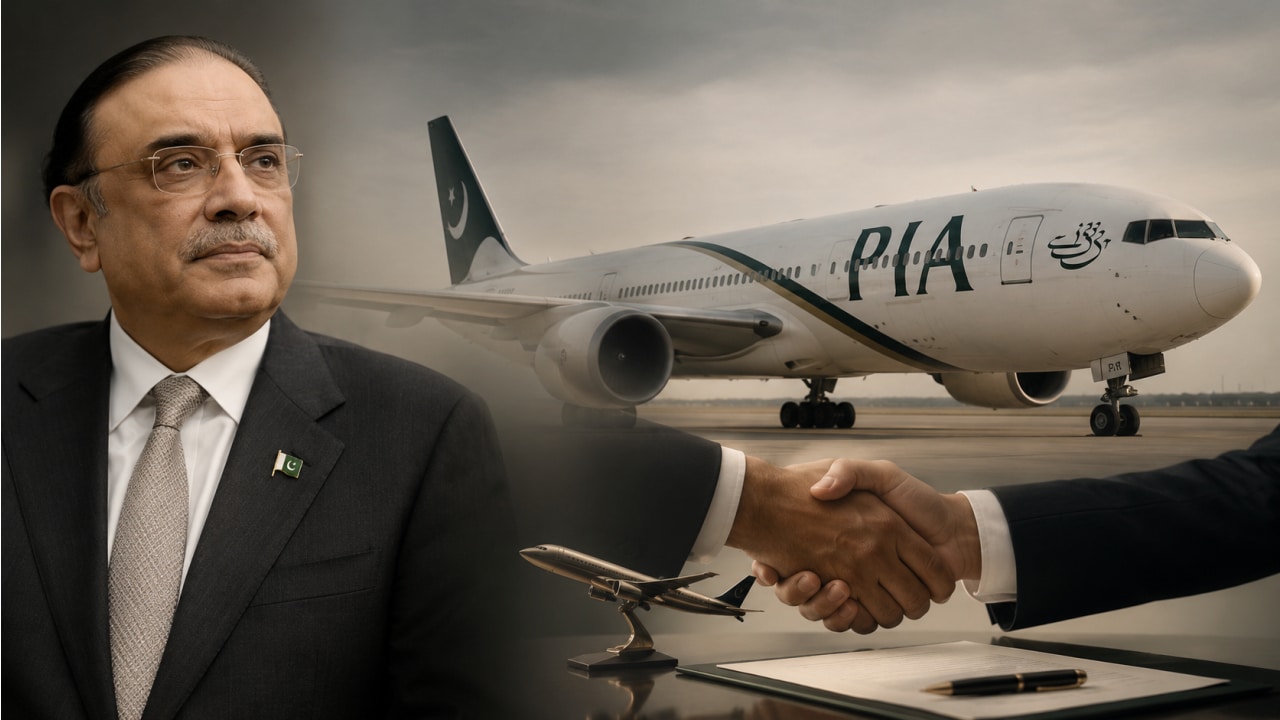
National advancement requires the surgical removal of systemic inefficiencies. The PIA Privatization Completion serves as a catalyst for this transformation, following President Asif Ali Zardari’s formal assent to the Pakistan International Airlines Corporation (Conversion and Repeal) Bill 2026. This legislative milestone effectively eliminates the final legal barrier to transferring the national carrier to its new private-sector custodians.
The Senate passed the legislation on June 10, followed rapidly by the National Assembly. Consequently, the government has finalized the structural framework necessary to implement a new ownership model. This shift represents a calibrated effort to stabilize the national treasury while revitalizing a legacy institution through market-driven precision.
Strategic Milestones in the PIA Privatization Completion
The transaction follows a highly competitive bidding cycle conducted earlier this year. During this process, the Arif Habib Consortium emerged as the successful bidder with a strategic offer of Rs. 135 billion for a 75 percent stake. This bid narrowly surpassed the Lucky Consortium, which provided a final offer of Rs. 134 billion. Furthermore, the inclusion of Fauji Fertilizer Company as a strategic partner strengthens the financial baseline of the acquisition.
Government officials categorize this development as the most significant large-scale privatization in nearly two decades. Under the established terms, the state will receive Rs. 10.2 billion in immediate cash proceeds. More importantly, this move drastically reduces the government’s exposure to the airline’s historical fiscal volatility.
- Winner: Arif Habib Consortium (75% stake).
- Transaction Value: Rs. 135 Billion.
- Immediate Liquidity: Rs. 10.2 Billion cash proceeds.
- Strategic Ally: Fauji Fertilizer Company.
The Situation Room: Analysis of the PIA Privatization Completion
The Translation (Clear Context)
The repeal of the PIA Corporation Act is more than a legal formality; it is a structural “reset.” By converting the entity from a statutory corporation into a private company, the government removes the rigid bureaucratic layers that hindered operational agility. This allows the new owners to restructure labor, routes, and fleet management without the friction of outdated state regulations.
The Socio-Economic Impact
How does this change the daily life of a Pakistani citizen? Currently, taxpayers subsidize PIA’s losses to the tune of billions. Experts estimate that this privatization will save the public approximately Rs. 35 billion annually. For the average household, this means state funds can be reallocated toward critical infrastructure or education rather than covering the deficits of a failing enterprise. Furthermore, travelers can expect improved service standards as private competition drives efficiency.
The Forward Path (Opinion)
This development represents a Momentum Shift for Pakistan’s economic reform agenda. While the transition may face initial labor and logistical hurdles, the exit of the state from commercial aviation is a vital stabilization move. It signals to global investors that Pakistan is serious about dismantling inefficient state-owned enterprises (SOEs) and fostering a transparent, investment-friendly climate.








