
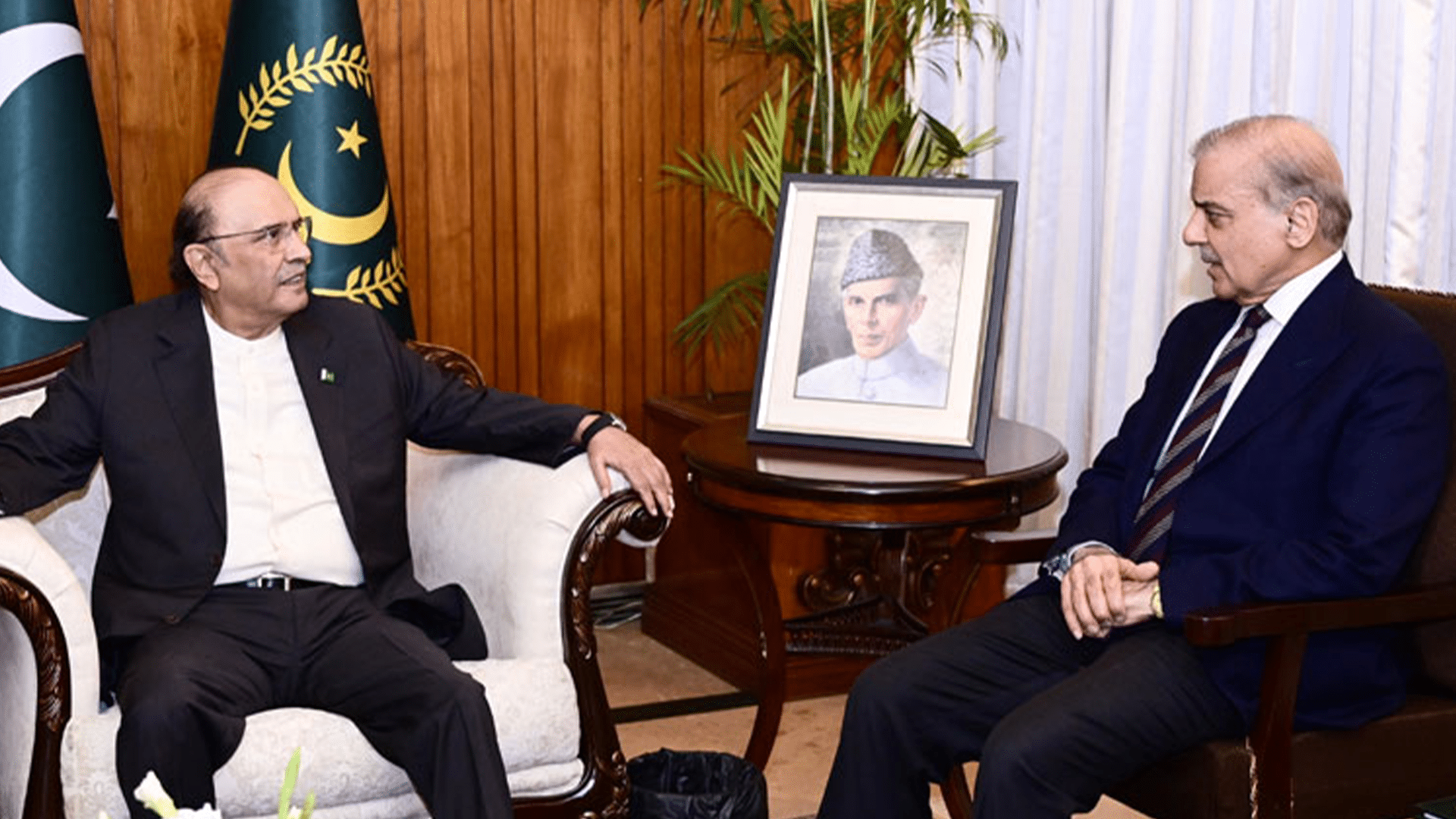
National advancement requires a calibrated alignment between federal fiscal policy and provincial autonomy. Recently, President Asif Ali Zardari urged the federal government to prioritize a growth-oriented budget that safeguards provincial rights and enhances public welfare. During a strategic consultation at the Aiwan-e-Sadr, the President and Prime Minister Shehbaz Sharif evaluated the national economic trajectory. They focused on aligning fiscal planning with tangible relief measures for the Pakistani citizenry.
Calibrating the Federal Fiscal Framework
The high-level session involved the core leadership of the state, including the Deputy Prime Minister and the Ministers for Finance, Interior, and Law. Consequently, the discussion spanned the critical intersections of national security and regional stability. President Zardari emphasized that the growth-oriented budget must function as a catalyst for inclusive economic stability. Furthermore, he argued that development planning loses its efficacy if it does not integrate provincial autonomy with citizen-centric relief.
The participants reviewed the internal and regional security landscape, including developments in Azad Jammu and Kashmir and Gilgit-Baltistan. Interior Minister Mohsin Naqvi provided a technical briefing on regional diplomatic engagements. This collective assessment aims to ensure that the upcoming financial roadmap addresses both structural economic gaps and immediate social needs.
The Situation Room Analysis
The Translation (Clear Context)
In technical terms, the President is advocating for “Fiscal Federalism.” This means the budget should not just be a spreadsheet of numbers but a calibrated tool that respects the 18th Amendment. By focusing on “inclusive economic stability,” the leadership aims to prevent a top-heavy economy where growth happens in isolation. Instead, they seek a framework where resources flow effectively to the provinces, ensuring that local governance has the financial fuel to function.
The Socio-Economic Impact
For the average Pakistani citizen, this strategic shift translates into more localized development and potential relief from inflationary pressures. When the budget protects provincial rights, it ensures that essential services like healthcare and education receive their allocated funding at the grassroots level. Consequently, professionals and students in both urban centers and rural districts can expect more targeted public welfare initiatives that directly improve their quality of life.
The Forward Path (Opinion)
This development represents a Momentum Shift for Pakistan’s political economy. By moving away from purely stabilization-driven austerity and toward a growth-oriented budget, the government is signaling a shift toward expansion. While stabilization was the baseline for survival, this move suggests a calibrated transition toward progress. Success now depends on the precision of the implementation phase and the transparency of provincial fund distribution.








