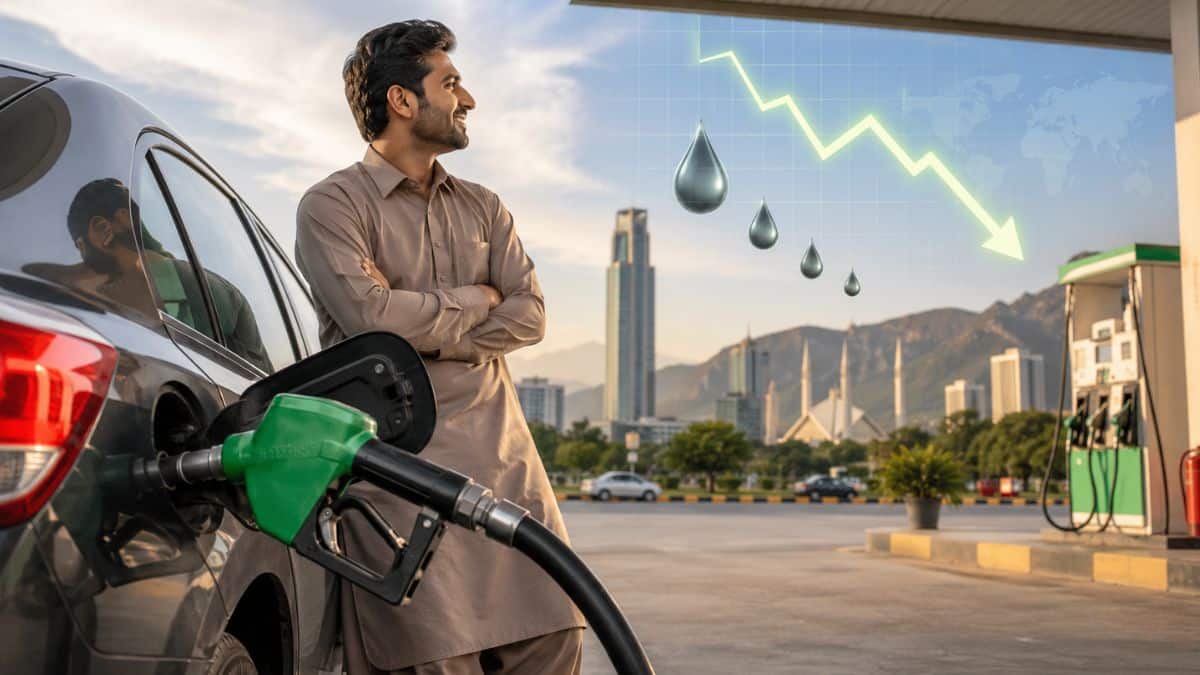
The structural stability of the national energy market depends on calibrated responses to global shifts. Petrol prices in Pakistan may see further downward adjustments as the government actively monitors global crude oil benchmarks. Prime Minister’s Adviser Rana Sanaullah recently indicated that a dedicated team is now assessing international market volatility to ensure domestic prices reflect global realities. This strategic oversight aims to sustain the momentum of recent price cuts and provide a baseline for economic relief.
Strategic Oversight of Global Energy Benchmarks
Global crude oil prices have eased significantly following a strategic reduction in geopolitical tensions. Previously, conflict-driven uncertainty caused a sharp spike in energy costs, prompting the government to implement a weekly review mechanism. Consequently, this precision-based monitoring allows the state to respond rapidly to market fluctuations. Specifically, the government remains committed to passing these international savings directly to the Pakistani consumer.

Maintaining Market Integrity
While the outlook remains positive, the government has issued a stern warning to market participants. Rana Sanaullah emphasized that the state will take strict action against any entity attempting to create artificial shortages. Maintaining a fluid supply chain is essential for the petrol prices in Pakistan to reach their target baseline without disruption from local manipulators.
Data Snapshot: Recent Price Adjustments
The federal government previously executed a major structural shift in fuel costs on June 19. This intervention significantly lowered the cost of living for millions. The key adjustments included:
- Petrol: Reduced by Rs. 74 per litre, bringing the current price to Rs. 299.78.
- High-Speed Diesel: Reduced by Rs. 67 per litre, resulting in a new rate of Rs. 311.56.

The Translation (Clear Context)
The government is moving away from reactive pricing toward a data-driven, weekly review model. This “weekly mechanism” mentioned by Sanaullah acts as a pressure valve. When global tensions between major oil producers ease, the government uses this data to recalibrate domestic costs almost in real-time. Essentially, the state is attempting to synchronize Pakistan’s economy with the global energy pulse to avoid sudden inflationary shocks.
The Socio-Economic Impact
For the average Pakistani citizen, a reduction in fuel prices is a catalyst for broader financial stability. Lower petrol prices in Pakistan directly decrease the operational costs for logistics and public transport. Consequently, students and professionals in urban centers like Lahore and Karachi see an immediate improvement in their monthly disposable income. Furthermore, rural households benefit from lower transportation costs for essential agricultural commodities, effectively cooling food inflation.
The “Forward Path” (Opinion)
This development represents a Stabilization Move. While a price reduction is progress, the focus on a weekly monitoring team suggests the government is prioritizing market maintenance over long-term structural reform. To achieve a true “Momentum Shift,” Pakistan must pair these fuel price adjustments with aggressive investment in renewable energy infrastructure. However, in the current fiscal climate, these calibrated reductions provide the necessary breathing room for the national economy to stabilize.