
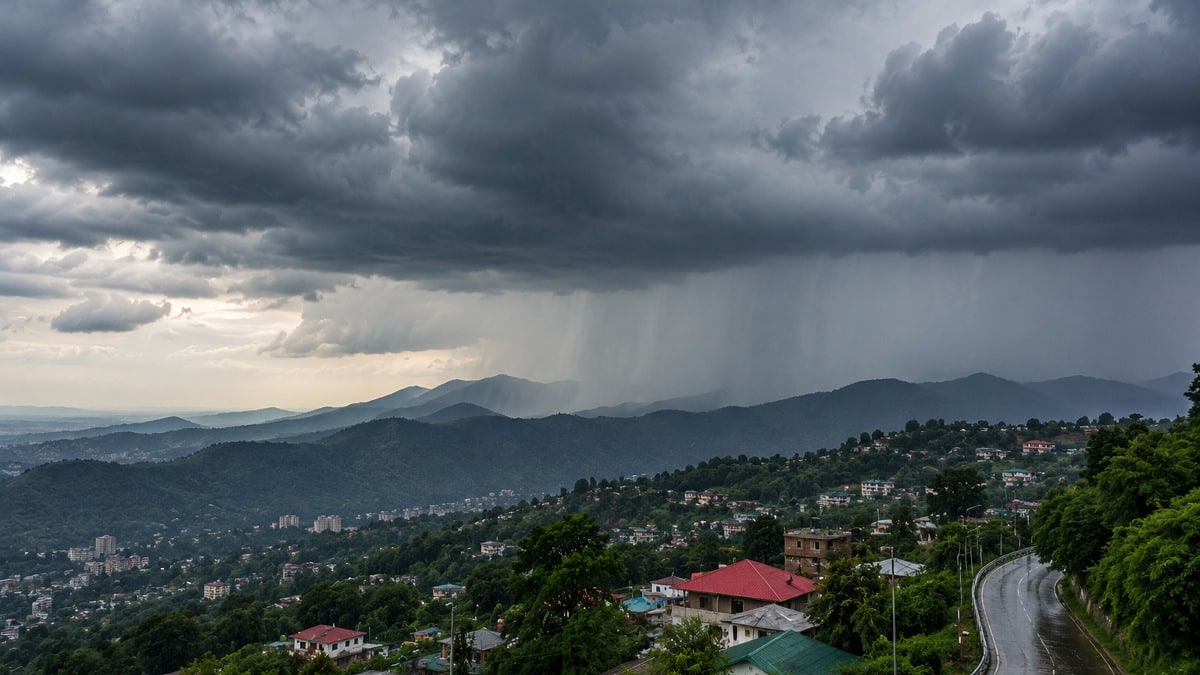
The Pakistan Meteorological Department (PMD) recently issued a comprehensive PMD rain prediction, signaling a strategic shift in regional atmospheric patterns. A westerly wave will likely approach the upper reaches of the country starting June 16, persisting through June 20. Simultaneously, moist currents from the Arabian Sea will penetrate the central and northern territories. This convergence marks a critical transition from extreme thermal conditions to a period of high-moisture stabilization.
Regional Analysis: The Scope of the PMD Rain Prediction
Consequently, the PMD anticipates diverse weather activity across multiple provinces. In Punjab and Islamabad, the system will trigger scattered windstorms and rain-thunderstorms, potentially including isolated hailstorms. This activity will affect major urban hubs like Lahore, Faisalabad, and Rawalpindi intermittently between June 16 and 20. Residents in these areas should prepare for sudden shifts in visibility and temperature.
Furthermore, the northern frontier will witness intensified precipitation. Kashmir and Gilgit-Baltistan expect rain-wind and thunderstorms starting from June 16 and 18, respectively. Meanwhile, Khyber-Pakhtunkhwa and parts of Balochistan will likely face heavy falls. Even upper Sindh, including Sukkur and Larkana, will experience this system, while Karachi may see dust storms accompanied by light rain during the forecast window.
The Situation Room: Technical and Social Impact
The Translation (Clear Context)
The current weather mechanism involves a “Westerly Wave”—a low-pressure system moving from the west—intersecting with high-moisture Arabian Sea currents. This interaction creates a catalyst for convective activity. Essentially, the hot, dry air currently hovering over Pakistan is being displaced by cooler, denser, and moisture-rich air, resulting in predictable but intense storm cells.
The Socio-Economic Impact
This development directly impacts the daily lives of millions. For urban residents in Lahore and Rawalpindi, the primary concern is urban flooding, which can disrupt commute times and damage basement infrastructures. For the rural sector, this PMD rain prediction serves as a critical signal for crop management. While the rain offers a respite from the heat, the potential for hailstorms poses a structural threat to weak housing and solar installations in both urban and rural settings.
The Forward Path (Opinion)
We classify this development as a Momentum Shift. After a period of stagnant heat, this system acts as a necessary environmental reset. However, it exposes the structural vulnerabilities of our urban drainage and power grids. Precision in government response during these five days will determine if we capitalize on the cooling effect or succumb to localized logistical failures.
Possible Impacts and Advisories
- Structural Integrity: Strong windstorms and lightning may damage weak structures, specifically solar panels, electric poles, and billboards.
- Geological Hazards: Vulnerable areas in Khyber Pakhtunkhwa, Gilgit-Baltistan, and Kashmir face a high risk of landslides through June 21.
- Urban Readiness: Heavy rains will likely cause urban flooding in major cities; municipal authorities must clear drainage arteries immediately.
- Agricultural Strategy: Farmers must calibrate their irrigation and harvest schedules according to the prevailing moisture levels.
- Travel Safety: Tourists should avoid unnecessary travel to northern regions during this forecast period to minimize landslide exposure.








