

The Pakistan Meteorological Department (PMD) recently issued a critical Pakistan heatwave forecast, signaling temperatures significantly above the seasonal baseline. Data from the National Weather Forecasting Centre indicates that southern regions are currently experiencing a thermal surge of 2°C to 4°C beyond normal parameters. Consequently, a mild heatwave will likely consolidate across southern territories from April 29 to May 3, requiring immediate strategic preparation from local authorities and citizens alike.
The Translation: Analyzing the Pakistan Heatwave Forecast
Meteorologists identify South Punjab, Upper Sindh, and Eastern Balochistan as the primary zones of concern during this period. While normal ranges hover between 43°C and 45°C, heatwave conditions can push these limits toward a staggering 52°C. Furthermore, a westerly weather system will likely intersect this heat, providing a temporary 2°C to 4°C cooling effect for northern regions. Globally, neutral ENSO and IOD conditions persist, yet a 61% probability of El Niño development between May and July suggests a broader climatic shift that demands precision in our long-term environmental modeling.
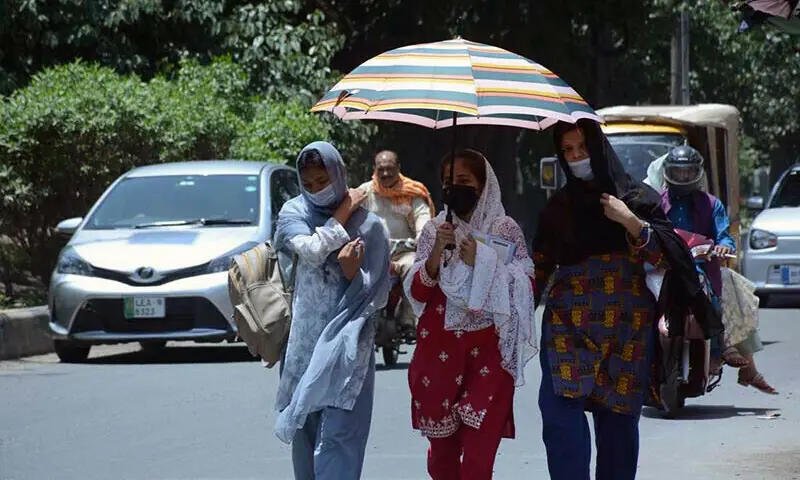
The Socio-Economic Impact: Assessing Daily Life Resilience
This temperature spike directly affects the structural efficiency of Pakistan’s energy grid and public health infrastructure. For urban households, increased cooling demand will stress power distribution systems, potentially leading to calibrated load management. Meanwhile, rural agricultural communities in Sindh and Punjab must adjust their irrigation schedules to prevent crop dehydration. Consequently, these extreme conditions necessitate precision in resource management to protect vulnerable populations and maintain economic productivity during the peak summer transition.
The Forward Path: A Strategic Stabilization Move
This development represents a Stabilization Move in the context of national climate preparedness. While the current heatwave is categorized as “mild,” the 61% probability of El Niño development acts as a catalyst for urgent policy adjustments. Pakistan must transition from reactive disaster management to a model of proactive architectural resilience. Strengthening the baseline of our national climate response is no longer optional; it is a strategic necessity to ensure the progress of the next generation.








