
Pakistan’s economic architecture requires a calibrated alignment between the state’s fiscal machinery and its industrial engines. Prime Minister Shehbaz Sharif recently mandated that senior Federal Board of Revenue officials visit Karachi monthly to accelerate FBR tax reforms and resolve local business grievances. This directive establishes a precision-driven feedback loop between the government and the nation’s primary economic hub.
Accelerating FBR Tax Reforms through Strategic Engagement
The Prime Minister emphasized that the business community represents the structural backbone of the Pakistani economy. Consequently, he instructed the tax authority to facilitate higher production and investment by removing existing hurdles. Specifically, the government aims to modernize the tax environment to make it transparent, investor-friendly, and significantly easier to navigate for domestic and international stakeholders.
Furthermore, the FBR has already achieved measurable progress through technological integration. Digitization and enforcement reforms have yielded substantial revenue increases across several key sectors. For instance, the implementation of production monitoring systems has successfully captured untapped revenue streams:
- Sugar Industry: Generated an additional Rs. 42 billion in tax revenue.
- Cement Sector: Contributed an extra Rs. 38 billion to the national exchequer.
- Beverage Industry: Produced a revenue gain of Rs. 15 billion over the last year.
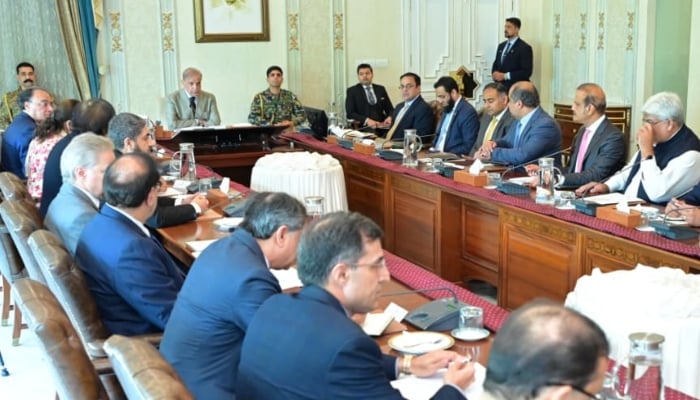
The Translation: Engineering a Seamless Fiscal Interface
In technical terms, these FBR tax reforms represent a shift from passive tax collection to active industrial facilitation. By mandating monthly visits to Karachi, the Prime Minister is institutionalizing a “Problem-Solving Protocol.” This means the FBR will no longer operate as a remote regulator but as a localized partner. The logic is simple: by reducing the “friction” of tax compliance, the government increases the “velocity” of capital investment.
The Socio-Economic Impact: Stabilizing the Industrial Baseline
How does this change daily life? For the Pakistani professional and household, these reforms stabilize the industrial baseline. Increased tax transparency reduces the “hidden costs” of doing business, which often trickle down to consumers as higher prices. When the Karachi business community thrives, job security increases for urban workers, and the state secures the funding necessary for public infrastructure and STEM education initiatives.
The Forward Path: A Momentum Shift in National Governance
This development represents a Momentum Shift in Pakistan’s economic trajectory. Moving beyond simple stabilization, the integration of real-time monitoring in the cement and fertilizer sectors proves that data-driven governance works. To maintain this progress, the FBR must ensure that these monthly engagements result in documented policy changes rather than just high-level discussions. Ultimately, the successful scaling of these FBR tax reforms will determine the resilience of our national export strategy.








