
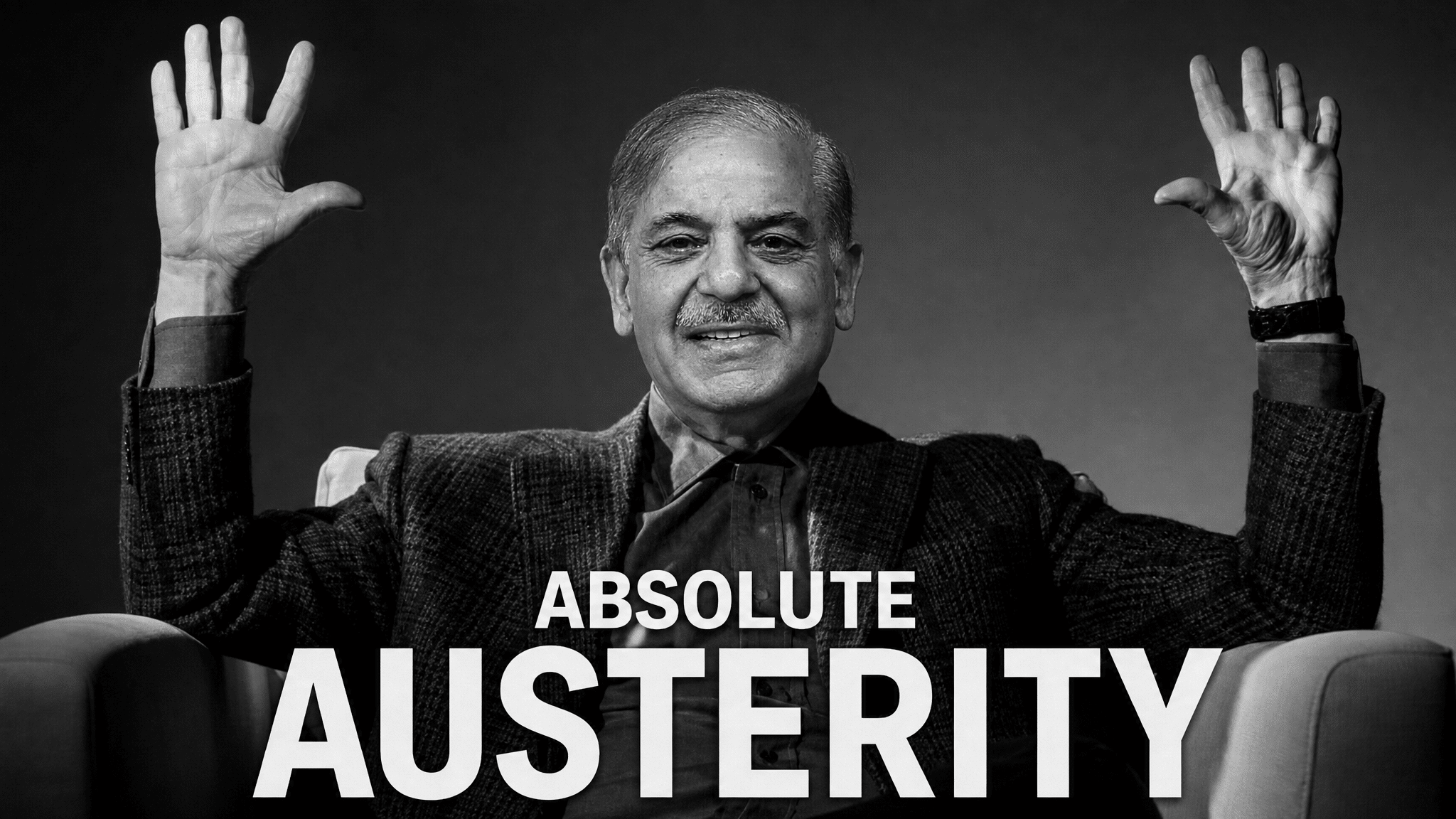
Prime Minister Shehbaz Sharif approved a strategic extension of the federal Pakistan austerity drive on Thursday. This decision mandates that existing spending restrictions will continue until June 30 to maintain national fiscal discipline. Consequently, the Cabinet Division released an official notification outlining the continued constraints on government operations. The administration intends for these measures to serve as a baseline for structural economic stabilization during the current fiscal cycle.
The Structural Logic of the Pakistan Austerity Drive
The calibrated extension focuses on high-impact expenditure areas within the federal framework. Specifically, the government will maintain a 50 percent reduction in fuel consumption for all official vehicles through the end of June. Furthermore, the directive requires that 60 percent of the total government vehicle fleet remains grounded to prevent unnecessary operational costs. In addition to these transport limits, the Prime Minister extended the absolute ban on foreign visits for all government officers and officials. These restrictions represent a precision-based approach to resource management during a critical economic juncture.

The Translation: Contextualizing Fiscal Discipline
In “Next Gen” clarity, this extension is not merely a delay in spending but a structural reinforcement of the national budget. The government is essentially “freezing” non-essential hardware and logistical costs to prioritize essential systemic liquidity. By grounding 60 percent of the fleet, the state reduces the immediate demand for imported fuel and maintenance parts. This move signals to international financial observers that the executive branch is exercising disciplined control over its internal balance sheet.

The Socio-Economic Impact
How does this development change the daily life of a Pakistani citizen? Strategically, these measures protect the national treasury from localized waste, which indirectly stabilizes the value of the Rupee. For the average professional or student, a more disciplined government budget reduces the immediate pressure for further domestic tax hikes on essential services. However, the reduction in government mobility may lead to slower administrative response times in certain public sectors. Households should view this as a necessary stabilization move that prioritizes national solvency over administrative convenience.
The Forward Path: Strategic Analysis
This development represents a Stabilization Move rather than a total momentum shift. While these measures are constructive for maintaining the current baseline, they function as defensive maintenance of the existing fiscal environment. To transition into a growth phase, Pakistan must eventually pivot from restricting spending to optimizing the efficiency of every rupee spent. For now, this disciplined extension provides the necessary breathing room to calibrate long-term structural reforms.








