

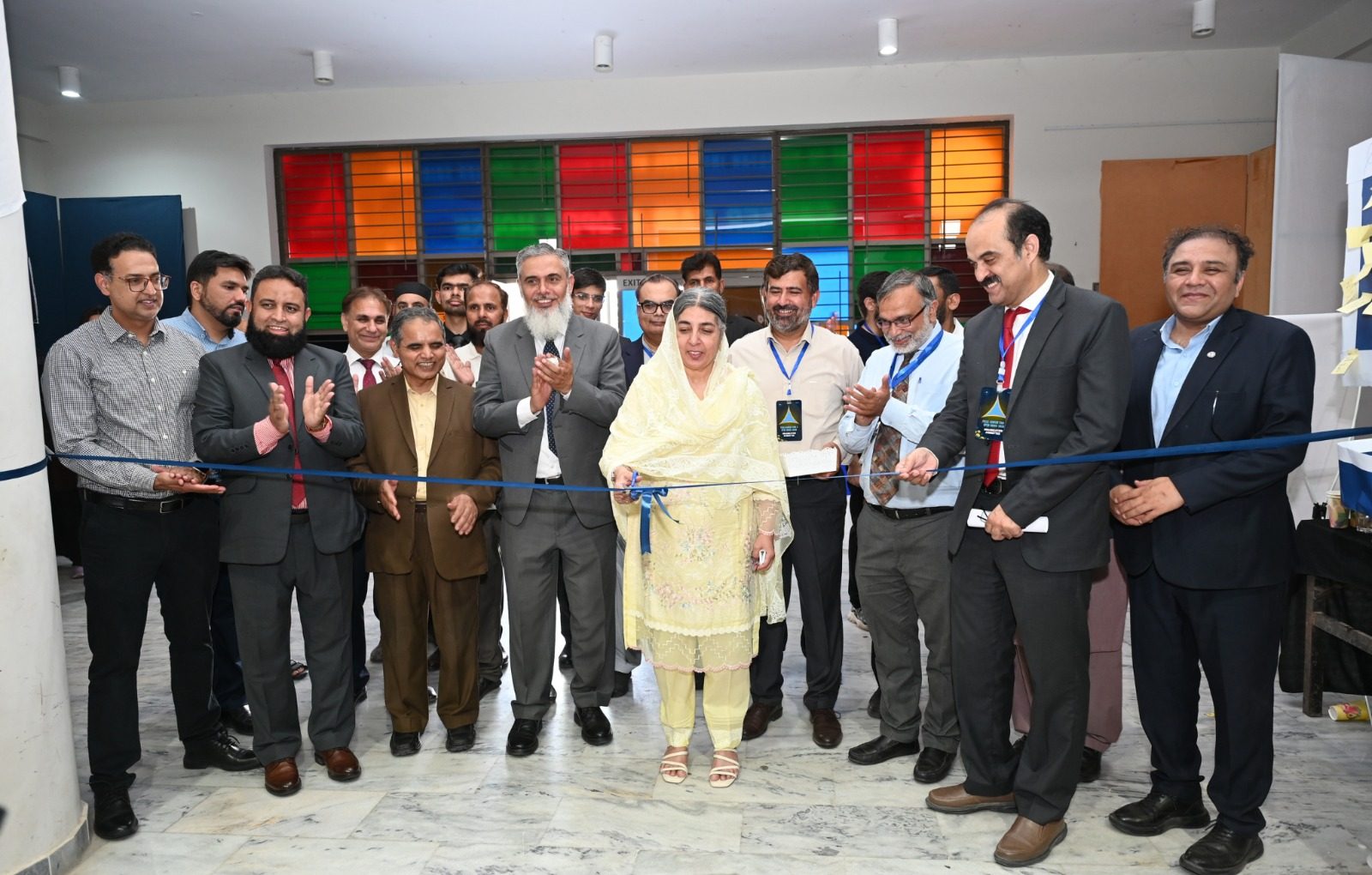
The PIEAS Career Fair 2026 recently concluded as a precision-engineered catalyst for Pakistan’s scientific advancement. Under the strategic auspices of the Pakistan Atomic Energy Commission (PAEC), the Pakistan Institute of Engineering and Applied Sciences (PIEAS) hosted this convergence of academia and industry leaders. Consequently, the event established a high-performance platform for innovation, research, and structural professional development.
Calibrating Innovation: The 120-Project Benchmark
Final-year students from diverse engineering and scientific disciplines presented over 120 innovative projects. These initiatives focused on emerging technologies, creative problem-solving, and industrial applications. Furthermore, industry representatives praised the technical depth of these projects, noting their immediate practical relevance to Pakistan’s industrial baseline.

Additionally, approximately 50 renowned national and international organizations participated in the fair. This participation provided a vital networking framework, offering students calibrated pathways for internships, career guidance, and future employment. Rector PIEAS, Dr. Anila Usman, emphasized that the event perfectly reflected the disciplined hard work and innovative thinking of the youth.

The Situation Room: Strategic Analysis
The Translation
In “Next Gen” terms, the PIEAS Career Fair functions as a technical audit of Pakistan’s future workforce. Instead of traditional job hunting, the event creates a high-density marketplace where intellectual capital meets industrial demand. Specifically, the 120 projects serve as tangible proof-of-concepts, moving beyond theoretical education into calibrated, market-ready solutions.
The Socio-Economic Impact
For the average Pakistani citizen, these institutional initiatives represent a baseline for economic stability. By aligning student research with industrial needs, we reduce the “skill gap” that often leads to underemployment. Consequently, this creates a more efficient pipeline for STEM professionals to enter the workforce, driving urban development and increasing the household income of skilled families across the nation.
The Forward Path
We categorize this development as a Momentum Shift. While many institutions host career fairs, the PIEAS-PAEC collaboration adds a layer of national security and strategic precision. To maintain this progress, Pakistan must now scale this model to other technical universities, ensuring that academic innovation remains the primary catalyst for our structural economic growth.








