
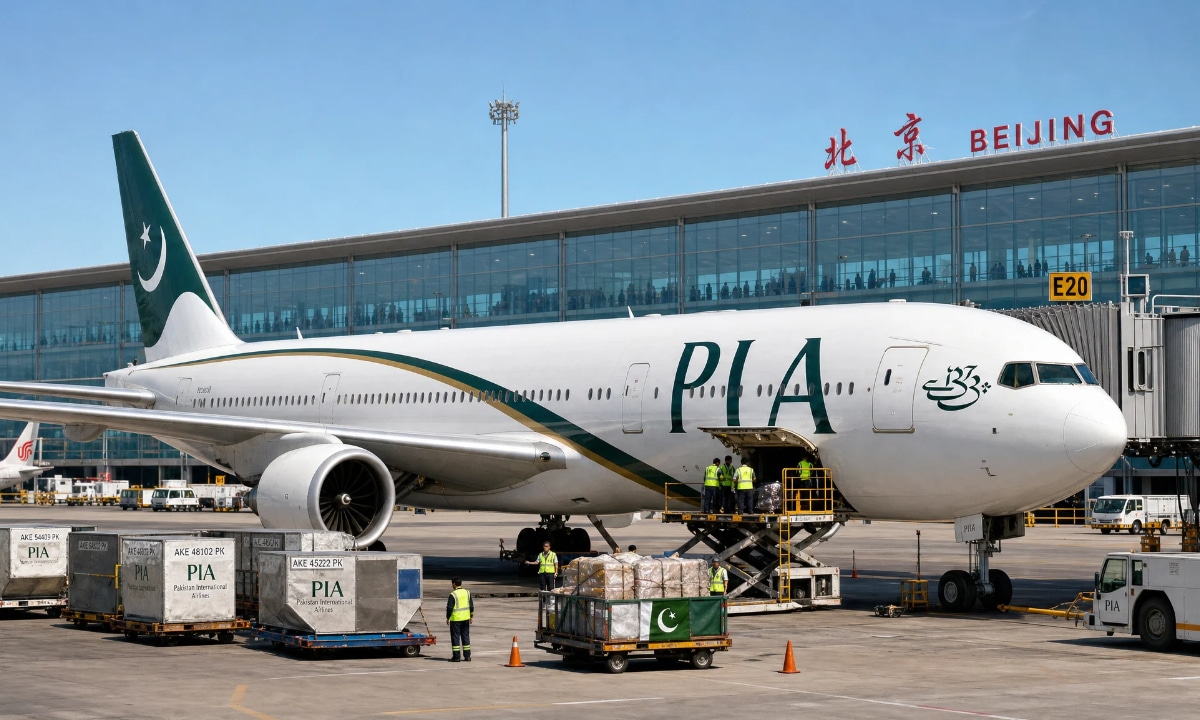
Strategic connectivity requires more than just established flight paths; it demands a calibrated logistical framework that supports the traveler. Pakistan International Airlines (PIA) has officially updated its PIA baggage allowance for the Beijing route, marking a significant shift in regional competitiveness. By increasing the weight limits for Economy and Executive Economy classes, the national carrier aims to streamline the movement of human and economic capital between these two strategic partners.
Calibrating the PIA Baggage Allowance for Regional Competition
Under the newly revised policy, Economy Class passengers can now carry 50 kilograms of baggage, representing a 25% increase from the previous 40-kilogram limit. Furthermore, Executive Economy passengers will see their allowance rise from 50 to 60 kilograms. Consequently, PIA now offers one of the most competitive baggage provisions in the regional market, positioning itself as a primary choice for high-volume travelers.
Beyond weight limits, PIA has strengthened its operational network through calibrated partnerships with Air China and Shenzhen Airlines. These interline arrangements allow passengers from 25 Chinese cities to travel seamlessly to Islamabad via Beijing. Each traveler benefits from a single through fare and a precision-engineered connection process that eliminates traditional transit friction.
The Translation: What This Means for Global Connectivity
In technical terms, “interline arrangements” refer to a commercial agreement where airlines handle passengers traveling on itineraries that require multiple flights on multiple airlines. For the user, this means your PIA baggage allowance remains consistent across the journey, and your luggage is checked through to the final destination. This structural improvement transforms Beijing into a high-efficiency hub for Pakistani expatriates and students.
The Socio-Economic Impact: Empowering the Pakistan-China Corridor
This policy change directly influences the daily lives of the thousands of Pakistani students currently enrolled in Chinese universities. Increased baggage limits allow for the transport of essential supplies and personal goods that were previously cost-prohibitive. For business professionals, the expanded network into 25 Chinese cities serves as a catalyst for trade, reducing the “logistics tax” on small-to-medium enterprises operating within the CPEC framework.
The Forward Path: A Momentum Shift
At Next Generation Pakistan, we categorize this development as a Momentum Shift. While many national carriers are unbundling services and charging for every kilogram, PIA is moving in the opposite direction to secure market share on a critical diplomatic route. This is a strategic move to leverage the airline’s unique position in the Pak-China friendship, turning a logistics update into a tool for national advancement.








