
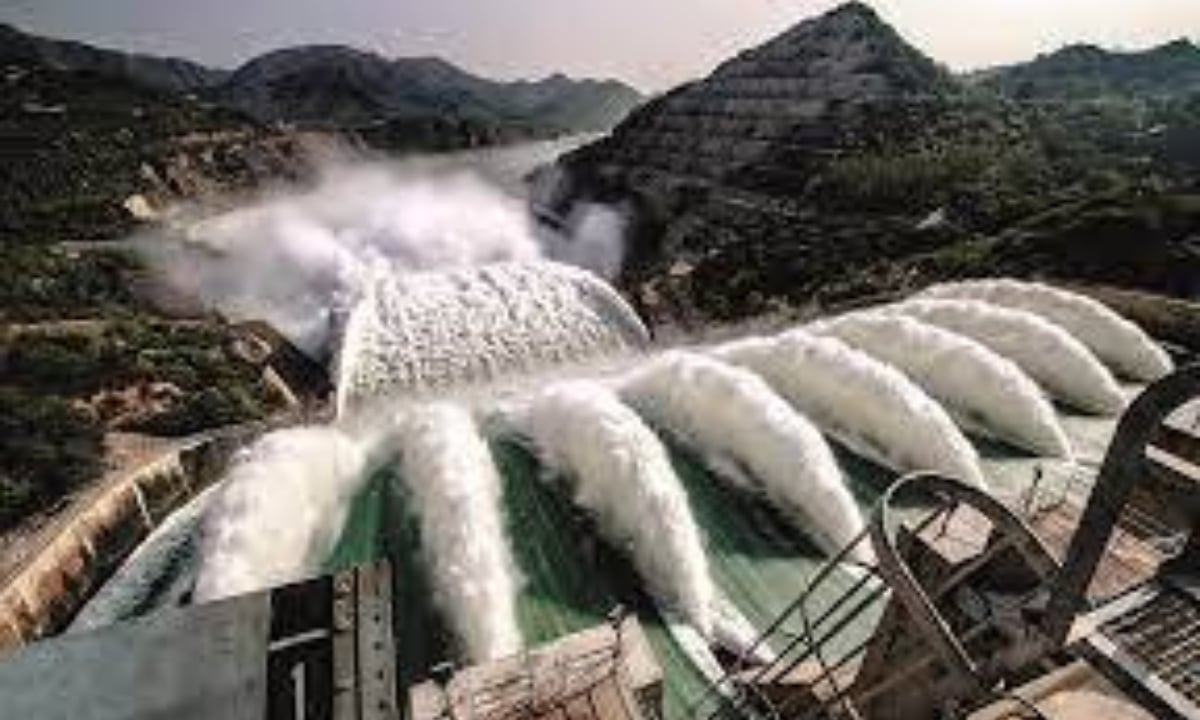
Pakistan’s water reservoirs have reached a calibrated 72% of their total storage capacity, amassing 9.466 million acre-feet (MAF) ahead of the critical irrigation phase. This storage surge, primarily driven by the Tarbela Dam, establishes a strategic baseline for the nation’s agricultural output. Current data indicates that the Indus River System is receiving 401,600 cusecs of inflows, while managed outflows remain at 304,700 cusecs to maintain system equilibrium.
Strategic Storage Levels at Tarbela and Chashma
Tarbela Dam currently leads the national recovery by holding 5.063 MAF of water. Consequently, the reservoir has achieved 90.72% of its total 5.58 MAF capacity. This significant accumulation results from consistent glacier melt and monsoon rainfall in the upper Indus basin. Similarly, Chashma Barrage is operating at near-peak efficiency, with Pakistan’s water reservoirs there reaching 0.285 MAF, or 91.64% of maximum capacity.
Furthermore, authorities are strategically diverting 354,600 cusecs across the irrigation network. This allocation specifically supports the Kharif crops, including cotton, rice, and sugarcane. Sindh receives the largest share at 195,000 cusecs, followed by Punjab at 145,000 cusecs, ensuring regional agricultural stability.
Analyzing the Mangla Deficit and Environmental Outflows
In contrast to Tarbela, Mangla Dam remains well below its seasonal benchmark. The reservoir is currently 56.74% full because weak rainfall across the Jhelum catchment limited inflows to 46,200 cusecs. As a result, water managers have reduced releases to a precision level of 7,000 cusecs to conserve remaining resources for the Rabi sowing season.
Simultaneously, the system has released 0.532 MAF downstream of Kotri Barrage into the Arabian Sea. This calibrated release protects the Sindh delta by limiting seawater intrusion. Such structural management is essential for maintaining the ecological integrity of Pakistan’s coastal regions.
The “Situation Room” Analysis
The Translation (Clear Context)
In technical terms, the “Million Acre-Feet” (MAF) metrics represent the volume of water needed to cover one million acres of land at a depth of one foot. By reaching 72% capacity, Pakistan has successfully secured the “fuel” needed for its primary economic engine: agriculture. The high inflow-to-outflow ratio at Tarbela suggests a high-efficiency recharge phase, while the conservation at Mangla indicates a disciplined approach to seasonal scarcity.
The Socio-Economic Impact
This development directly impacts the food security of every Pakistani household. Sufficient water for Kharif crops like rice and sugarcane stabilizes market prices and ensures export potential. For the rural professional, it guarantees a predictable irrigation schedule. For the urban citizen, higher dam levels often translate to improved hydroelectricity generation, potentially reducing the frequency of power shortfalls during peak summer months.
The Forward Path (Opinion)
This development represents a Momentum Shift. While the deficit at Mangla requires careful monitoring, the near-full status of Tarbela and Chashma provides a significant buffer. The system’s ability to release water downstream of Kotri while maintaining 72% national storage demonstrates improved structural management. Pakistan must now focus on monsoon activity through mid-August to bridge the gap in the Jhelum basin.








