
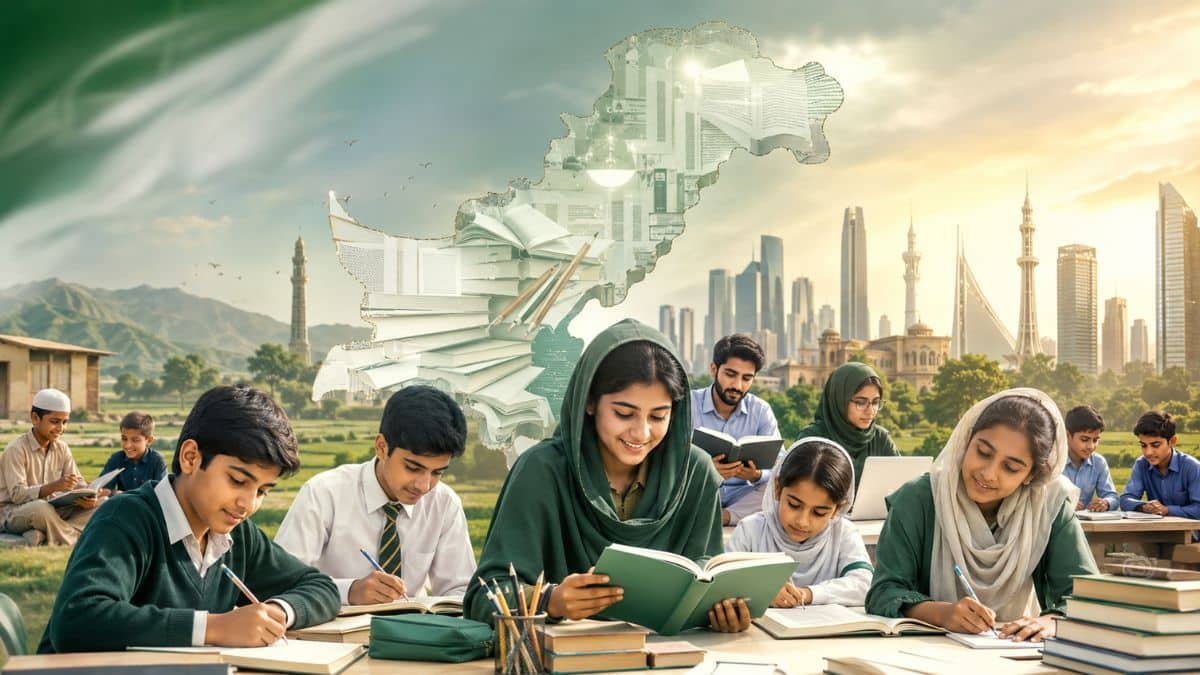
The Pakistan Economic Survey 2025-26, released on June 11, 2026, reveals that the Pakistan literacy rate has climbed to 63.0%. This calibrated increase from the previous year’s 60.6% indicates a steady upward trajectory in national human capital development. Data from the 2025 Population and Housing Census served as the baseline for these findings, highlighting both incremental progress and persistent structural barriers in the educational landscape.
Analyzing the Strategic Literacy Divide
While the overall Pakistan literacy rate shows growth, the metrics reveal a stark disparity between geographic zones. Urban areas maintained a robust literacy level of 74.0%, whereas rural regions lagged significantly at 55.0%. Consequently, this 19-point gap suggests that infrastructure and educational access remain concentrated in metropolitan hubs, leaving rural populations at a disadvantage in the modern economy.
Furthermore, the government allocated Rs. 962.0 billion to education expenditure during FY2025. Although this is a substantial sum, it represents only 0.8% of the national GDP. Therefore, achieving long-term system efficiency will require a more aggressive fiscal commitment to improve school accessibility and teacher training quality across the country.
The Translation
In “Next Gen” terms, a 63% literacy rate is a signal of emerging potential, but it also identifies a “Digital Dead Zone” for 37% of the population. When we speak of literacy today, we are not just discussing basic reading; we are discussing the baseline for digital inclusion and workforce readiness. The logic behind these numbers suggests that until we bridge the rural-urban divide, the national economy will continue to operate below its maximum precision and output capacity.
The Socio-Economic Impact
This development directly influences the daily lives of every Pakistani citizen. For urban professionals, a higher literacy environment fosters a more competitive labor market and sparks innovation. However, for rural households, the 55% literacy ceiling acts as a barrier to social mobility and higher income growth. Improving these metrics is essential to ensuring that the benefits of the digital economy reach the doorstep of every citizen, regardless of their postal code.
The Forward Path: Strategic Opinion
This update represents a Stabilization Move rather than a full Momentum Shift. While the 2.4% increase is positive, the 0.8% GDP expenditure is insufficient to catalyze a total educational transformation. To move Pakistan toward a global baseline, the state must pivot from merely maintaining schools to strategically investing in high-quality digital education and vocational training. We are moving in the right direction, but the velocity of change must increase to meet the demands of the 21st century.








