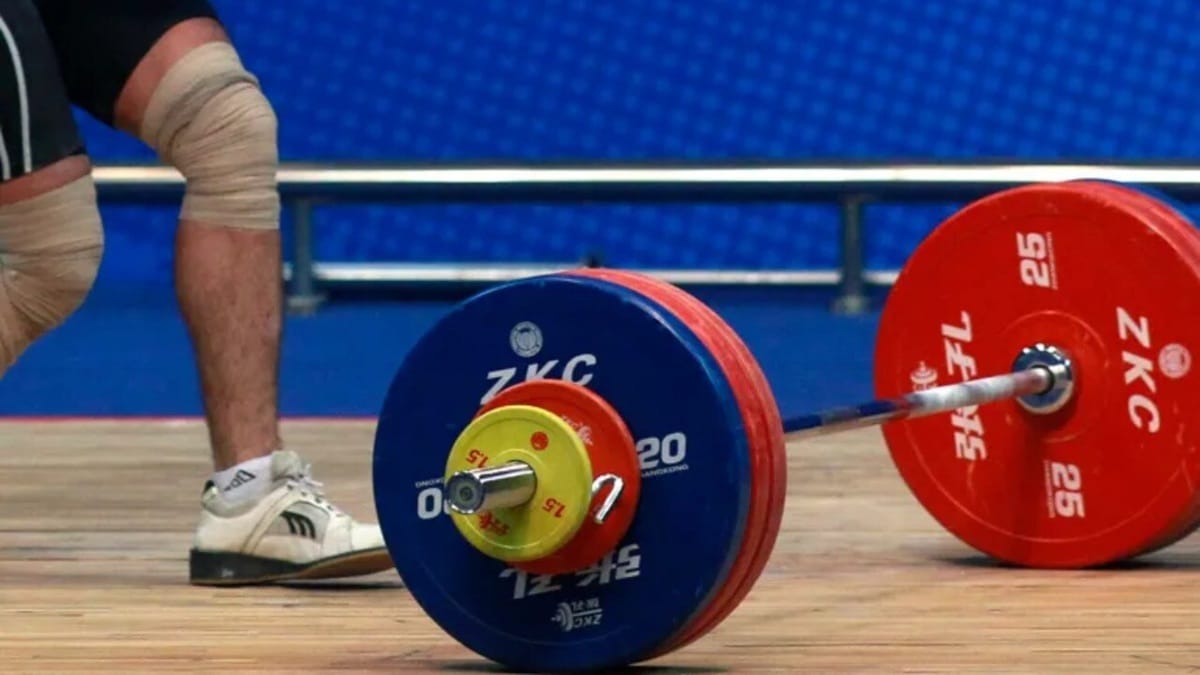
The ongoing Pakistan weightlifting ban serves as a critical baseline for analyzing the systemic failures within our national sports governance. Currently, our elite athletes face exclusion from the upcoming Asian Games in Japan due to an unpaid anti-doping fine exceeding $30,000. This calibrated sanction stems from repeated rule violations within the Pakistan Weightlifting Federation (PWLF) dating back to 2021.
The Structural Cost of Governance Failure
The International Weightlifting Federation (IWF) and the Court of Arbitration for Sport (CAS) identified systemic issues involving athletes and officials. Consequently, Interim Committee Chairman Zahid Iqbal recently dispatched urgent correspondence to the Pakistan Olympic Association (POA) and the Pakistan Sports Board (PSB). He demands the immediate recovery of funds from the suspended federation and the specific individuals involved in these violations.
Data indicates that high-profile athletes, including Talha Talib and Abu Bakar Ghani, each incurred $5,000 fines in 2021. However, due to administrative delays and non-payment, the collective liability has ballooned. The Interim Committee, managing affairs since 2022, lacks a complete breakup of these costs but emphasizes that the Pakistan weightlifting ban remains active until the IWF receives full payment.
The Translation (Clear Context)
In technical terms, this is a “Compliance Freeze.” When a national federation fails to pay fines related to Anti-Doping Rule Violations (ADRVs), the international governing body (IWF) revokes the right of all athletes under that flag to compete. This is a mechanism designed to force domestic accountability. The logic is simple: the system remains locked until the catalyst—the fine—is settled.
The Socio-Economic Impact
The Pakistan weightlifting ban directly impacts the career trajectories of clean athletes who have dedicated years to precision training. For the average Pakistani household, this represents a loss of national prestige and a waste of public funds allocated to sports development. Professionally, it shuts down the “Sports Economy” for coaches, trainers, and athletes, effectively pausing a generation of talent in rural and urban hubs.
Restoring National Sporting Integrity
Zahid Iqbal has urged the Federal Investigation Agency (FIA) to place responsible officials on the Exit Control List (ECL) until they clear their liabilities. Furthermore, he criticized the POA for recognizing a suspended federation, which complicates the legal landscape. The Interim Committee seeks provisional recognition from the IWF to protect clean athletes from the fallout of this Pakistan weightlifting ban.

The “Forward Path” (Opinion)
This development represents a Momentum Shift toward accountability, though it currently operates in a state of crisis management. To move forward, Pakistan must implement a precision-based governance model that separates individual athlete conduct from institutional responsibility. The proposed “recovery” from delinquent officials is a necessary catalyst for structural stability. Without this, our sporting frontier remains compromised.